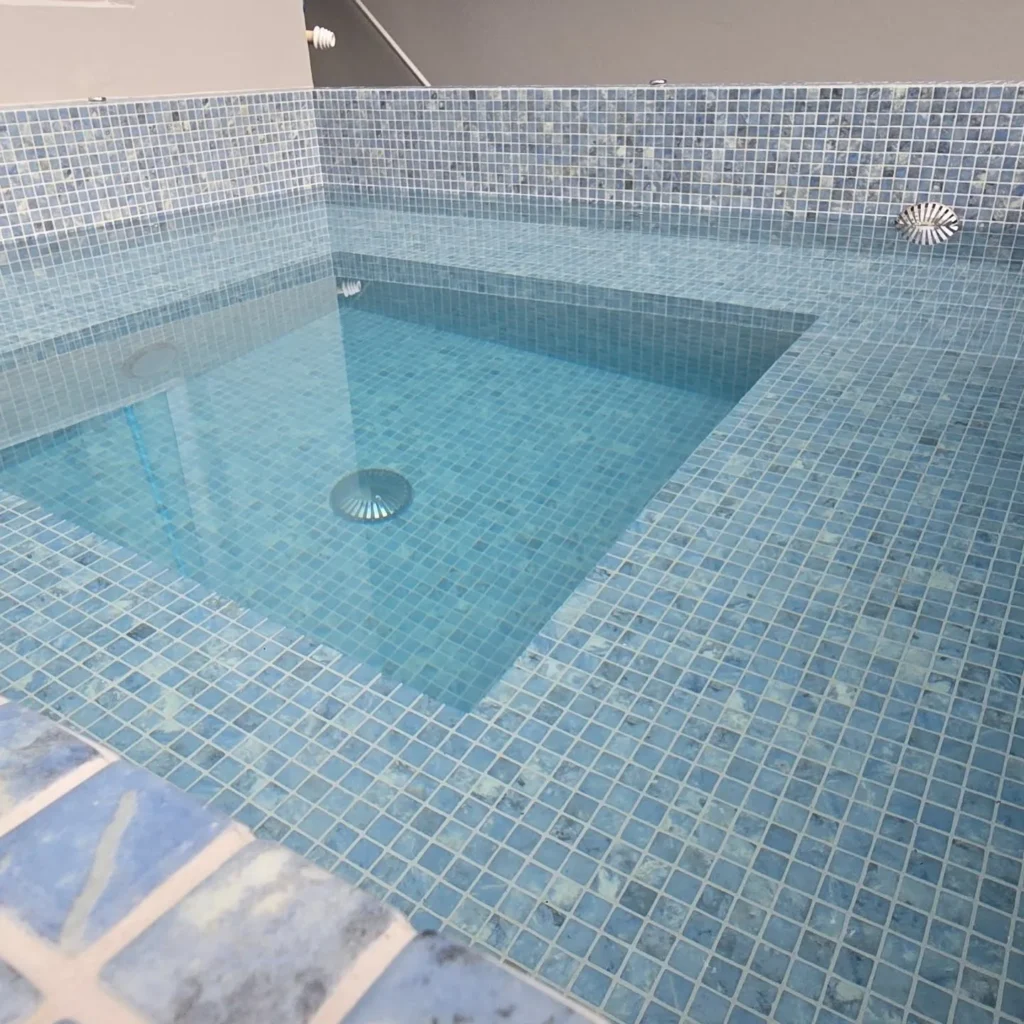
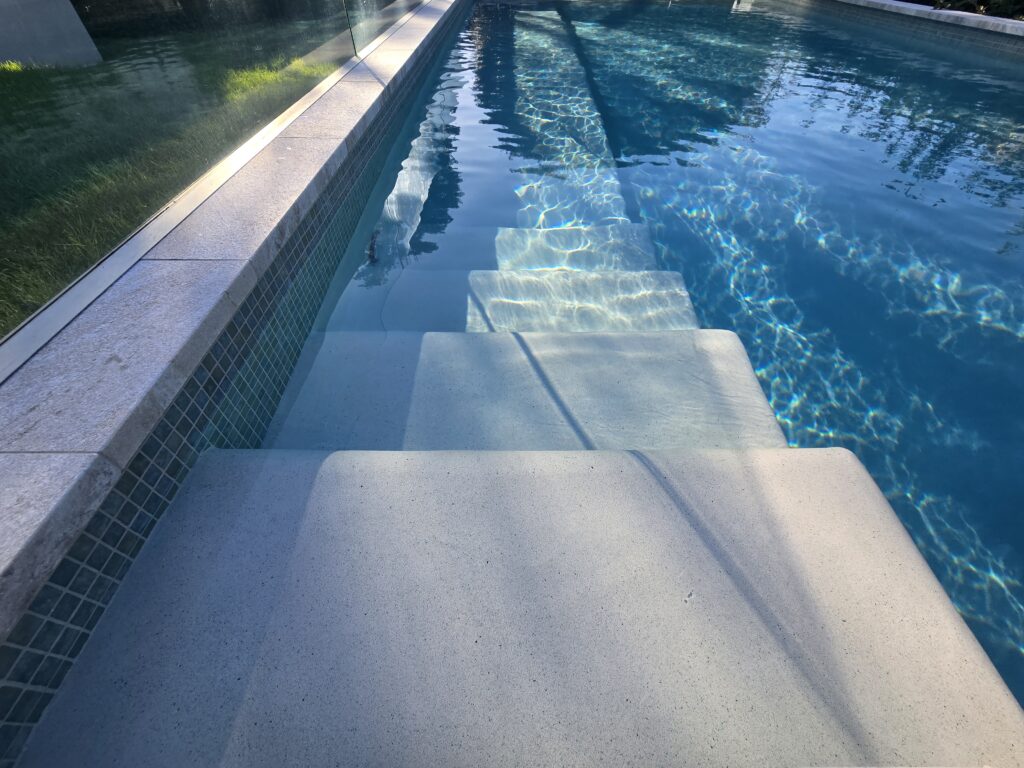
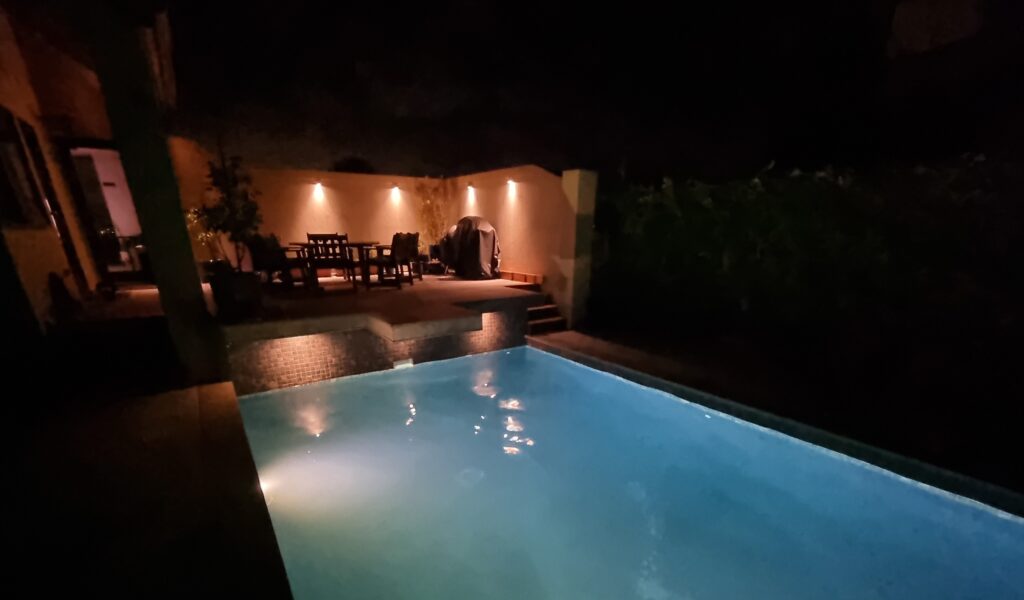
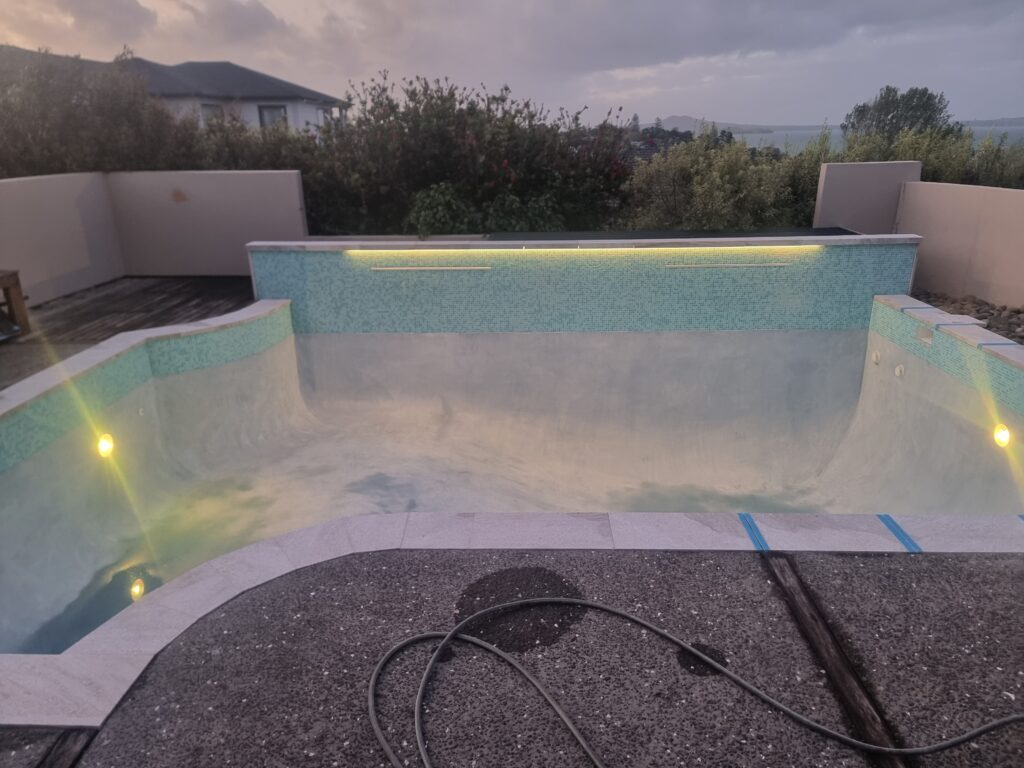
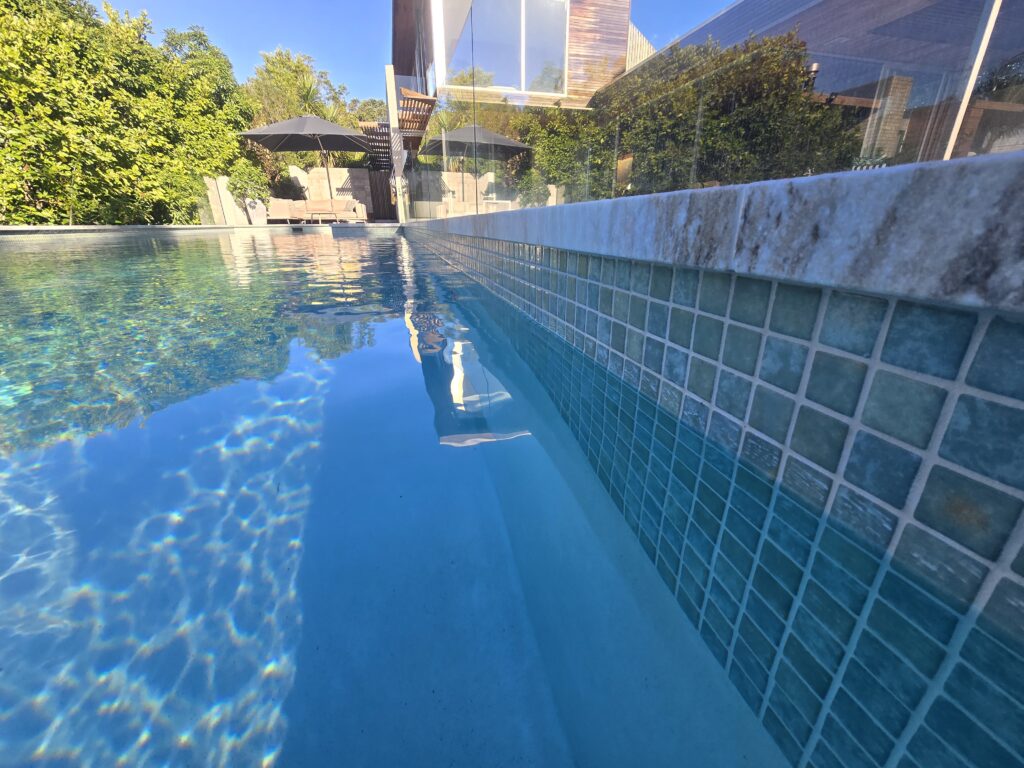
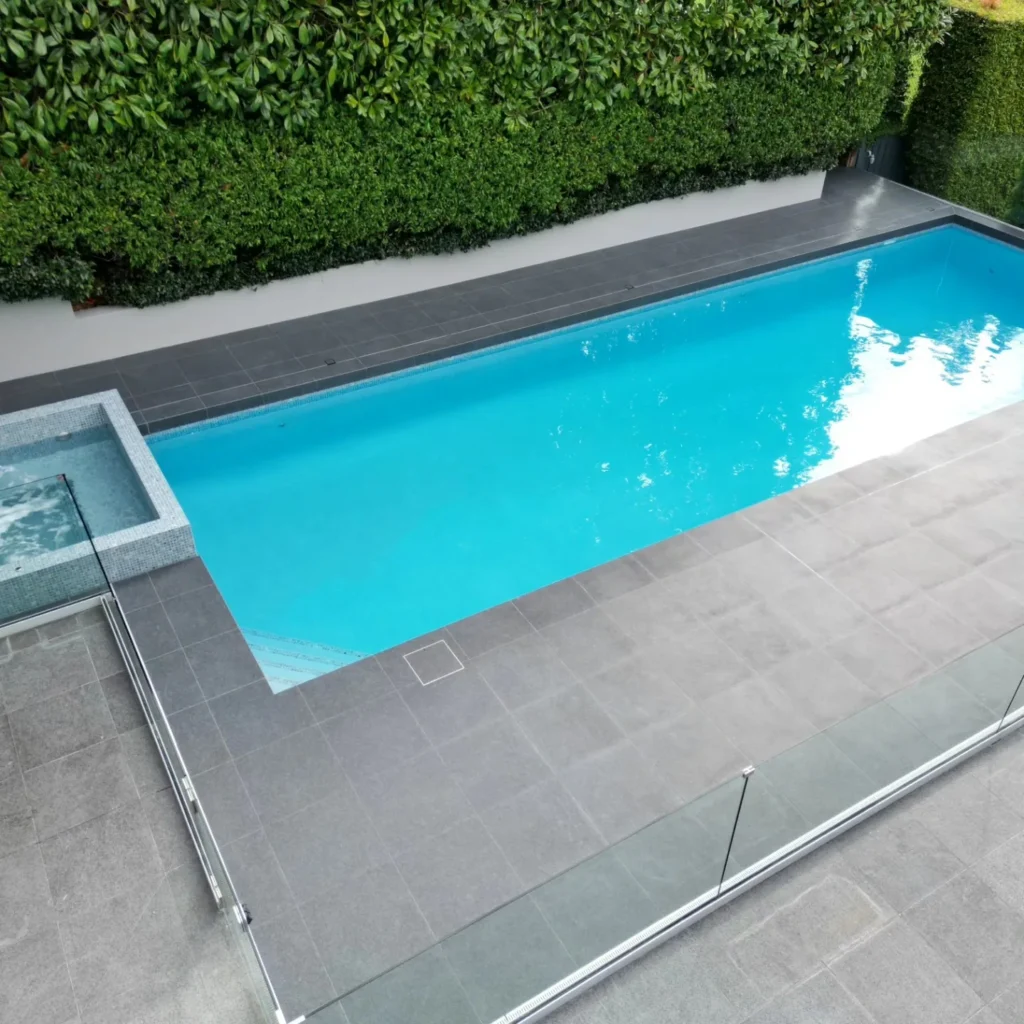
Resurfacing, retiling, new coping and full pool makeovers for concrete and fibreglass pools across Auckland. Honest quotes, tidy workmanship, and a free site visit before you commit anything.
5.0 ★ on Google · 35+ five-star reviews · Concrete & fibreglass specialists · Auckland-wide · Free site visit and quote
5.0 ★ on Google · 35+ reviews10-15 yrs between resurfaces3-6 weeks typical renovation$45k-$167k pool value (CoreLogic)1.2m minimum fence height
Trusted by leading Pool Companies
In short
Artisan Stone & Tile renovates tired Auckland pools into clean, modern outdoor spaces. We handle everything from a straight resurface to a full retile with new coping, lighting and surrounds, on both concrete and fibreglass pools. Most full renovations run $35,000 to $60,000 depending on size and finish. Every job starts with a free on-site assessment so your quote reflects your actual pool, not a guess.
What we renovate
We cover the whole renovation, not just one part of it:
Resurfacing and refinishing – strip the old interior and lay a fresh, long-lasting finish
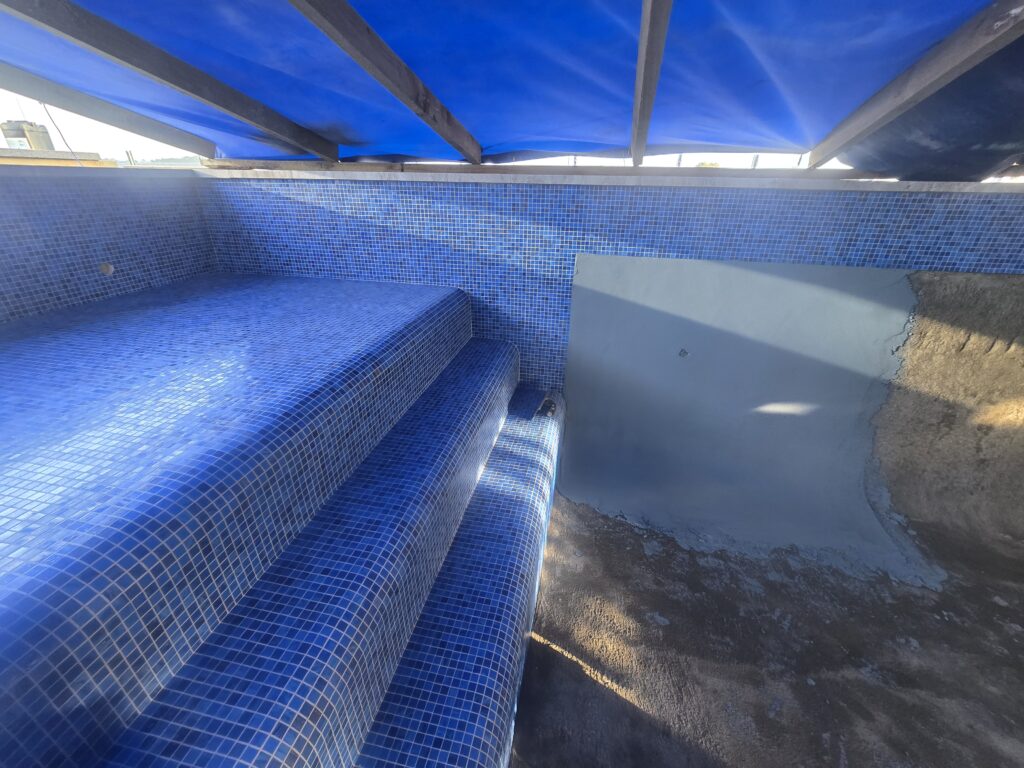
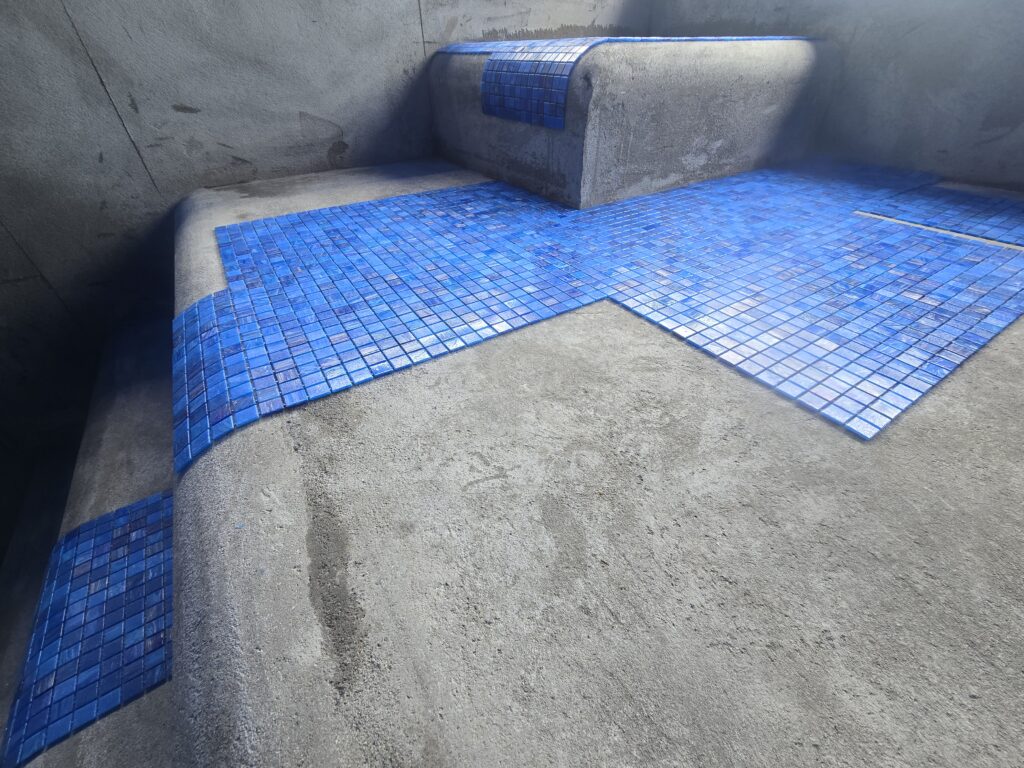
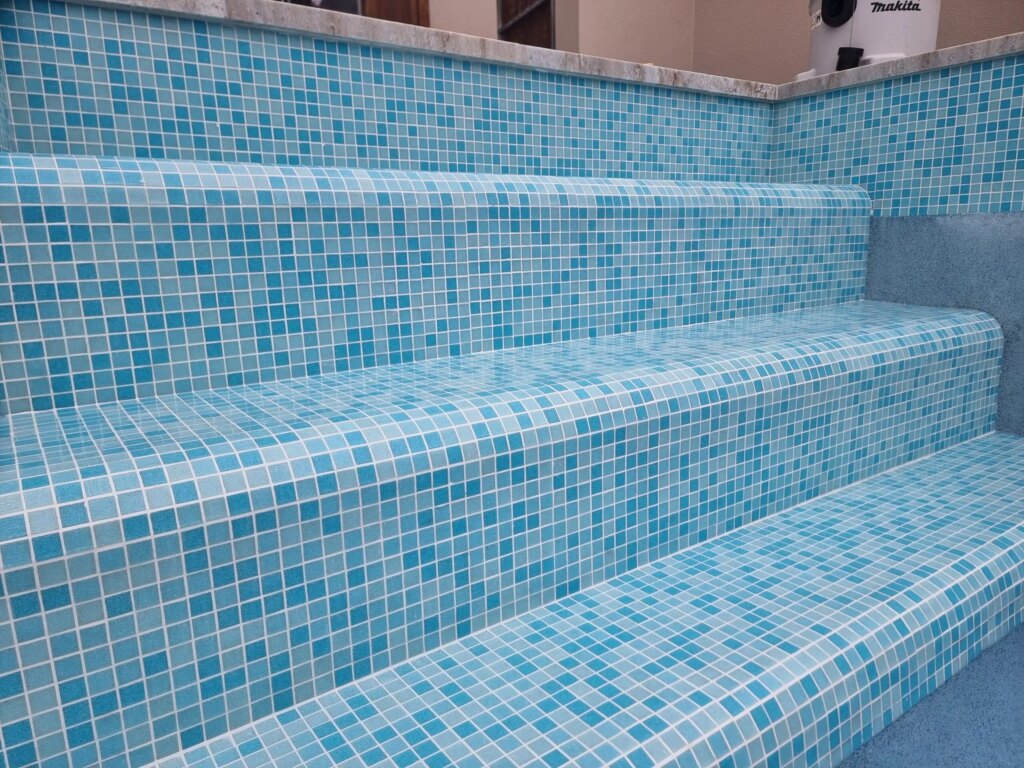
Retiling – waterline bands through to fully tiled interiors in glass mosaic or porcelain
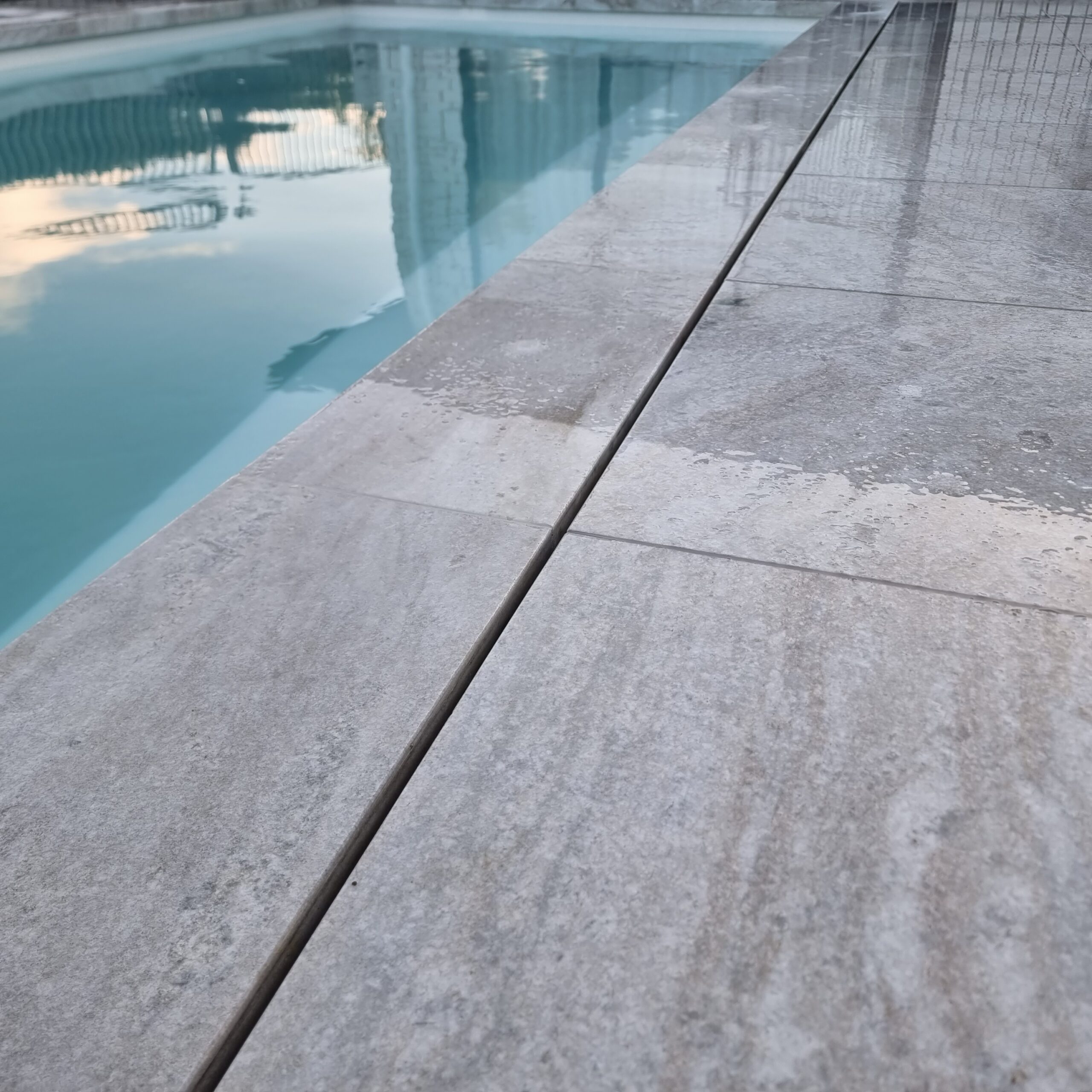
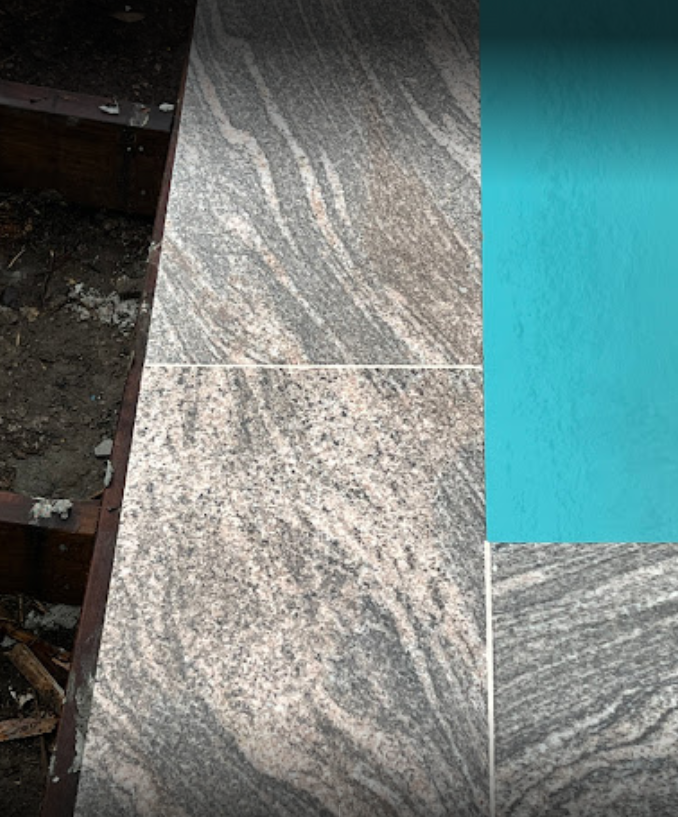
New coping stones – natural stone, granite and porcelain drop-face edges
Pool surrounds and paving – the deck and patio that frame the pool
Lighting, plumbing and equipment upgrades – done while the pool is already drained
Reshaping – new steps, ledges and seating within the existing shell
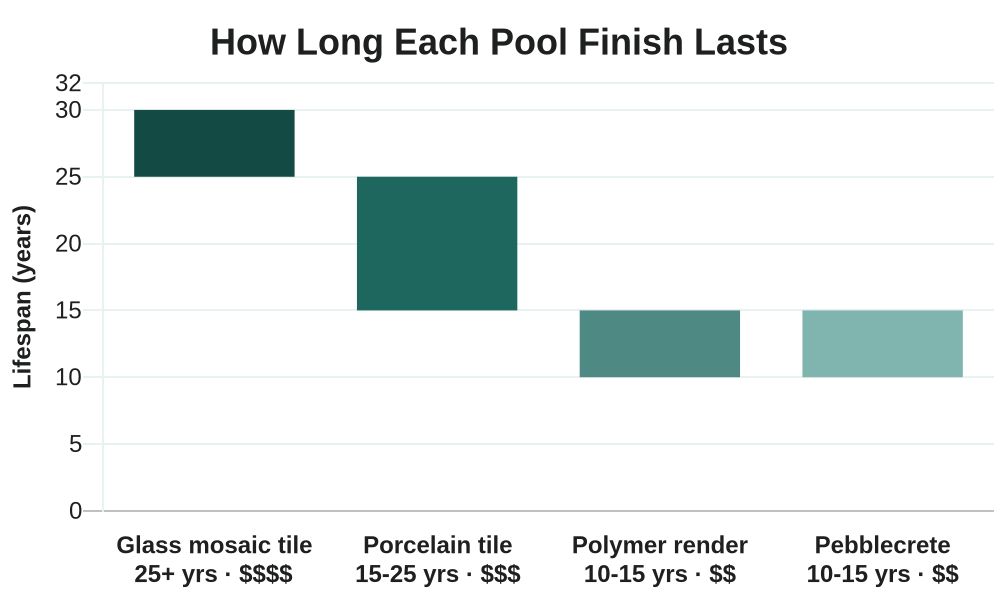
The finish you choose sets the look, the lifespan and a large part of the cost. Here is how the main options stack up.
How long each pool finish lasts before it needs redoing.
Finish
Look
Lifespan
Relative cost
Best for
Glass mosaic tile (Ezarri / Bisazza)
Rich colour, premium
25+ years
$$$$
High-end and feature pools
Porcelain tile
Clean and modern
15-25 years
$$$
Durable everyday premium
Polymer-modified plaster / render
Smooth, classic
10-15 years
$$
Cost-effective refresh
Pebblecrete
Textured, natural
10-15 years
$$
Grip and value
Swipe the table sideways to see every column.
Smoother finishes like tile collect less algae and need fewer chemicals over their life. Rougher finishes like pebblecrete give better grip underfoot but stain more easily. We no longer use Hydrazzo – its supplier is discontinuing it – so today we specify a modern polymer-modified plaster, either Quartz Pool Finish by Oceania or Ultra Plaster by SSL Distributors, which hold colour and resist staining more reliably, or a fully tiled finish.
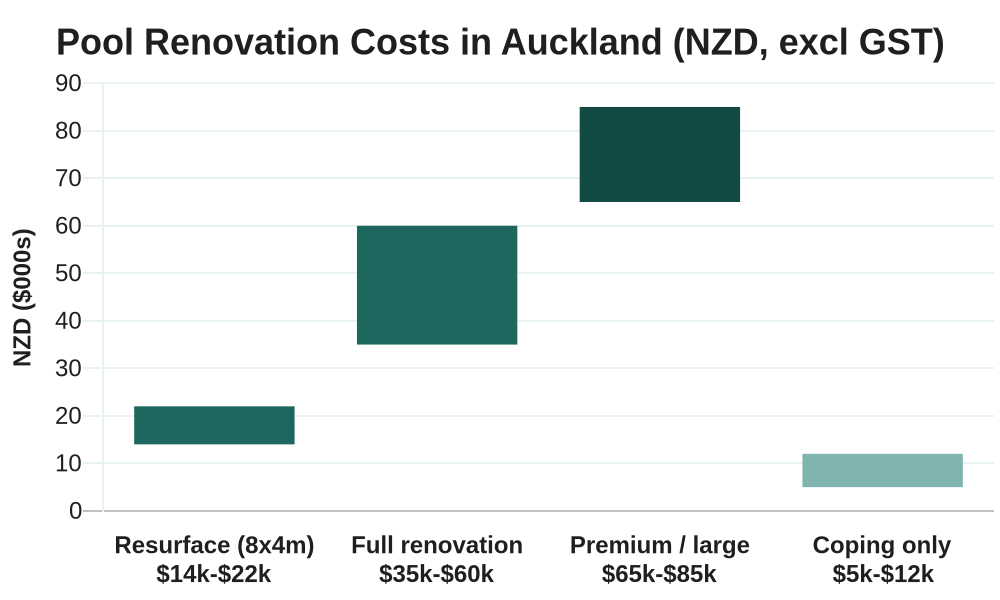
A pool renovation in Auckland is priced on scope, not a flat rate. A straight resurface is the entry point; a full renovation with new tiling, coping and surrounds sits higher. The figures below reflect real jobs we have completed, not generic online estimates.
Typical Auckland pool renovation price ranges by scope, excluding GST.
Renovation scope
What it covers
Typical price (excl GST)
Resurface / refinish
Strip old interior, lay a new plaster or render finish
$200-$320 per m² (about $14,000-$22,000 for a standard 8x4m pool)
Full renovation
Retile, new coping and resurface together
$35,000-$60,000
Premium / large
Fully tiled spa or tiled patio, glass mosaic, natural stone coping
$65,000-$85,000
Coping only
Replace coping stones (natural stone or porcelain), no full drain
$5,000-$12,000
Swipe the table sideways to see every column.
Prices are a guide only, exclude GST, and are confirmed at a free site visit.
Five things move the price the most: pool size, the condition of the shell once the old surface comes off, the finish you choose, site access, and any equipment upgrades. Steep sections in suburbs like Titirangi and narrow side access in Grey Lynn or Ponsonby add labour because materials get carried rather than wheeled in. Structural consent, where it applies, adds a further $1,000 to $3,000 in Auckland Council fees.
Two pools that look identical on paper can quote very differently once the shell is exposed. For a full breakdown of what sits behind each number, see our pool renovation cost guide.
Our process
The pool renovation process, step by step
Every renovation follows the same core sequence, whether it is a resurface or a full rebuild of the finish:
Drain the pool and dispose of the water correctly
Strip the old surface back to the shell
Repair any cracks or structural damage in the concrete
Waterproof with a membrane where required
Resurface or tile the interior
Set new coping around the pool edge
Cure for 7 to 14 days before refilling
Fill and commission – balance the water and test the equipment
The pool renovation process
Every renovation follows the same core sequence.
1Drain
2Strip old surface
3Repair shell
4Waterproof
5Resurface / tile
6Set new coping
7Cure 7-14 days
8Fill & commission
Full renovation 3-6 weeks · Resurface only 1-2 weeks
A full concrete pool renovation takes 3 to 6 weeks from drain to first swim. A resurface on its own is faster at 1 to 2 weeks. Auckland weather matters here, because rain slows the curing of plaster, adhesive and grout. Our pool renovation timeline guide walks through what happens week by week.
Recent projects
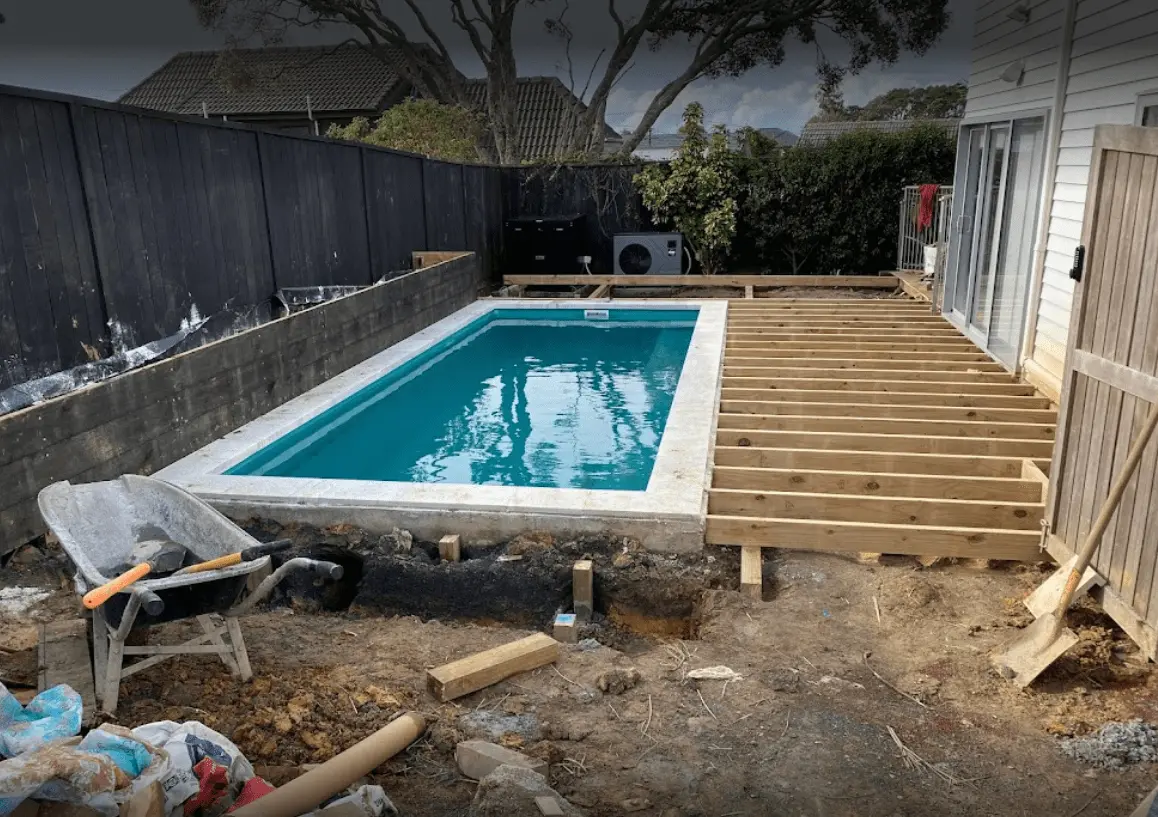
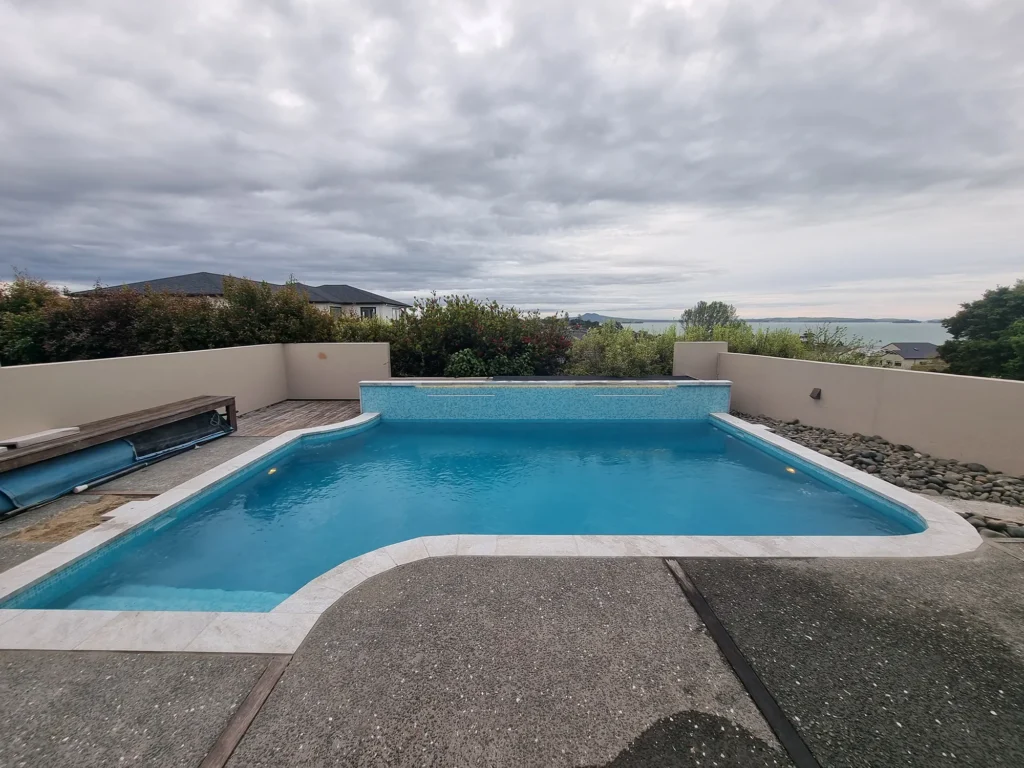
Recent pool renovations across Auckland
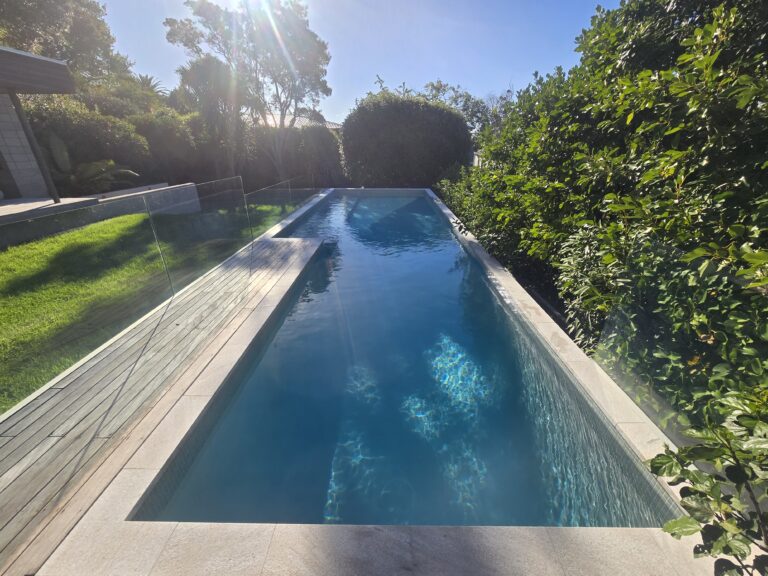
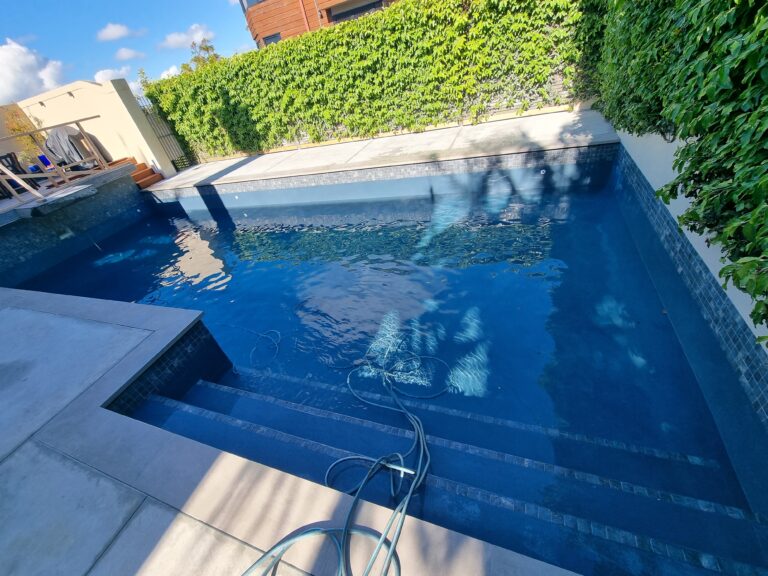
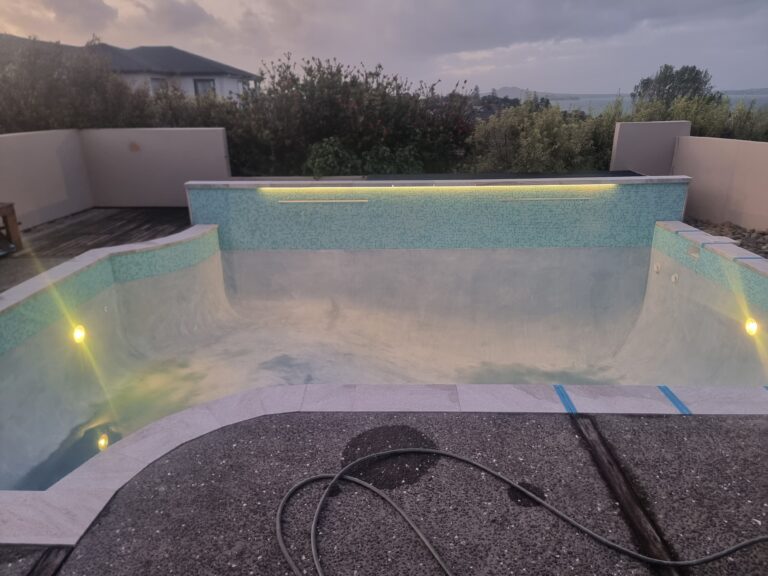
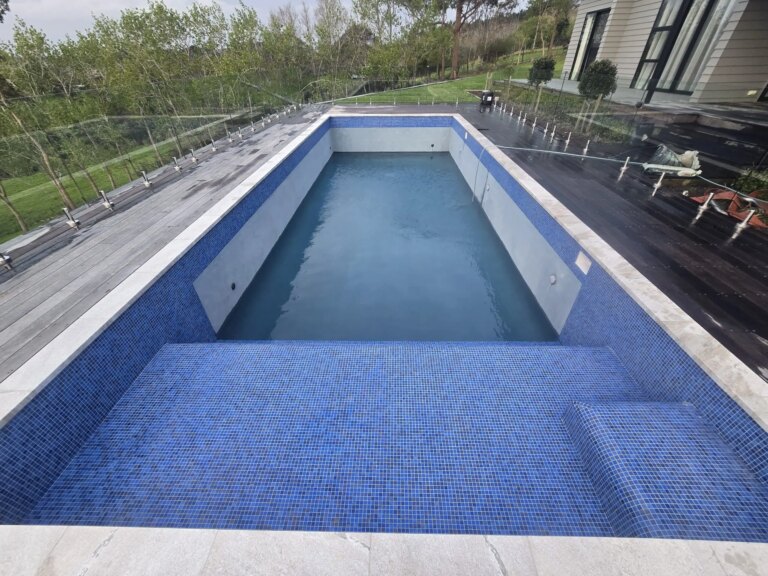
Real projects, real suburbs. Each one shows the scope, materials and finished result. Each area brings its own quirks too – North Shore properties often sit on clay with high water tables that need extra drainage, coastal pools in the eastern bays face faster salt wear on coping and grout, and steep central suburbs add access cost.
A concrete shell lasts 50 years or more, but the interior surface needs redoing every 10 to 15 years. Five signs tell you the time has come: the surface feels rough enough to graze skin, cracks wider than a hairline have opened up, staining will not shift with normal chemicals, you are losing more than 5mm of water a day beyond evaporation, or tiles and grout are lifting.
Not every crack means a full renovation. Cosmetic surface cracks are common and usually patched. Structural cracks, where both sides move when you press them, need a proper on-site assessment because they can point to shell movement in Auckland’s clay and volcanic soils.
One caution for older pools: anything built before 1990 may have asbestos in the original plaster, which has to be tested and safely removed before work starts. Our guide to the signs your pool needs renovation covers each one in more detail.
5 signs your pool needs renovation
Most concrete pool surfaces need redoing every 10-15 years.
1Surface rough enough to graze skin
2Cracks wider than a hairline
3Staining that won’t clean off
4Water loss over 5mm a day
5Tiles or grout lifting
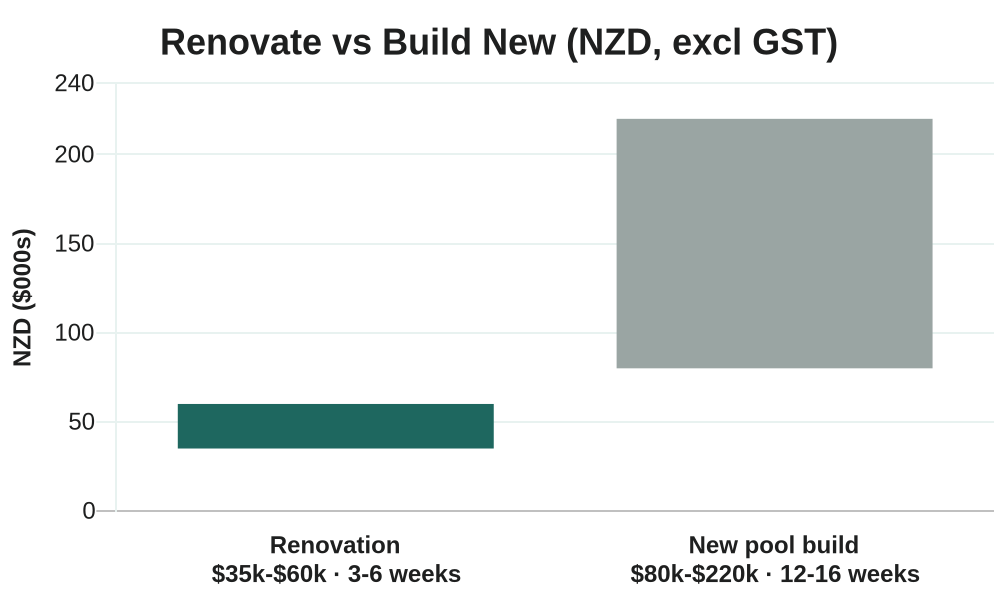
Renovating a sound shell costs less and takes less time than a new build.
Renovate or replace
Renovate or replace? Pool renovation versus a new pool
For most Auckland homeowners with a sound concrete shell, renovation wins on both cost and disruption. A renovation keeps your existing landscaping, fencing and plumbing, and can still deliver new tiling, coping, lighting and reshaped steps. A new build only makes sense when the shell has failed beyond repair, or you need a completely different size, shape or position in the yard.
Yes, but not the same way as concrete. A fibreglass shell can’t be fully tiled or replastered – only a concrete pool takes a full tiled interior or a new render finish, because the fibreglass surface flexes and won’t hold rigid coatings. Fibreglass renovation instead focuses on resurfacing the existing shell and upgrading coping, fittings and lighting.
Around a third of Auckland’s residential pools are fibreglass. If you want a fully tiled pool, that means a concrete shell – see our swimming pool tiling page.
Consent
Do you need consent for a pool renovation in Auckland?
Cosmetic work like resurfacing and retiling generally does not need building consent. Structural changes do, under the Building Act 2004, which includes repairing the shell, changing the pool’s depth or shape, or altering plumbing that runs through the shell wall. Consent fees from Auckland Council for pool work usually land between $1,000 and $3,000, and consented work needs a code compliance certificate once finished.
Do you need consent for a pool renovation?
Usually no consent
Resurfacing
Retiling
Cosmetic finishes
Consent needed
Shell repair
Changing depth or shape
Plumbing through the shell wall
Council fees $1,000-$3,000 · Pool fence minimum 1.2m
Pool fencing is a separate requirement, and it must meet a minimum 1.2 metre height at all times. A renovation is often the point where any non-compliant fencing has to be brought up to standard. A reputable renovation company will tell you upfront whether your project needs consent and handle the application. Our Auckland pool renovation consent guide explains what applies to your job.
$45k-$167ka pool’s contribution to property valuation (CoreLogic)
Property value
Does a pool renovation add value to your home?
A well-finished renovation can lift your property value, especially in premium Auckland suburbs where buyers expect a functional outdoor entertaining area. CoreLogic research puts a pool’s contribution at roughly $45,000 to $167,000 of a property’s valuation, with the strongest lift in higher-value suburbs. The reverse is just as true: a cracked or empty pool reads as a liability and can drag an offer down, because buyers price in the cost of fixing or removing it.
The strongest return comes from turning a visibly tired pool into a clean, modern finish. Our pool renovation cost guide looks at where the money goes and what it returns.
Best time to book
Best time to book a pool renovation in Auckland
The best time to book is autumn or winter, between March and July. Most people wait until August to November so the pool is ready for summer, which pushes wait times out to 4 to 8 weeks and leaves you less choice of dates. Booking in autumn for a late-spring start gives shorter 2 to 4 week lead times and warm, dry weather for the actual work. Our guide to the best time for a pool renovation explains how the seasons affect the result.
Best time to book a renovation
Book in autumn for a spring start.
Jan
Feb
Mar
Apr
May
Jun
Jul
Aug
Sep
Oct
Nov
Dec
Best time to book · 2-4 week lead Peak rush · 4-8 week lead
Choosing a company
How to choose a pool renovation company
Get at least three quotes and compare the scope of work, not just the bottom line. The cheapest quote is often cheap because it skips proper surface preparation, which is the single biggest factor in how long a renovation lasts. A reputable company offers a 5 to 10 year warranty on surface work, uses staged payments with no more than a 20 percent deposit, and gives you a written contract.
Ask to see pools they renovated two or three years ago, so you can judge how the finish has held up. Red flags include no fixed address, no past project photos, pressure to sign quickly, and any request for full payment before starting. Our guide to choosing a pool renovation company lists what to check.
Aftercare
Caring for your renovated pool
The first 28 days after a resurface set how long the finish lasts. New plaster and render surfaces need daily brushing for the first two weeks to stop calcium building up, with pH held between 7.2 and 7.6, and no automatic cleaners for the first month. After that, ongoing pool care runs about $1,200 to $2,500 a year in chemicals, servicing and testing. Consistent maintenance adds 3 to 5 years to any finish. Our pool aftercare guide sets out the routine.
Caring for your renovated pool - first 28 days
Daily brushing for the first 2 weeks
Keep pH between 7.2 and 7.6
No automatic cleaners for 4 weeks
Ongoing care $1,200-$2,500 a year
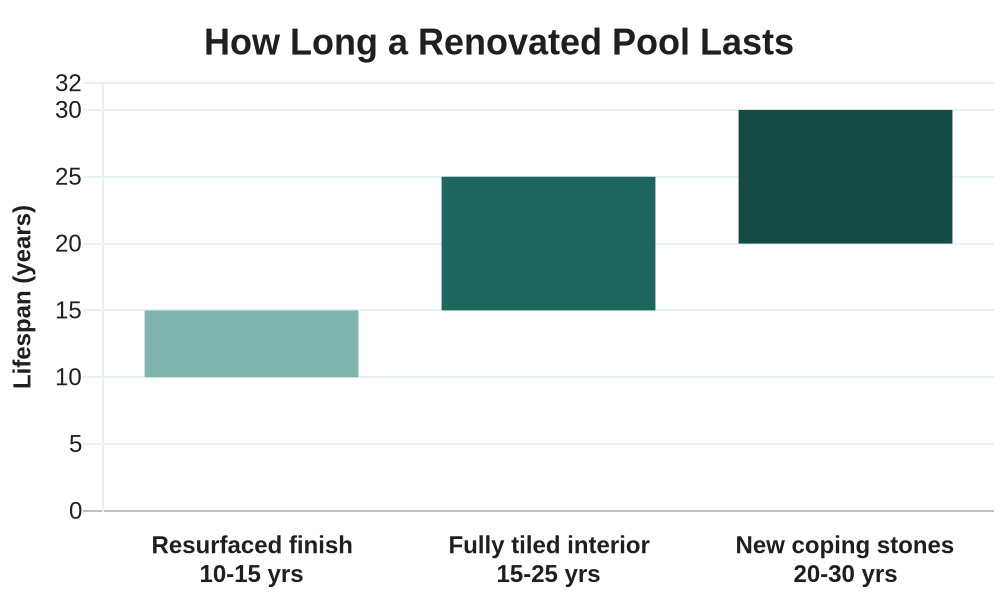
How long each part of a renovated pool lasts, with consistent maintenance.
A pool renovation in Auckland ranges from about $200-$320 per square metre for a resurface to $35,000-$60,000 for a full retile with new coping and resurfacing. Premium projects with a fully tiled spa or glass mosaic run $65,000-$85,000. See the full breakdown in our renovation cost guide.
A full concrete pool renovation takes 3 to 6 weeks from drain to first swim, while a resurface on its own takes 1 to 2 weeks. Weather can extend this because new surfaces need dry conditions to cure. Our renovation timeline week by week covers the stages.
Cosmetic work like resurfacing and retiling usually needs no consent, but structural changes to the shell do under the Building Act 2004, with council fees of roughly $1,000 to $3,000. Fencing must also meet the 1.2 metre standard. Check what applies in our pool renovation consent guide.
Yes, a pebblecrete pool can be resurfaced, either with fresh pebblecrete or by switching to a smoother render or full tile finish. Most pebblecrete surfaces last 10 to 15 years before they need redoing. Compare the finishes in our pool surface options.
Yes, but a fibreglass pool can’t be fully tiled or replastered – only concrete pools take a full tiled or rendered interior. Around a third of Auckland pools are fibreglass, and their renovation focuses on resurfacing the shell and updating coping and fittings. For a fully tiled pool you need a concrete shell – see our fully tiled pool interiors.
The clearest signs are a rough surface, cracks wider than a hairline, staining that will not clean off, and water loss beyond 5mm a day. Most concrete pool surfaces need renovating every 10 to 15 years. Our signs your pool needs renovation guide lists what to look for.
Renovation is almost always cheaper and faster than a new build, which starts around $80,000, while keeping your existing shell, landscaping and plumbing. A new pool only makes sense when the shell has failed or you need a different size or shape. Compare the two on our concrete pool builds page.
A well-maintained pool can add value in premium suburbs; CoreLogic research puts a pool’s contribution at roughly $45,000 to $167,000 of a property’s valuation, while a neglected pool can lower an offer. The finish and condition matter most. Our cost and return guide looks at the return.
Autumn and winter, March to July, are the best months to book, with shorter 2 to 4 week lead times than the spring rush. The work itself needs dry weather to cure properly. See why in our best time for pool renovation guide.
A resurfaced pool lasts 10 to 15 years, a fully tiled pool lasts 15 to 25 years, and new coping lasts 20 to 30 years depending on the material. Consistent maintenance adds 3 to 5 years to any finish. Our pool aftercare guide explains how to get there.
Trusted by Auckland Homeowners
From pool coping to complete renovation, our team has delivered stunning results across Auckland. See how we’ve turned our clients’ pool visions into reality.
Our Happy Clients
⭐⭐⭐⭐⭐ 5.0 from 35+ five-star reviews
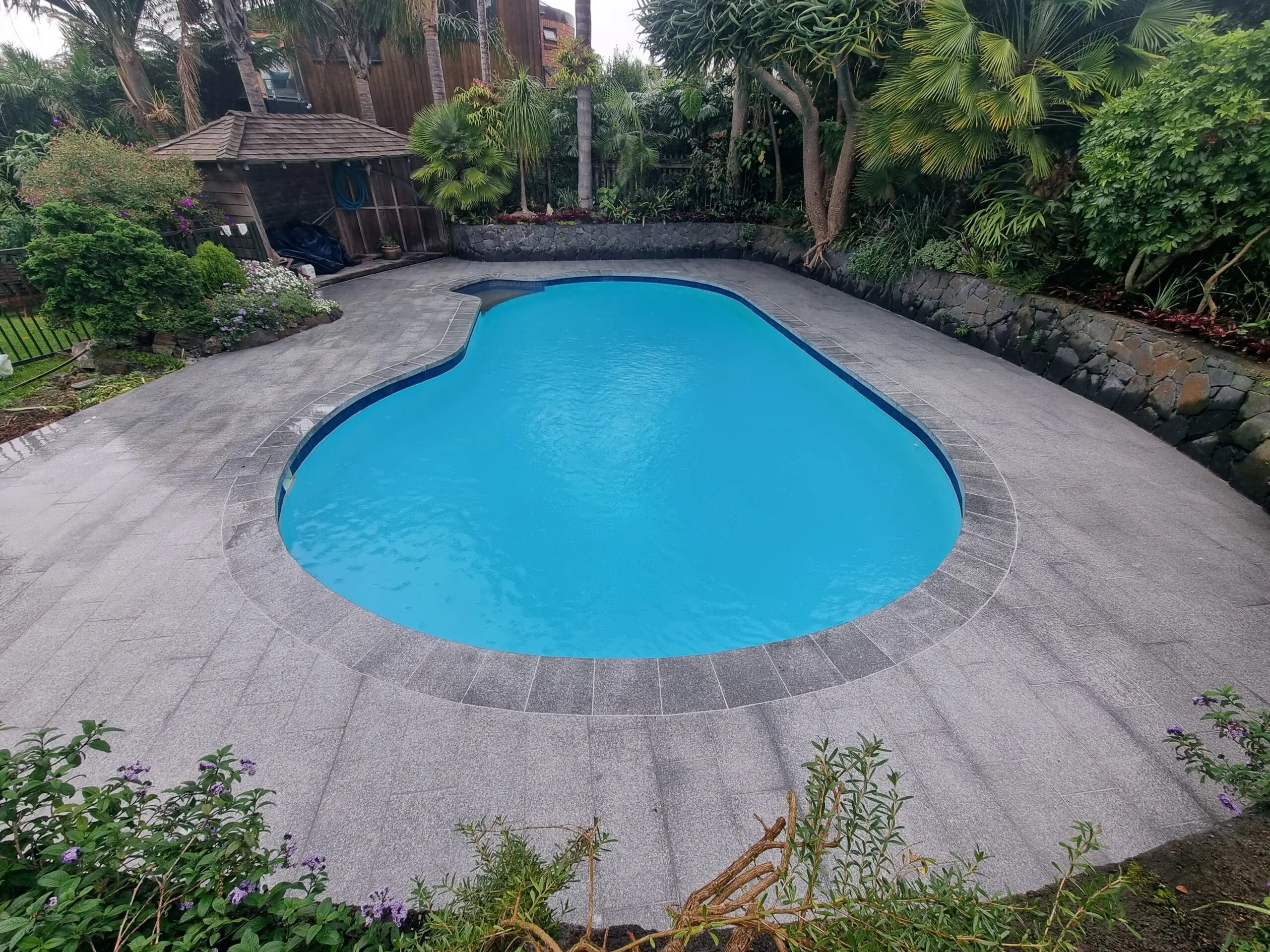
Mario and his team did an excellent job replacing the copings and tiles around a 30 year old kidney shaped pool. Large area and not an easy one with all the curves.
Their attention to detail was excellent but the most impressive part was how they engineered the flow of rain water on tiles around pool to drain naturally.
Mario and his team were a pleasure to deal with. Their knowledge and craftsmanship is exceptional.
Absolutely outstanding service and workmanship from Mario and his team. From the initial quote to the final installation we have been so impressed. Mario has by far been one of the best tradesman we have dealt with. He is prompt with his communication and incredibly honest and upfront. He is fantastic with advice and sharing his knowledge about the products and overall design which we really appreciated.
Mario did a fantastic job on the coping around the pool, it was a difficult job and was completed on time, at the cost quoted and the finished results looks amazing as you can se from the before and after pictures. Highly recommend
Our pool was not installed completely level. Mario helped to rectify issues, grinding and levelling to produce an amazing outcome. Mario is an honest, hardworking perfectionist which shows in his outstanding work. Thank you.
Mario and his team did an amazing job on our pool - great to work with, excellent comms, and gave us great options. Highly recommend
Get a free pool renovation quote
Tell us about your pool and we will give you a straight answer and a clear quote after a free on-site visit. No pressure, no full payment upfront.