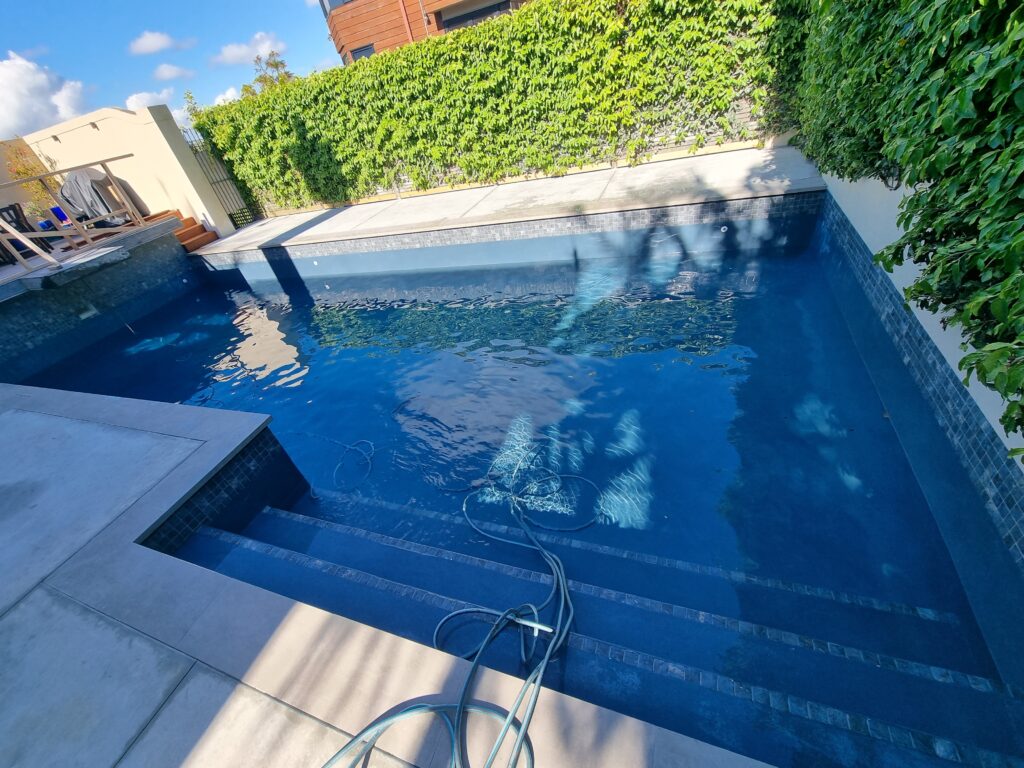
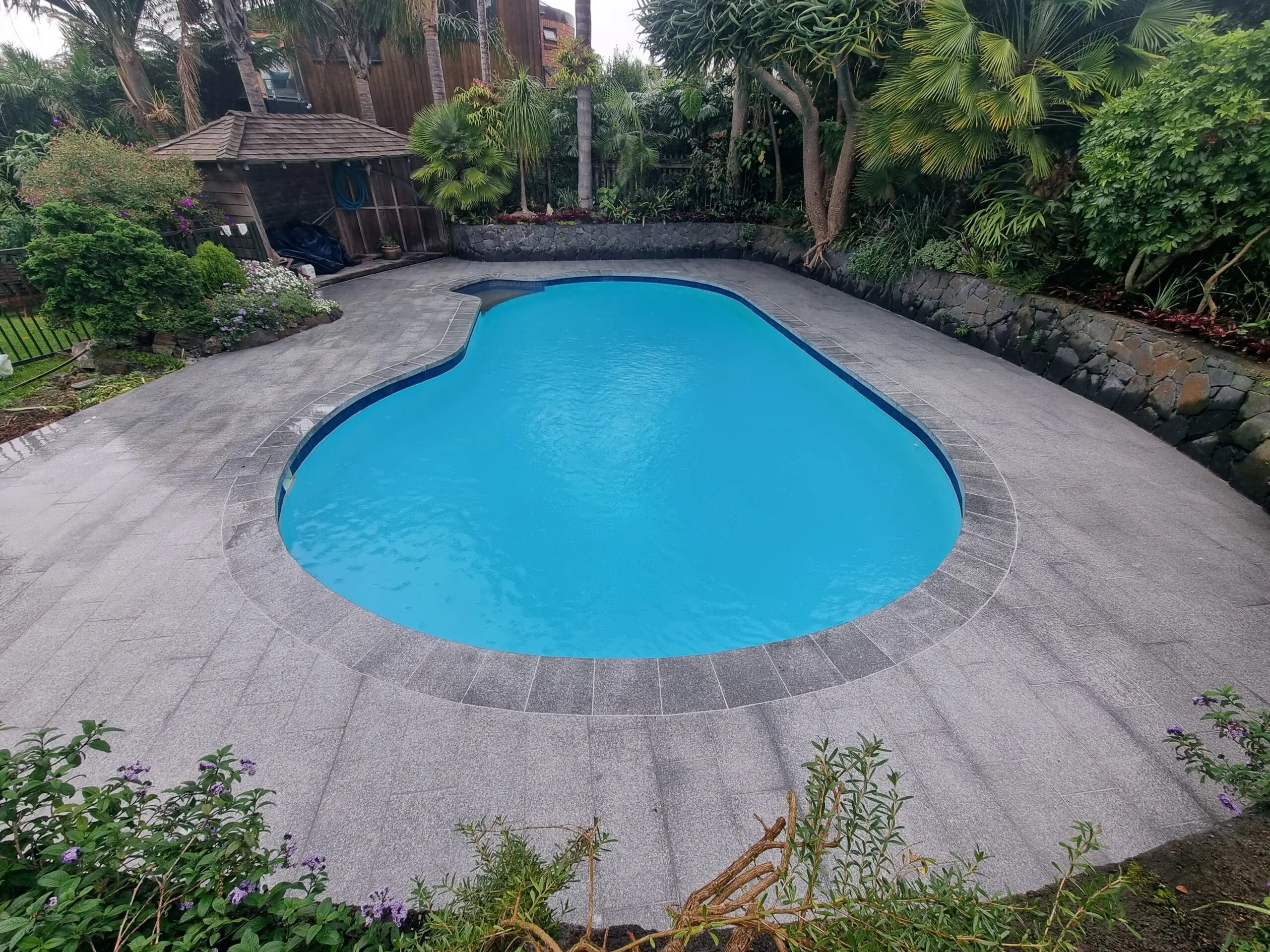
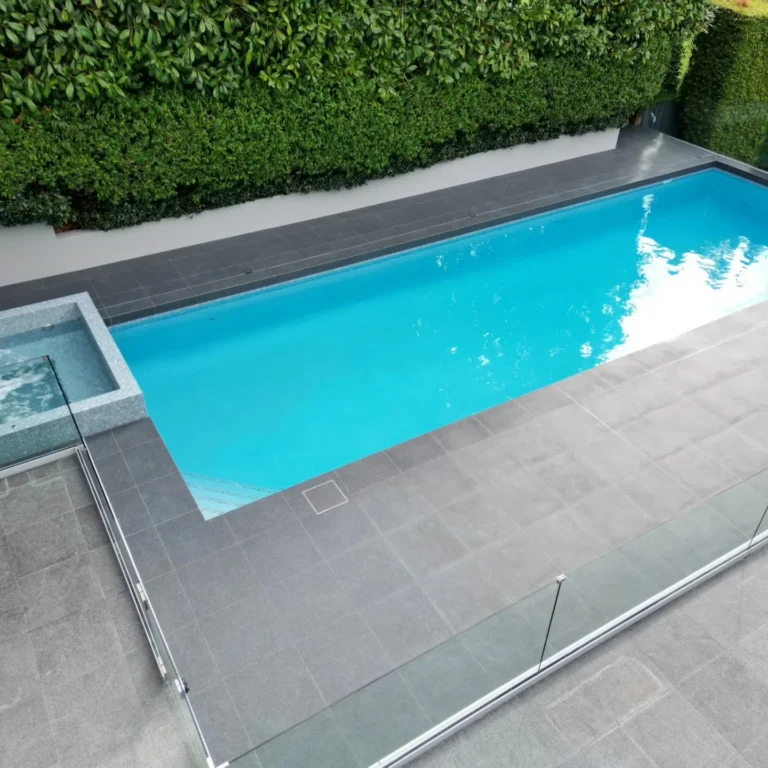
Artisan Stone & Tile paves and finishes the area around Auckland pools – concrete, travertine, porcelain and stone pavers, non-slip underfoot and built to drain. Every surround goes over a proper concrete base, so it stays put on Auckland’s clay. Honest quotes and a free site visit before you commit.
5.0 ★ on Google · 35+ five-star reviews · Non-slip · Built to drain · Laid over concrete · Auckland-wide
5.0 ★ on Google · 35+ reviewsLaid over a 100mm concrete baseNon-slip as standardConcrete from ~$300/m² · pavers $450-600Built to drain
Trusted by leading Pool Companies
In short
Your pool surround is the paving, deck and patio around the pool - the surface you walk on and entertain from. We lay it in finished concrete or in porcelain, travertine and stone pavers, and we build in the fall and drainage so water runs off instead of pooling. Non-slip comes as standard. The one thing we never skip is the base: every paver goes over a 100mm concrete base, because Auckland's clay ground moves and cracks anything laid on compacted aggregate. Finished concrete runs about $300 per square metre, and pavers $450 to $600, all in.
The basics
What are pool surrounds?
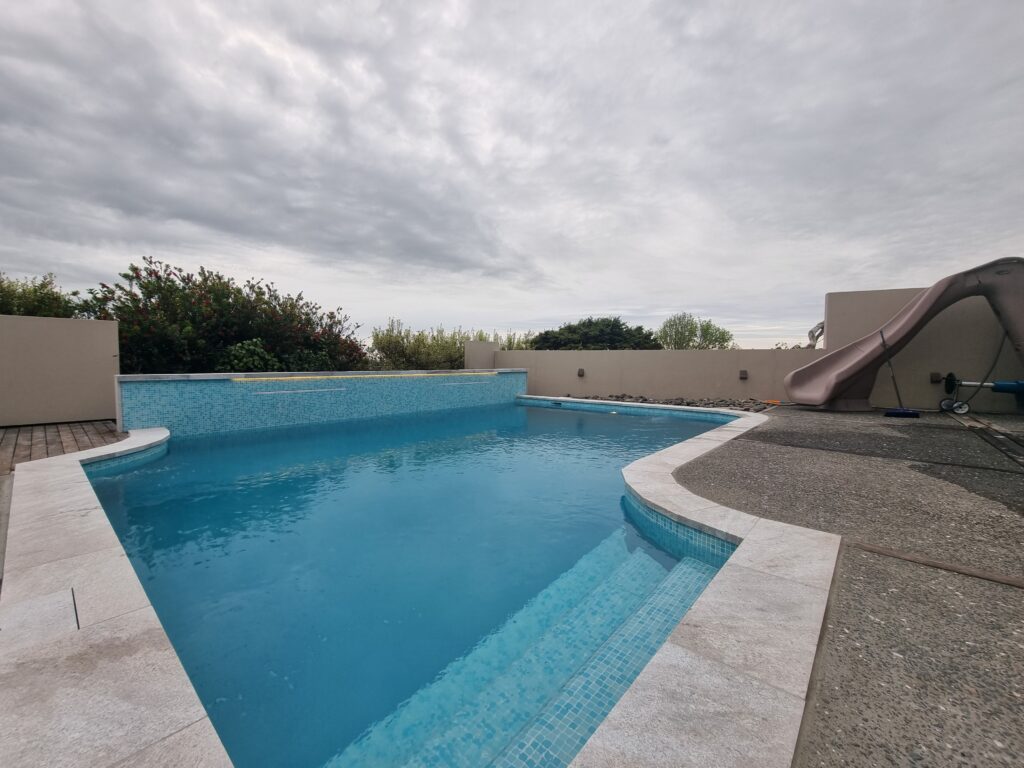
Your pool surround is everything paved around the pool – the deck, the patio, the path, the entertaining area. It is the surface underfoot, the frame around the water, and the part of the pool area you actually use most.
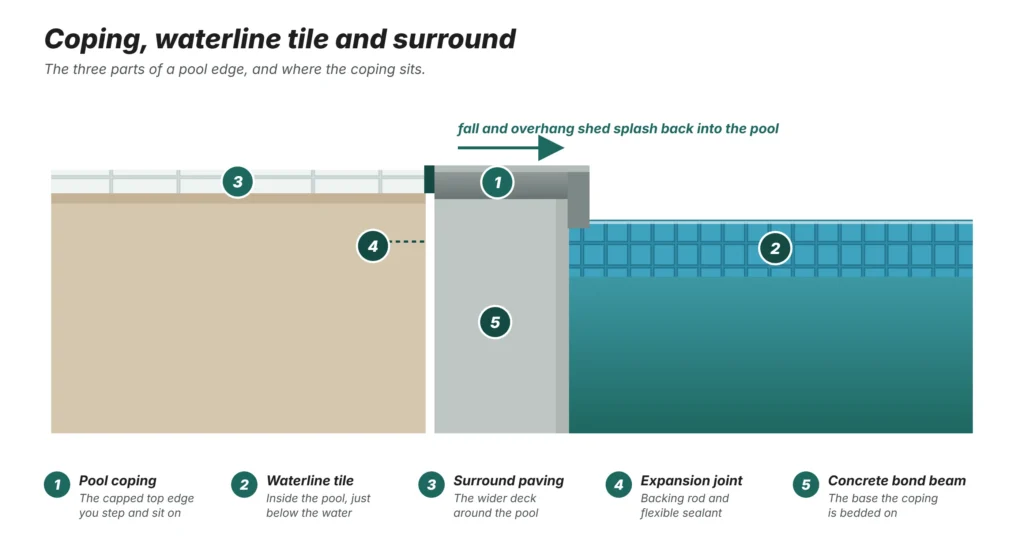
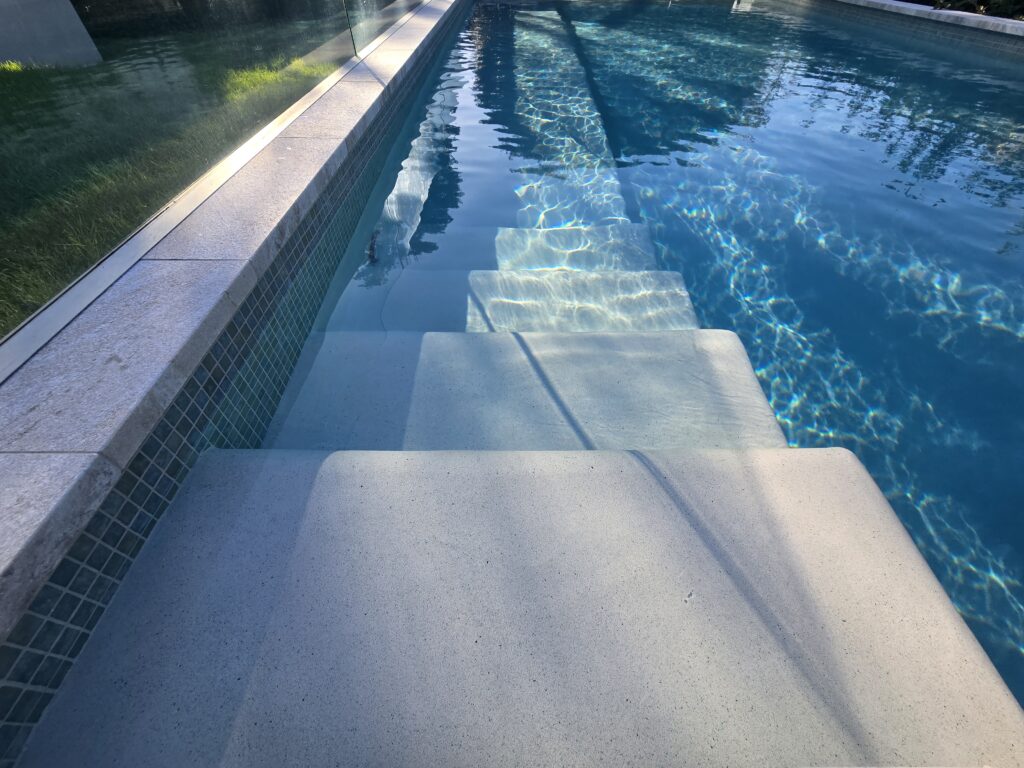
It helps to keep three things separate. The pool coping is just the narrow capped edge at the very lip of the pool. The waterline and interior tiling sits inside, below the water. The surround is everything beyond the coping – the wider paved zone.
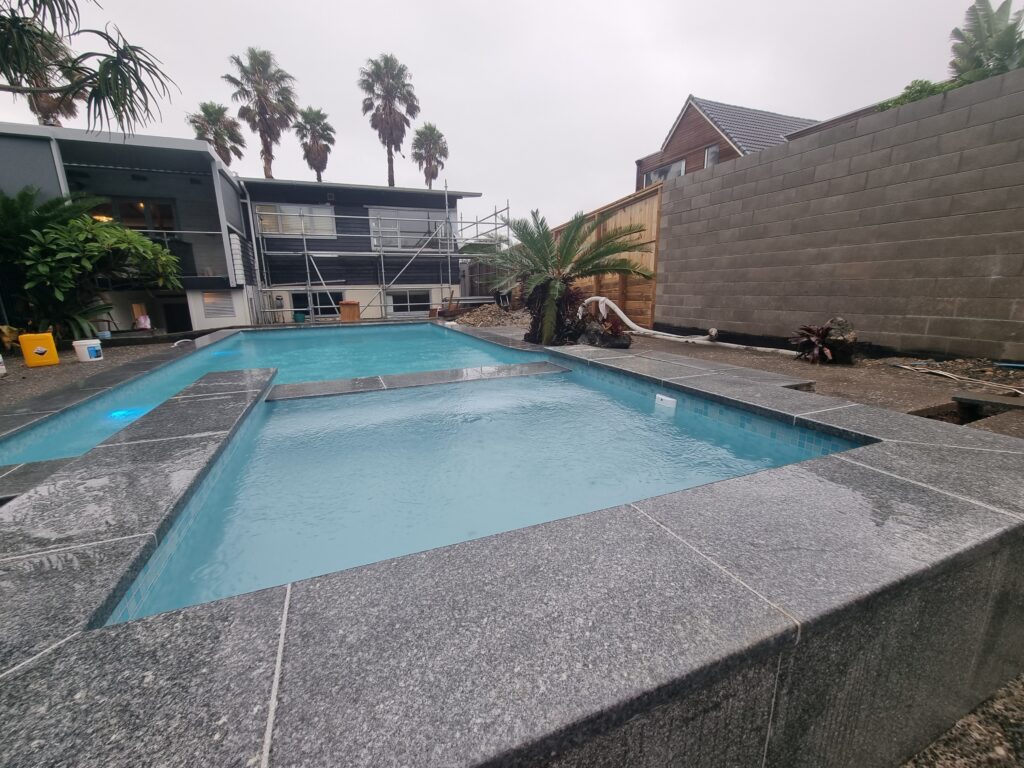
That is the work we do here: we lay and finish the surround in concrete or pavers, get the levels, fall and drainage right, and tie it into the pool and the house. We also clad pool feature and retaining walls in matching stone where a job calls for it. A new surround is often part of a wider pool renovation, done while the area is already open.
Materials
Choosing your pool surround material
The material sets the look, the grip and the cost. Most Auckland surrounds come down to concrete or pavers, and there is a clear pick for every budget.
Finished concrete is poured in place and finished for looks and grip. Exposed aggregate shows the stone in the mix and gives natural texture. Honed concrete is ground smooth then sealed. Coloured and decorative-cut concrete lets you set the tone and break up the slab. It is joint-free, hard-wearing and the most cost-effective option, and the finish is where the grip and the character come from.
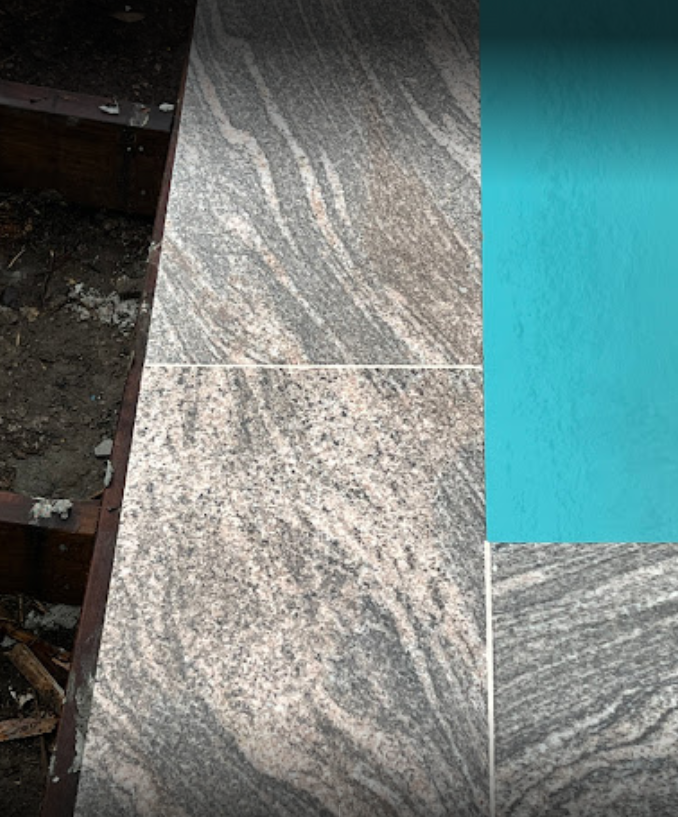
Natural stone pavers are the premium end, and travertine leads it. Travertine, including silver travertine, gives that resort look and stays cooler underfoot, though it needs sealing to keep salt and stains out. Bluestone is dense, salt-tolerant and naturally non-slip. Stone is laid as pavers over the base.
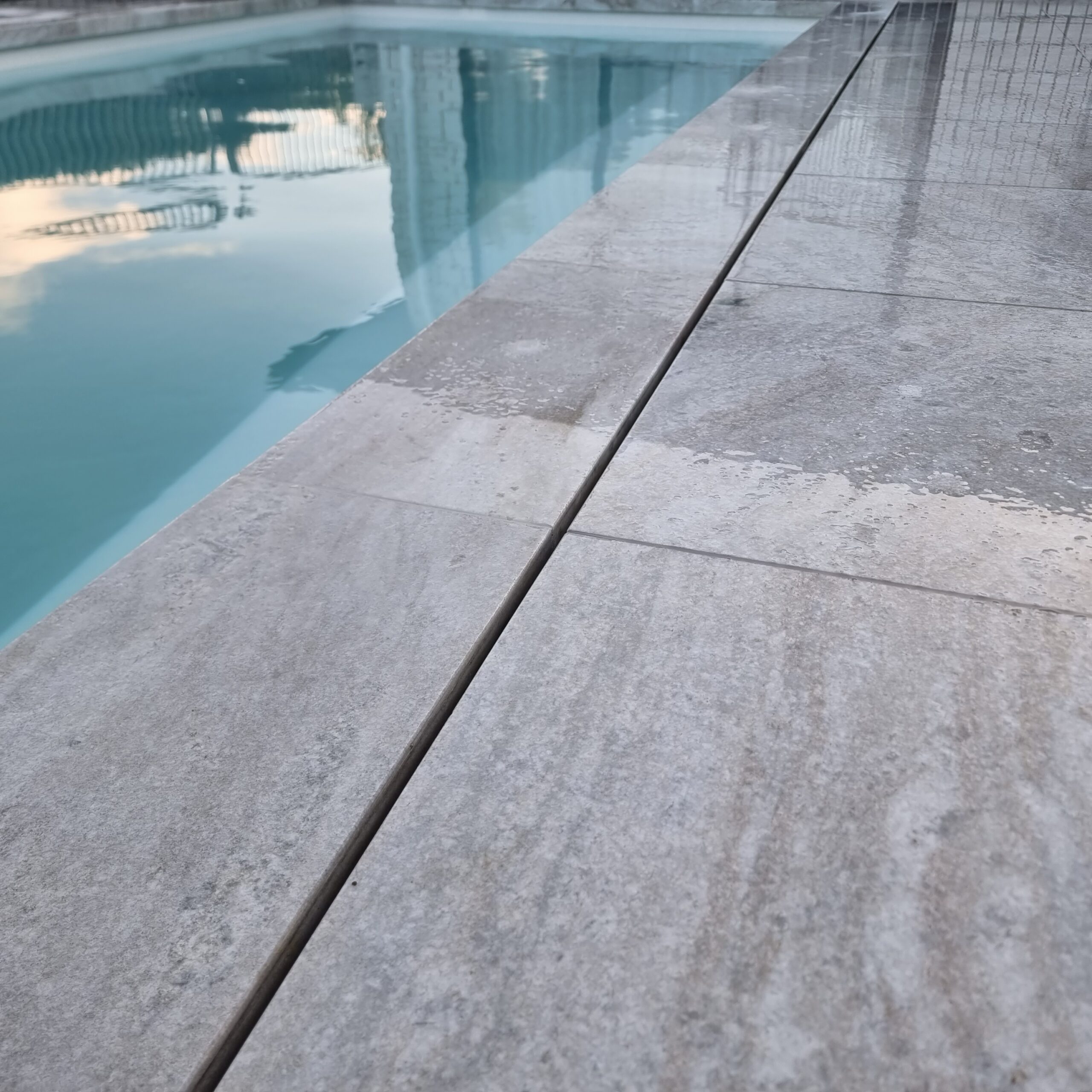
Porcelain pavers are what we lay most. They are low-maintenance, hold their colour, come in slim large formats, and shrug off frost, salt and stains without the sealing that natural stone needs.
Grip matters more around a pool than anywhere else on the property, and it is a finish choice as much as a material one.
Aim for a textured or honed surface rated R11 or higher, which is the level recommended for wet pool-area surfaces. Honed stone, textured and exposed-aggregate concrete, flamed granite and grip-rated porcelain all give reliable grip without shredding bare feet. What you avoid is polished or glazed surfaces – they look sharp dry and turn dangerously slick the moment they are wet.
The same material can be slip-safe or slippery depending on the finish, so we match the finish to the fact that this surface spends its life wet. Pool fencing and safety rules sit with Building Performance New Zealand, and our non-slip pool surfaces guide compares the options.
Built to drain
Getting the fall and drainage right
This is the part nobody sees and every surround that lasts gets right. The surface is laid to a slight fall away from the pool and the house, with channel or strip drains where the site needs them, so rainwater and splash run off rather than sitting on the surface or tracking back toward the pool and the building.
Poor fall is the number-one reason surrounds go slippery, stained and algae-prone within a few years. Water that cannot drain pools in low spots, feeds algae in the shade, and works into joints. Getting the levels and drainage engineered from the start is quietly the most important thing we do on a surround, and it is where a cheap job shows its age fastest.
Both work well, and the honest answer depends on your look and budget. Here is the straight comparison.
Finished concrete is laid as one continuous surface, fast to lay and the most cost-effective, with few joints for weeds to find. The trade-off is that any cracking shows, and the colour and finish are set once it is poured. Pavers – porcelain or stone – give a premium look, come in a huge material range, can be lifted and replaced individually, and offer natural non-slip options. The trade-off is more joints and a higher spend.
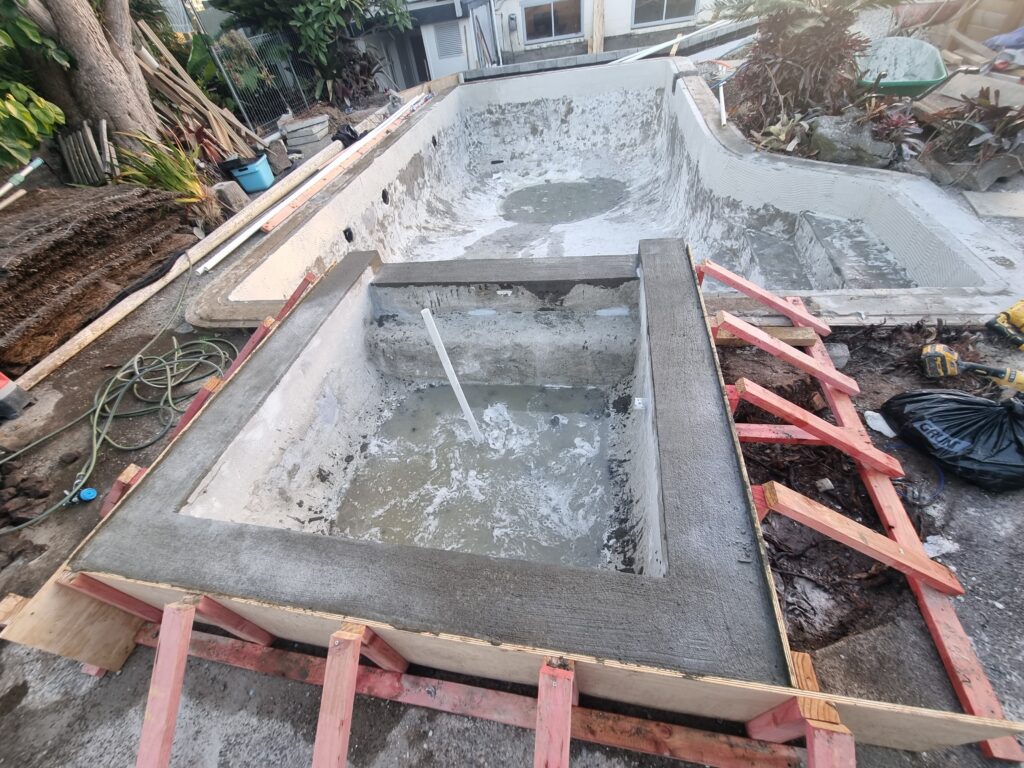
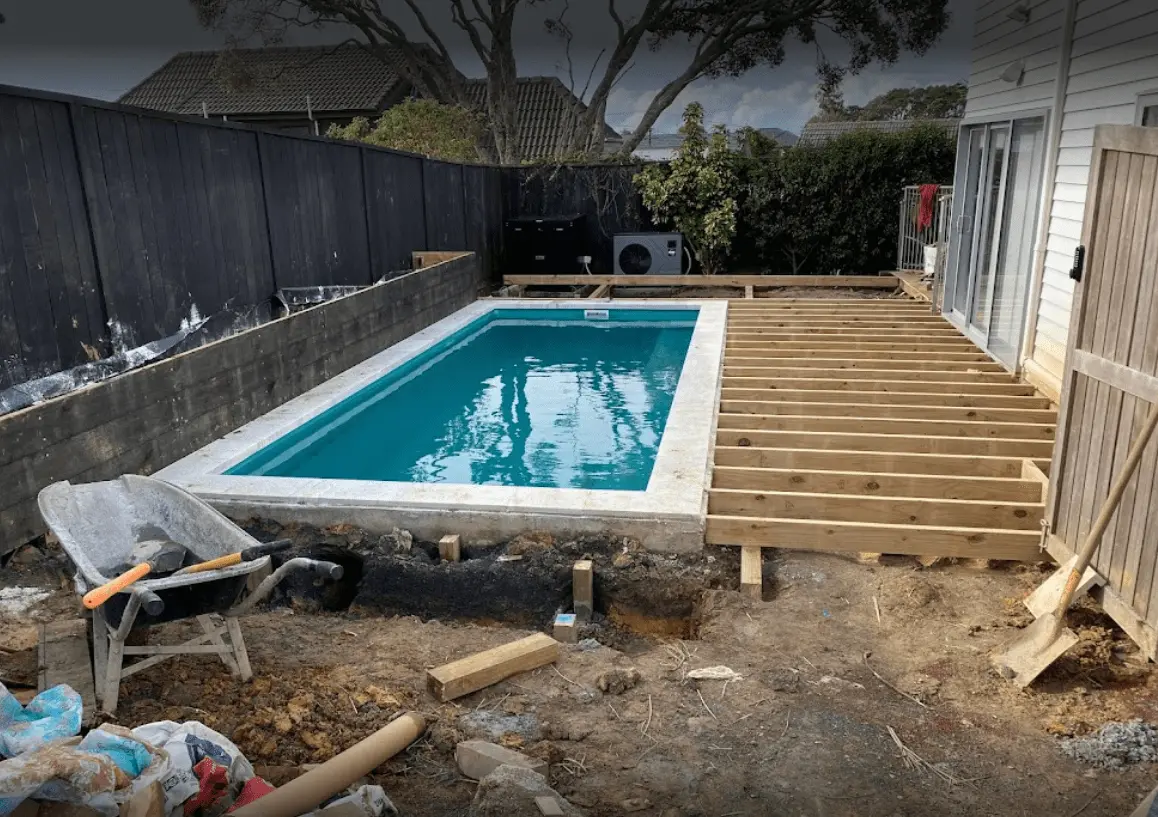
One thing does not change between them: on a paver job, the pavers go over a 100mm concrete base either way. In New Zealand, laying pavers straight onto compacted aggregate is asking for trouble, because our clay ground moves with the seasons and pulls a compacted-base surround apart. So the real choice is finished concrete as the surface, or pavers over concrete – not pavers instead of concrete.
Aspect
Finished concrete
Pavers (porcelain or stone)
Cost
About $300 per m² all-in
$450 to $600 per m², natural stone a bit more
Look
One continuous surface, colour and decorative cuts
Pool surrounds are priced per square metre of the area laid, and the rate turns on the material and the finish.
Surround
What it includes
Price (excl GST)
Finished concrete
100mm base, colour, decorative cuts, sealer
~$300 per m²
Porcelain pavers
100mm concrete base, tile supply, laying
$450-$600 per m²
Travertine / natural stone
As above, plus sealing
A bit more than porcelain
Swipe the table sideways to see every column.
The reason these sit above a bargain paving quote is the base. Every rate above includes a 100mm concrete base under the surface, plus supply and laying. A compacted-aggregate surround is cheaper on day one and cracks on Auckland clay within a few seasons, so it costs more in the end. Area, access and how much drainage and prep the site needs move the final number.
Prices are a guide only, exclude GST, and are confirmed at a free site visit. Our pool surround cost guide breaks pricing down by material.
The process
How we lay a pool surround
Every surround follows the same core sequence, whether it is finished concrete or pavers.
The base and the fall are where a surround is won or lost, which is why we spend the most care there and never lay pavers over bare compacted ground. A surround is usually done as part of a wider renovation, while the pool area is already open. Our pool surround design ideas show finished projects across Auckland.
How we lay a pool surround
The base and the fall are where a surround is won or lost.
1Assess & set outlevels + fall
2Prepare the base100mm concrete
3Drainagechannel drains
4Lay the surfaceconcrete or pavers
5Joint, clean & seal
Never over bare compacted ground · NZ clay moves and cracks it.
Recent work
Recent pool surround projects across Auckland
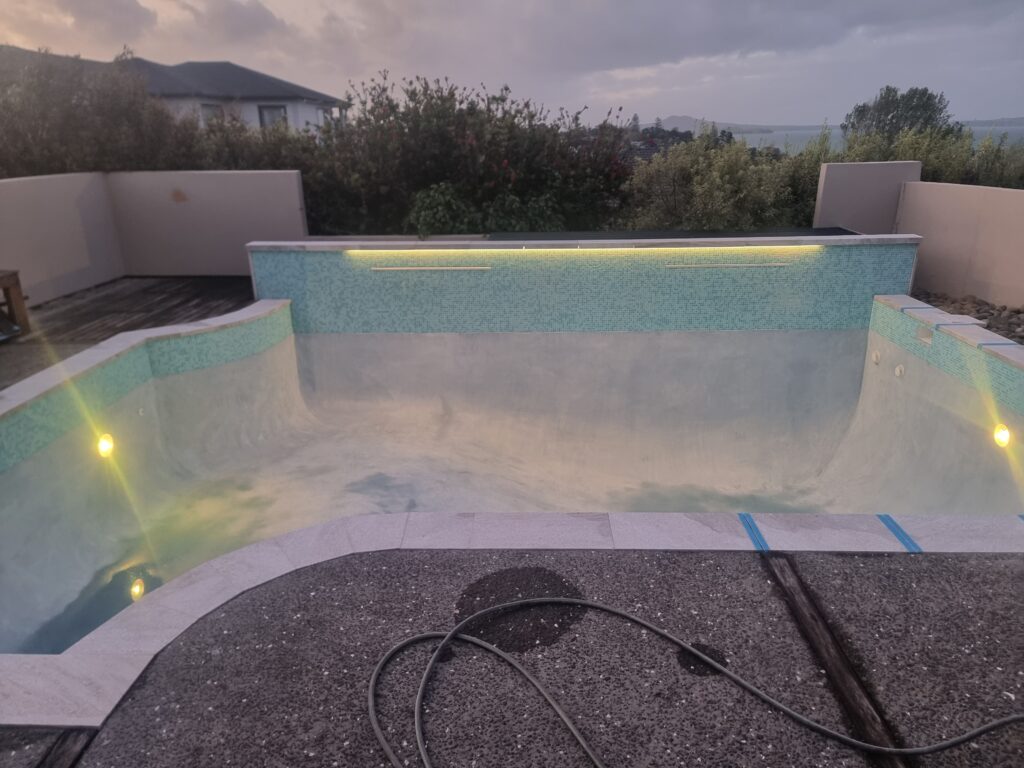
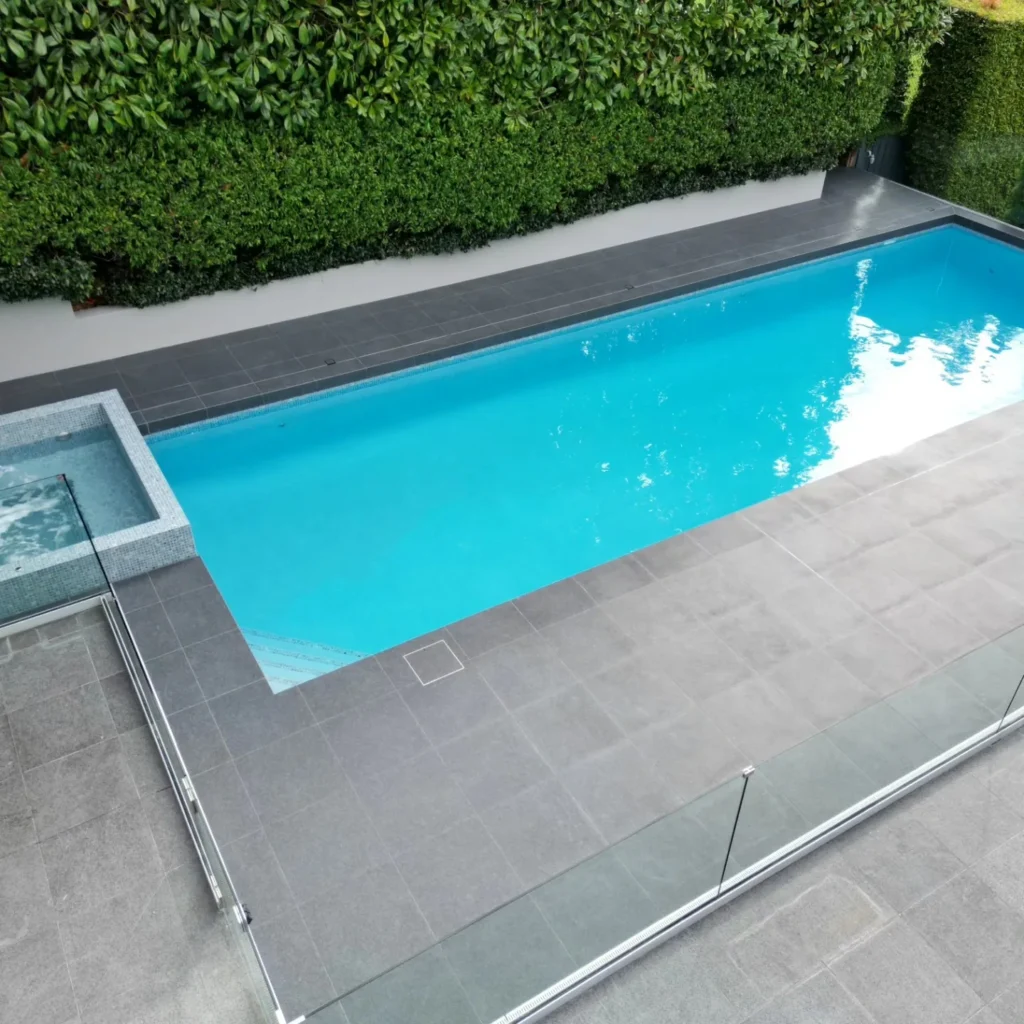
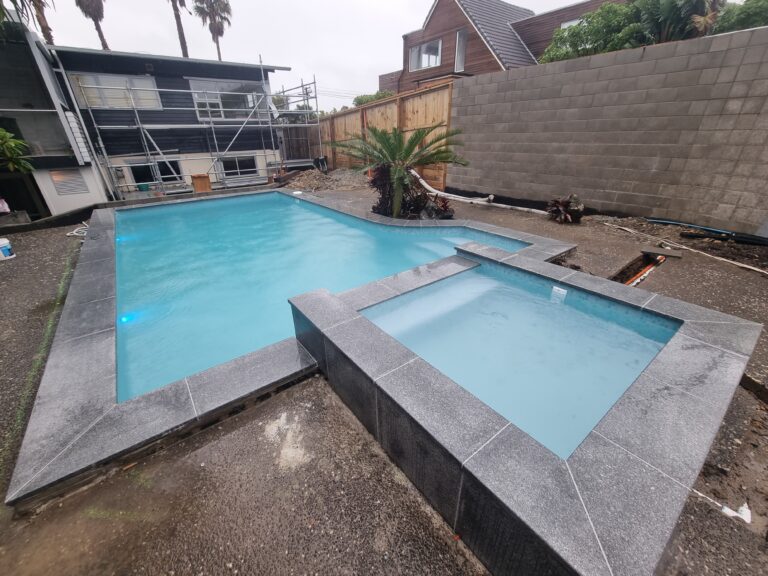
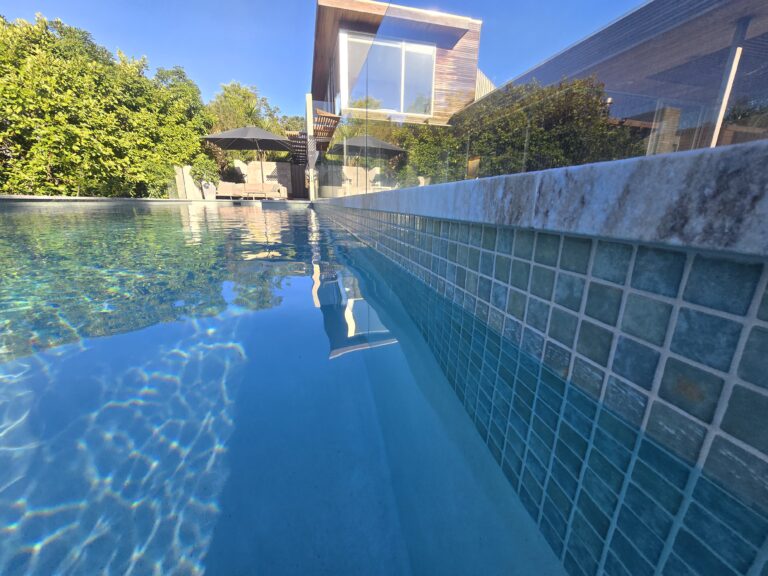
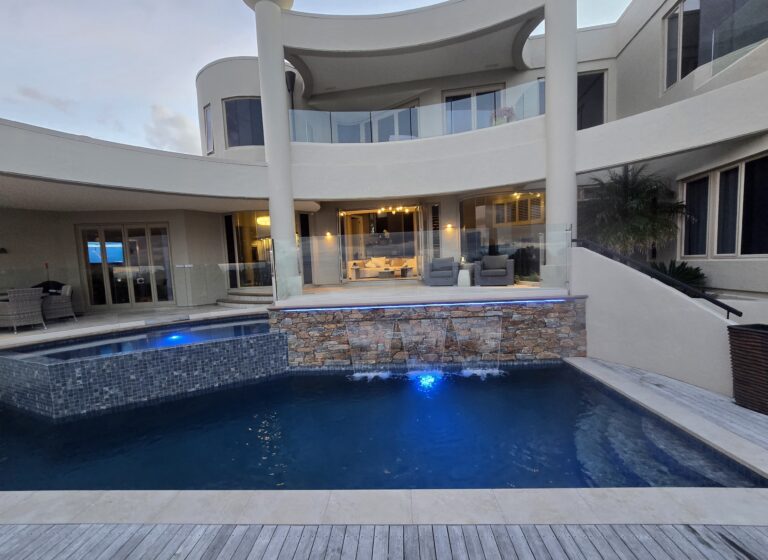
Real surrounds, real Auckland suburbs. Each shows the material, finish and finished result.
From pool coping to complete renovation, our team has delivered stunning results across Auckland. See how we’ve turned our clients’ pool visions into reality.
Our Happy Clients
⭐⭐⭐⭐⭐ 5.0 from 35+ five-star reviews
Mario and his team did an excellent job replacing the copings and tiles around a 30 year old kidney shaped pool. Large area and not an easy one with all the curves.
Their attention to detail was excellent but the most impressive part was how they engineered the flow of rain water on tiles around pool to drain naturally.
Mario and his team were a pleasure to deal with. Their knowledge and craftsmanship is exceptional.
Absolutely outstanding service and workmanship from Mario and his team. From the initial quote to the final installation we have been so impressed. Mario has by far been one of the best tradesman we have dealt with. He is prompt with his communication and incredibly honest and upfront. He is fantastic with advice and sharing his knowledge about the products and overall design which we really appreciated.
Mario did a fantastic job on the coping around the pool, it was a difficult job and was completed on time, at the cost quoted and the finished results looks amazing as you can se from the before and after pictures. Highly recommend
Our pool was not installed completely level. Mario helped to rectify issues, grinding and levelling to produce an amazing outcome. Mario is an honest, hardworking perfectionist which shows in his outstanding work. Thank you.
Mario and his team did an amazing job on our pool - great to work with, excellent comms, and gave us great options. Highly recommend
The paved area around a pool is the pool surround (also called the pool deck or patio). The narrow capped edge right at the pool’s lip is the coping, a separate part. The surround is everything beyond that edge.
The best pool paving is non-slip and drains well. Finished concrete suits most budgets; porcelain and natural stone pavers give a premium look. All should be laid over a concrete base with a fall for drainage.
There is no single best – it comes down to look, budget and grip. Finished concrete is the value pick, porcelain the low-maintenance all-rounder, and travertine or bluestone the premium natural-stone option.
Finished concrete runs about $300 per square metre, and porcelain pavers $450 to $600, both excluding GST and including the concrete base. Natural stone sits a little higher again. Your exact cost is confirmed at a free site visit.
Finished concrete is cheaper, joint-free and fast; pavers give a premium look, more material choice and individual replaceability. Either way, pavers go over a concrete base – not straight onto compacted ground.
A honed or textured finish rated R11 or higher – honed stone, textured or exposed-aggregate concrete, or grip-rated porcelain. Avoid polished or glazed surfaces, which turn slick when wet.
Yes. A surround is laid to a slight fall away from the pool and house, with channel drains where needed, so rainwater and splash run off. Poor drainage is the main cause of slippery, stained, algae-prone surrounds.
Often yes. A sound existing concrete slab can act as the base for new pavers, provided it is level, stable and drains properly. We assess the old surface at the site visit before recommending an overlay.
Because Auckland’s ground is mostly clay, which moves with the seasons. Pavers on compacted aggregate shift and crack within a few years, so we always lay over a 100mm concrete base. It costs more upfront and lasts far longer.
A finished, non-slip, well-drained surround turns the pool area into usable outdoor living space, which buyers value. A cracked or slippery surround does the opposite and reads as deferred maintenance.
Aftercare
Caring for your pool surround
A good surround is low effort. Sweep and rinse it regularly, and reseal natural stone or concrete periodically to keep salt and stains out. Watch for algae in shaded or damp spots – that is usually a drainage issue as much as a cleaning one, so if it keeps coming back, the fall is worth checking. Chlorine and salt splash sit on the surface around the pool, so a rinse after heavy pool use helps. Our guide to sealing and cleaning pool pavers sets out a simple routine.
Get a free pool surround quote
Tell us about your pool area and we will give you a straight answer and a clear quote after a free on-site visit. No pressure, no full payment upfront.