
Straight answers to the questions Auckland pool owners ask us most – on cost, consent, tiling, coping and concrete pool builds.
In short: This page answers 20 of the most common questions on pool renovation, tiling, coping and concrete pool builds in Auckland. Each answer links to a detailed guide if you want the full story. For a quote on your own pool, call 021 123 8672.
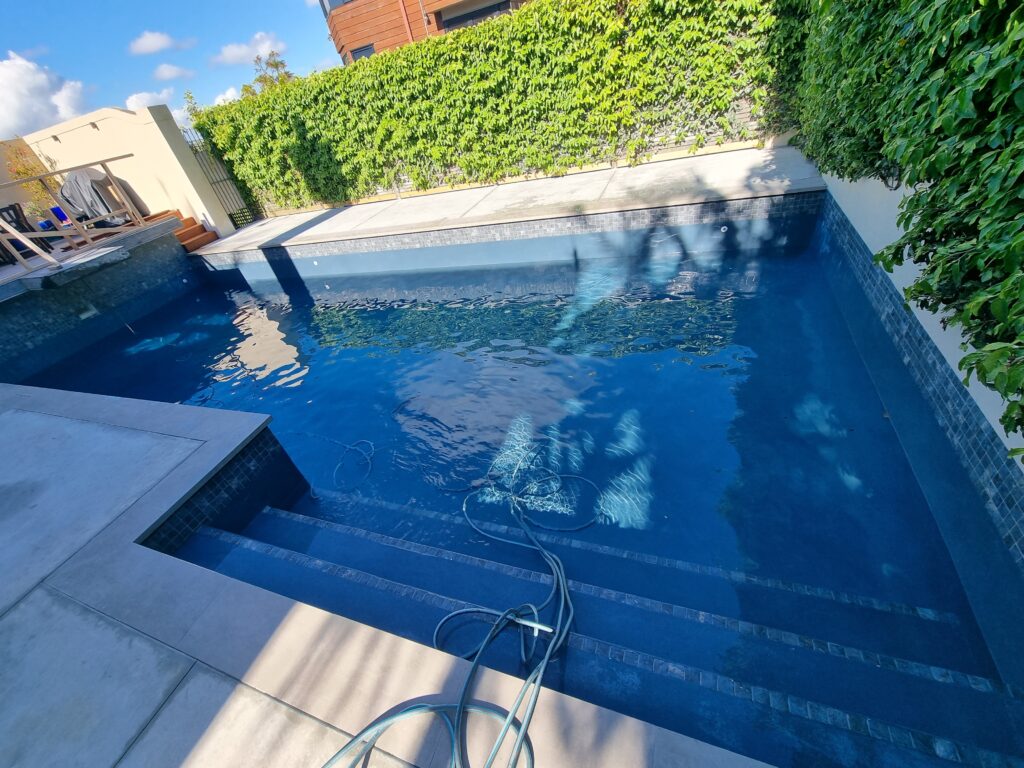
A pool renovation in Auckland typically costs between $25,000 and $65,000, depending on whether you are resurfacing, retiling, or replacing coping and surrounds. Full concrete pool renovations with new tiling and stonework usually land in the $45,000 to $65,000 range. See the full breakdown in our Auckland pool renovation cost guide.
A new concrete pool in Auckland generally starts around $70,000 and rises past $120,000 for larger pools with spas, tiling and landscaping. The final figure depends on excavation access, pool size and finish. Our concrete pool builds in Auckland page explains what drives the cost.
Replacing pool coping in New Zealand typically costs between $8,000 and $20,000, driven mainly by the stone you choose and the length of the pool edge. Natural stone and porcelain drop-face coping sit at the higher end. Compare the options in our pool coping cost guide.
Pool tiling in Auckland usually ranges from $15,000 to $40,000 for a full waterline-to-floor tile, depending on the tile and pool size. Glass mosaic tiling from brands like Ezarri and Bisazza sits at the premium end. See a full cost breakdown in our pool tiling cost in Auckland guide.
Cosmetic pool renovations like resurfacing or retiling usually do not need building consent, but structural changes, new fencing or a new pool do. Auckland Council requires compliant pool fencing with a minimum 1.2 metre height at all times under the Building Act. Check what applies to your project in our Auckland pool consent guide.
Most Auckland pool renovations take 3 to 5 weeks from drain to refill, depending on scope and weather. Retiling and new coping add time compared with a straight resurface. See a week-by-week timeline in our pool renovation timeline guide.
Common signs a pool needs renovation include cracked or stained plaster, loose or missing tiles, rough surfaces underfoot, and coping that has lifted or cracked. Most concrete pools need resurfacing every 10 to 15 years. Our signs your pool needs renovation guide covers what to look for.
Before a pool renovation, confirm your budget, choose your tile and coping finishes, and check access for machinery and materials. Booking 2 to 3 months ahead is wise over the busy spring and summer period. Use our pool renovation checklist to get ready.
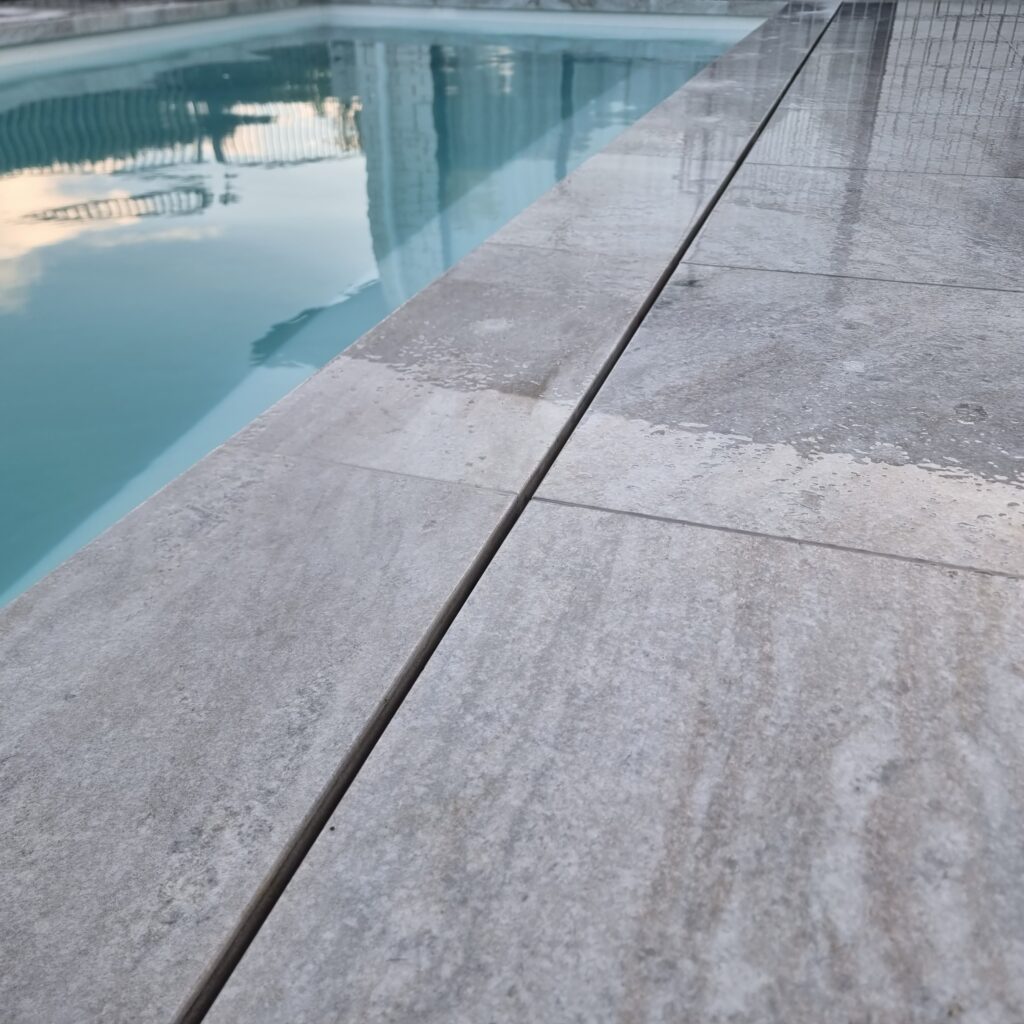
Concrete pools offer full design freedom and last decades, while fibreglass pools install in as little as 2 to 3 weeks and cost less upfront. For custom shapes, full tiling and infinity edges, concrete is the stronger choice. Weigh both up in our concrete vs fibreglass pools comparison.
Shotcrete and gunite are both sprayed concrete methods: shotcrete is mixed wet before spraying, while gunite is mixed with water at the nozzle. Both cure to a strong pool shell of around 30 MPa when applied by a skilled crew. Our shotcrete vs gunite guide explains which suits your project.
Drop-face coping has a square front edge that overhangs the pool wall by around 30 to 40mm for a sharp, modern look, while bullnose coping has a rounded, softer edge. Drop-face suits contemporary tiled pools; bullnose suits traditional and family pools. See both in our drop face vs bullnose coping guide.
Yes, a fibreglass pool can be tiled, but it needs correct surface preparation and a flexible, waterproof bonding system to hold on the smooth shell, which adds roughly 1 to 2 weeks to the job. Full tiling is more common on concrete pools, where tiles bond directly to the render. Learn how it works in our swimming pool tiling in Auckland guide.
The best pool coping materials for New Zealand conditions are natural stone (granite, travertine, bluestone) and porcelain, chosen for slip resistance and durability against salt and chlorine. Porcelain drop-face coping is the most popular modern choice among the four main options. Compare them in our pool coping materials guide.
The best pool tiles for New Zealand are fully vitrified glass mosaics and porcelain, which resist fading, frost and chemical wear. Glass mosaic brands like Ezarri and Bisazza carry a water absorption rate under 0.5%, making them ideal for constant immersion. See the full range in our pool tile types guide.
Popular pool surround options for Auckland homes include porcelain paving, natural stone and exposed aggregate concrete, all chosen for grip and heat resistance underfoot. Porcelain pavers stay noticeably cooler in summer sun than darker natural stone. Explore the options on our pool surrounds in Auckland page.
The best non-slip pool surrounds use textured porcelain, honed natural stone, or broom-finished concrete with a slip rating of R11 or higher. This rating matters most on steps and wet zones where falls happen. Our non-slip pool surrounds guide explains the ratings.
Pebblecrete is a pool finish made from small stones set in cement, giving a hard-wearing, textured surface that lasts around 15 to 20 years. It is durable but rougher underfoot than modern polished renders or tiles. Read more in our pebblecrete pool surfaces guide.
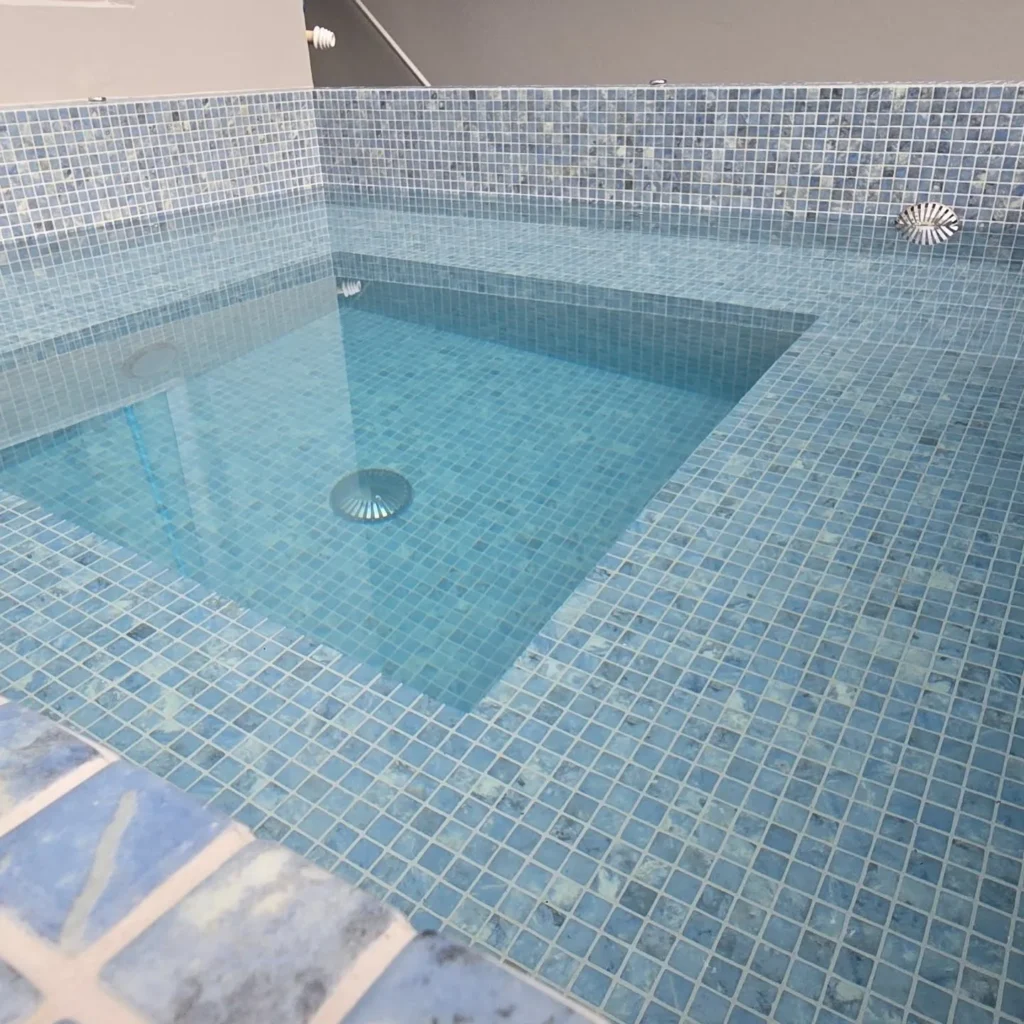
Maintaining a concrete pool means keeping the water balanced, brushing the walls weekly, and checking chlorine and pH at least twice a week over summer. Well-maintained render surfaces last 10 to 15 years before resurfacing. See a full routine in our concrete pool maintenance guide.
There are four common concrete pool problems: surface cracking, plaster staining, tile delamination, and leaking around fittings. Most are fixable during a resurface if caught early. Our concrete pool problems guide explains the warning signs and fixes.
A well-built, well-maintained pool can add value to a New Zealand home, particularly in warmer regions and higher-value suburbs, with industry estimates of a 5 to 8% lift on the right property. A neglected pool can do the opposite and deter buyers. Our does a pool add value guide weighs it up.
Artisan Stone & Tile is an Auckland pool renovation and tiling specialist led by Mario Miocevic, with a 5.0 star rating across 35+ Google reviews. The team focuses only on pools – resurfacing, tiling, coping and full concrete builds – across Auckland and the North Shore. Every answer on this page reflects what we actually do on site, not general advice. See our recent work on the projects page or read what clients say on the testimonials page.
Tell us about your pool and we’ll give you a straight answer and a clear quote.
Last updated: 14 August 2026 · Reviewed by Mario Miocevic, Artisan Stone & Tile