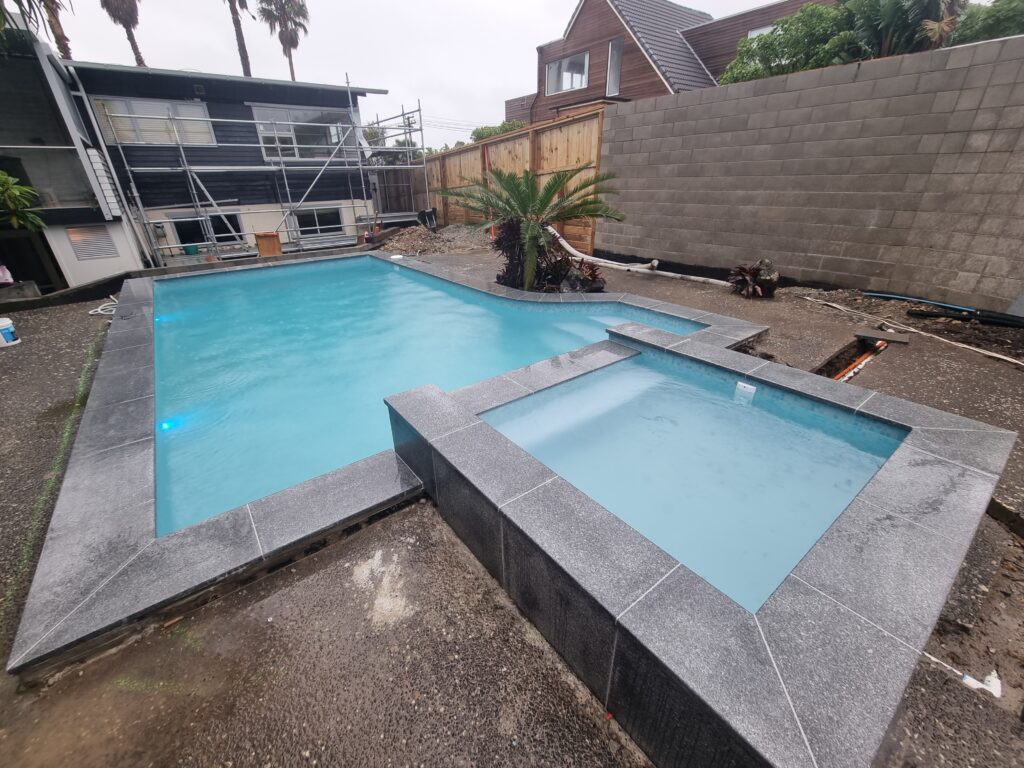
Concrete Pool Builds Auckland - Custom Pool Construction

Concrete pools in Auckland cost $80,000-$150,000, take 10-16 weeks from consent to swim, and last 50+ years. AST builds and renovates across Auckland.

50+ years shell lifespan 28-day mandatory cure 10-16 weeks consent to swim $30k-$80k value in premium suburbs $1,500-$3,500/yr maintenance 35+ ★ five-star reviews
35+
Five-Star Google Reviews
15+
Years Experience
Trade Certified
BRANZ Appraised

Artisan Stone & Tile builds custom concrete pools across Auckland. We also renovate existing ones. That matters because the same team that builds your pool is the team that maintains it 10 years from now.

This guide covers everything you need to know before building a concrete pool in Auckland. Costs, the build process, surface finishes, design options, council consent, and how to pick a builder who won’t cut corners.

Written by Mario Miocevic, 15+ years building and renovating concrete pools in Auckland.

TL;DR: Concrete pools in Auckland cost $80,000-$150,000 for a standard build, take 10-16 weeks from consent to swim, and last 50+ years. This guide covers costs, the build process, surface finishes, design options, council consent, and how to choose a builder. AST builds and renovates concrete pools across Auckland with 15+ years of hands-on experience.

Why Choose a Concrete Pool for Your Auckland Property?

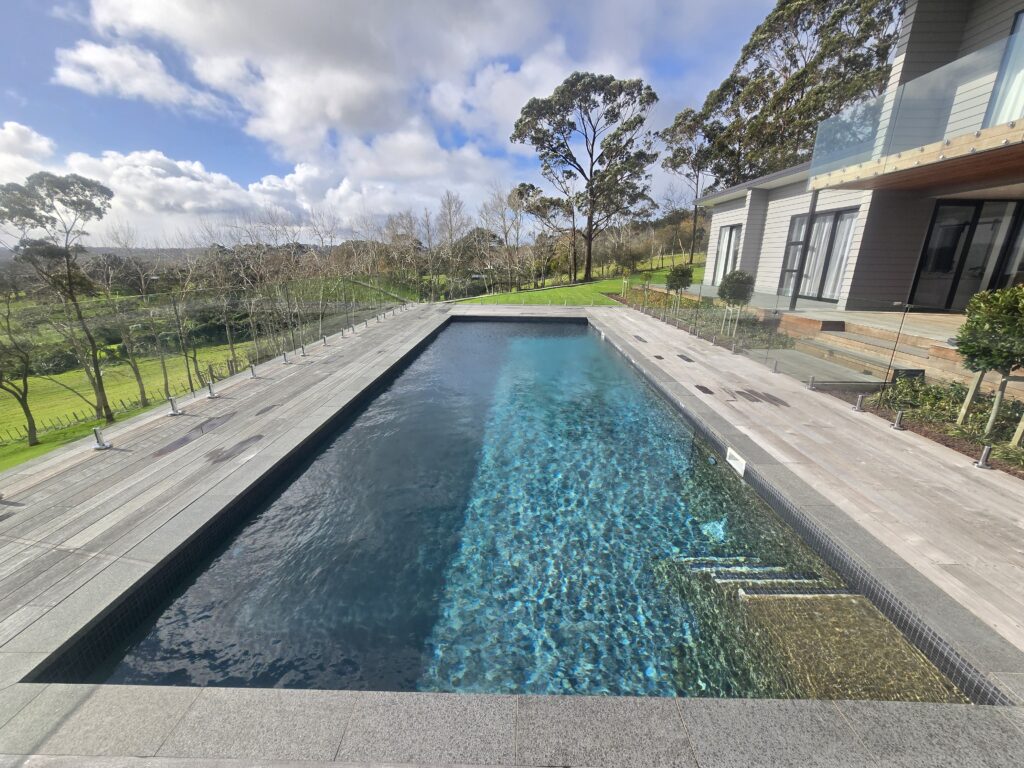
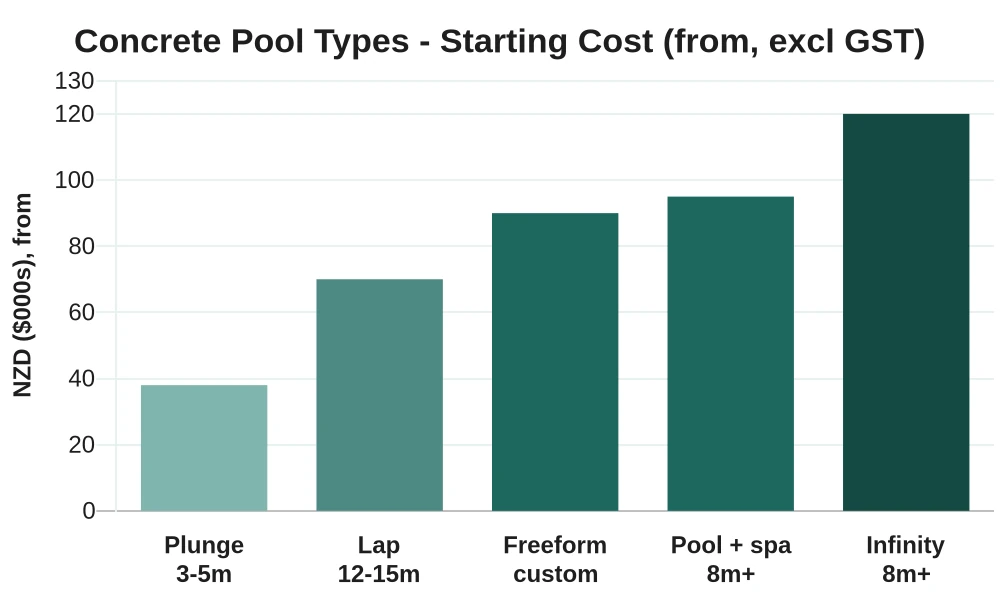
Rectangular concrete pools are the most cost-effective shape for Auckland builds, with freeform or curved designs adding 10-20% more due to extra formwork and steel. The most popular concrete pool styles in Auckland right now are lap pools (12m-15m long, ideal for narrow sections), plunge pools (3m-5m, starting from $38,000 for compact sites), and integrated pool-spa combos that add $15,000-$30,000 to the base build. Water features like spillovers and deck jets add $3,000-$15,000, while an infinity edge adds $15,000-$25,000. Auckland’s shrinking section sizes are pushing more homeowners toward smaller, smarter designs that maximise swim space without dominating the outdoor area. Steep sections are actually well-suited to concrete pool builds because the pool shell doubles as a retaining structure, turning a problem slope into a feature. Unlike fibreglass, concrete has no size or shape limits, so the design starts with your section rather than a catalogue. See our concrete pool design ideas for inspiration.

Concrete is the only pool type with zero limits on shape, size, or depth. You want an 18-metre lap pool? Done. A plunge pool tucked into a courtyard? Done. An infinity edge on a hillside in Titirangi? Concrete is the only option that works.

Fibreglass pools come as pre-made shells. The biggest moulds max out around 11 metres. You can’t change the depth. You can’t change the shape. And if your driveway is too narrow for the truck and crane, it won’t fit.

A concrete pool shell lasts 50+ years. That’s roughly double a fibreglass shell. And when the surface eventually needs refreshing, the same team that built it can handle the pool renovation for existing pools.

Auckland has steep sections, narrow access, volcanic rock, and clay soil. Concrete handles all of it. That’s why concrete pools Auckland homeowners build are designed on-site, piece by piece, to fit the section rather than the other way around.

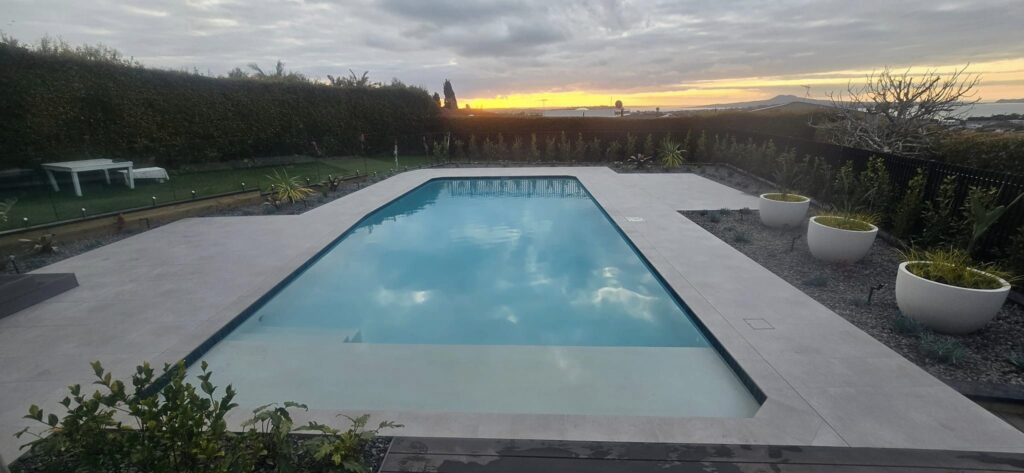
Custom concrete pool built on a steep Auckland section
Concrete pools work on steep Auckland sections where fibreglass can't reach

What Types of Pools Can You Build on an Auckland Section?

Every concrete pool starts as a blank canvas. Here are the five most popular styles we build in Auckland.

Comparison chart of five concrete pool types in Auckland with starting costs and build times: lap pool from $70,000, plunge pool from $38,000, infinity edge from $120,000, freeform from $90,000 and pool plus spa combo from $95,000
Five concrete pool types compared: starting cost and build time.

Lap pools

12m-15m x 2.5m-3m, starting from $70,000. Built long and narrow, these suit sections where width is tight but length is available. Popular with homeowners who want a pool for exercise rather than entertaining.

Concrete lap pool built on narrow Auckland section
Lap pools suit narrow Auckland sections where a wide pool won't fit

Plunge pools

3m-5m, starting from $38,000. The go-to plunge pool Auckland homeowners choose for compact sections and new-build townhouses. Small enough to fit almost anywhere. Deep enough to cool off. And still a genuine concrete pool, not a prefab tub.

Concrete plunge pool on small Auckland section
Plunge pools start from $38,000 and fit sections as small as 200sqm

Infinity edge pools

Starting from $120,000. The infinity edge creates a vanishing-water effect that works best on sloping sections. Suburbs like Titirangi, Herne Bay, and hillside areas of the North Shore are ideal. The edge system itself adds $15,000-$25,000 to a standard build.

Freeform and resort-style pools

Starting from $90,000. Organic shapes with curved edges, beach entries, and landscaped surrounds. They cost 10-20% more than rectangular pools because of the extra formwork and steel.

Pool and spa combinations

Add $15,000-$30,000 to any build. The spa shares filtration with the main pool but runs its own heating. Building the spa into the original design is far cheaper than retrofitting later.

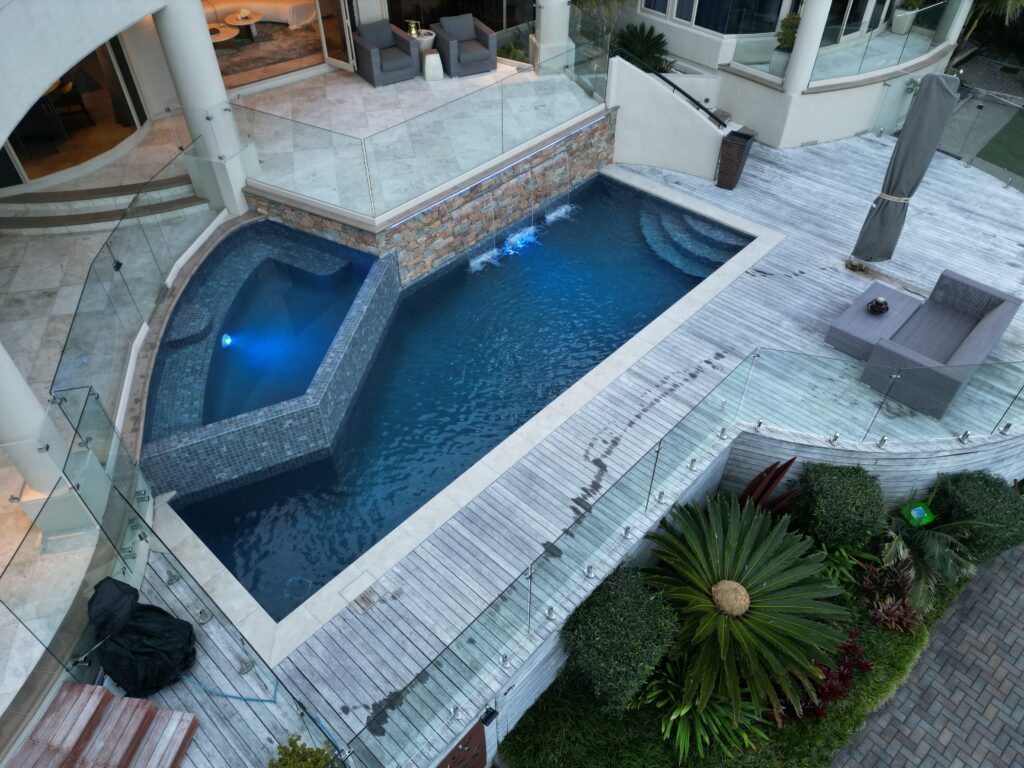
Concrete pool and spa combination build Auckland
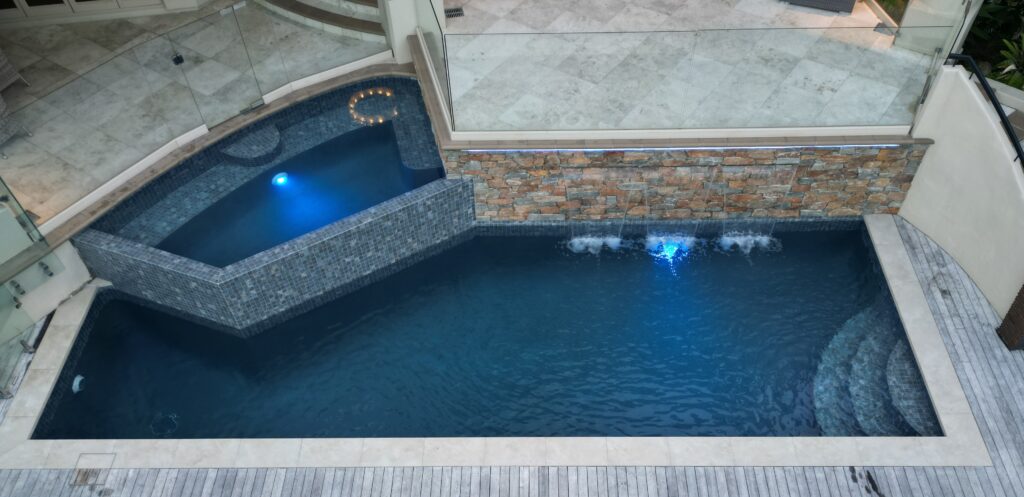
Integrated pool and spa combination, Auckland

Here’s how the five types compare:

Pool TypeTypical SizeStarting CostBest ForBuild Time
Lap pool12m-15m x 2.5m-3m$70,000Narrow sections, fitness12-16 weeks
Plunge pool3m-5m$38,000Small sections, compact areas8-12 weeks
Infinity edge8m+$120,000Sloping sections, views14-18 weeks
FreeformCustom$90,000Large sections, resort style12-16 weeks
Pool + spa combo8m+ pool + spa$95,000+Entertaining, year-round use14-18 weeks

What size concrete pool fits my Auckland section?

A standard 8x4m concrete pool needs a minimum section size of roughly 400 square metres once you account for Auckland Council setback rules, which typically require 1.5m clearance from each boundary. The three most popular sizes for Auckland residential sections are 7×3.5m (small, suits sections under 500sqm), 8x4m (standard, the most commonly built size), and 10x5m (large, needs 600sqm+ with room for fencing and landscaping). Narrow sections often work better with a lap pool configuration at 12m x 2.5m rather than a wide rectangle. Before committing to any size, get a site measure that accounts for stormwater easements, sewer lines, and any council setback overlays specific to your zone. Your pool builder should check the Auckland Unitary Plan rules for your property before drawing up plans. For help planning pool placement on tricky Auckland sections, read our guide to concrete pool design inspiration.

Which Surface Finish Is Right for Your Concrete Pool?

What is the best surface finish for a concrete pool in New Zealand?

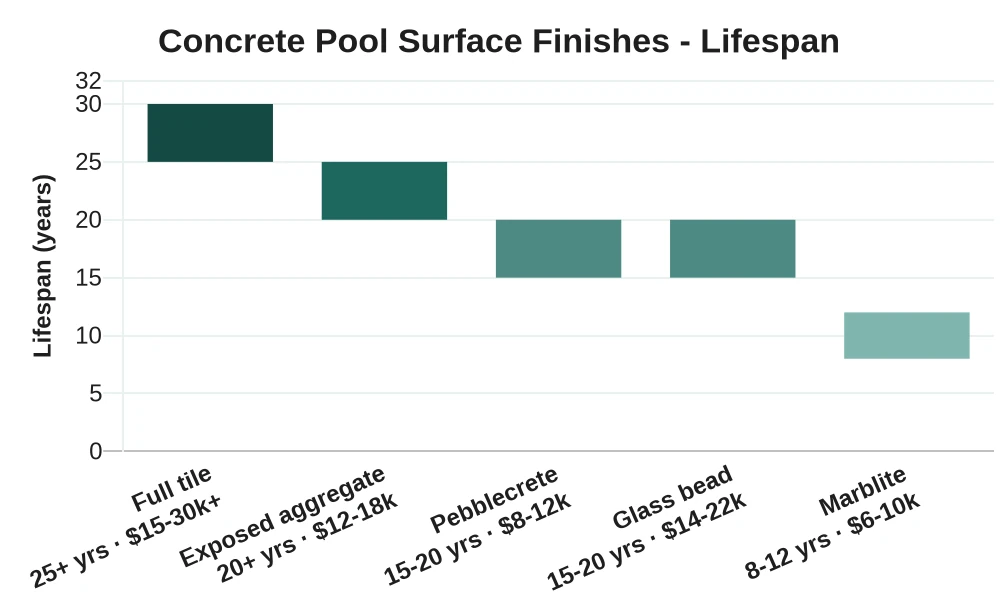
Pebblecrete is the most popular concrete pool finish in New Zealand, costing $8,000-$12,000 for a standard pool and lasting 15-20 years with proper water chemistry. Marblite plaster is the most affordable option at $6,000-$10,000 but lasts only 8-12 years and stains more easily in Auckland’s variable water conditions. Exposed aggregate finishes run $12,000-$18,000 and last 20+ years, making them the best value over the pool’s lifetime. Fully tiled interiors cost $15,000-$30,000+ but offer the most design flexibility and a 25+ year lifespan. Glass bead finishes sit between exposed aggregate and full tiling at $14,000-$22,000, creating a distinctive shimmer effect underwater. In New Zealand, pools are built using shotcrete rather than gunite, which is more common in the United States. Your choice of finish affects both the look and the long-term maintenance cost of your pool. For a full comparison of pool surface finishes, see our detailed guide.

Chart comparing concrete pool surface finishes by cost and lifespan: pebblecrete, marblite, exposed aggregate, full tile and glass bead
Pebblecrete is the most popular; full tile lasts longest.

Your surface finish is the single biggest design decision after pool shape. Here’s how they stack up:

FinishCost RangeLifespanTextureBest For
Pebblecrete$8,000-$12,00015-20 yearsTextured, gripMost popular, good value
Marblite$6,000-$10,0008-12 yearsSmoothBudget option
Exposed aggregate$12,000-$18,00020+ yearsNatural stone lookBest long-term value
Full tile (Ezarri, Bisazza)$15,000-$30,000+25+ yearsSmooth, customisablePremium, design-led
Glass bead$14,000-$22,00015-20 yearsShimmer effectVisual impact

We use Ezarri and Bisazza glass mosaic tiles for fully tiled pools. For renders, we use Diamond Brite and preblended polymer-enhanced products – Quartz Pool Finish by Oceania or Ultra Plaster by SSL Distributors – that are harder and more resistant to chemical etching than standard white plaster.

Natural stone and porcelain drop face pool coping stones for your pool complete the pool edge. For full retiling options, see our swimming pool tiling in Auckland guide.

Pebblecrete surface finish on concrete pool Auckland
Pebblecrete finish - the most popular choice for Auckland concrete pools

For more detail on each option, read our guides to pebblecrete pool surfaces in NZ, exposed aggregate pool finishes, and marblite pool finish guide.

What Happens During a Concrete Pool Build in Auckland?

How long does it take to build a concrete pool in Auckland?

A concrete pool build in Auckland takes 10-16 weeks from council consent approval to your first swim. The process runs in six stages: excavation (2-5 days depending on soil type and access), steel reinforcement and formwork (1-2 weeks), shotcrete shell pour (1-2 days), a mandatory 28-day curing period, interior finishing including tiling and coping (2-4 weeks), and final plumbing, fencing, and council inspection (1-2 weeks). The design and consent phase adds another 4-8 weeks before building starts. Auckland’s volcanic rock and clay soils can slow excavation, and steep or narrow sections sometimes need hand excavation instead of machinery. The best months to start a pool build in Auckland are March through November when drier conditions suit excavation and concrete curing. For a detailed breakdown of what each construction stage involves, read our guide to the concrete pool construction process.

Concrete pool build timeline

From council consent to your first swim.

1Design & consent4-8 wks
2Excavation2-5 days
3Steel & formwork1-2 wks
4Shotcrete pour1-2 days
5Cure28 days
6Interior finishing2-4 wks
7Plumbing, fencing, inspection1-2 wks
8Fill & swim

10-16 weeks from consent to first swim. The 28-day cure can't be rushed.

Here’s the build process step by step:

  1. 1
    Design and site assessment (1-2 weeks) – Your builder visits the site, checks soil type, access, boundaries, and services. Plans are drawn to fit your section.
  2. 2
    Council building consent (4-8 weeks processing) – Application to Auckland Council building consent. Budget $2,000-$5,000 in fees. Processing takes a minimum of 20 working days.
  3. 3
    Excavation (2-5 days) – The dig. Volcanic rock on the isthmus or clay on the North Shore can slow this. A standard pool produces 40-60 cubic metres of soil to remove.
  4. 4
    Steel reinforcement and formwork (1-2 weeks) – Steel rebar is tied into a cage that forms the pool’s structural skeleton. Read more about steel reinforcement and formwork explained.
  5. 5
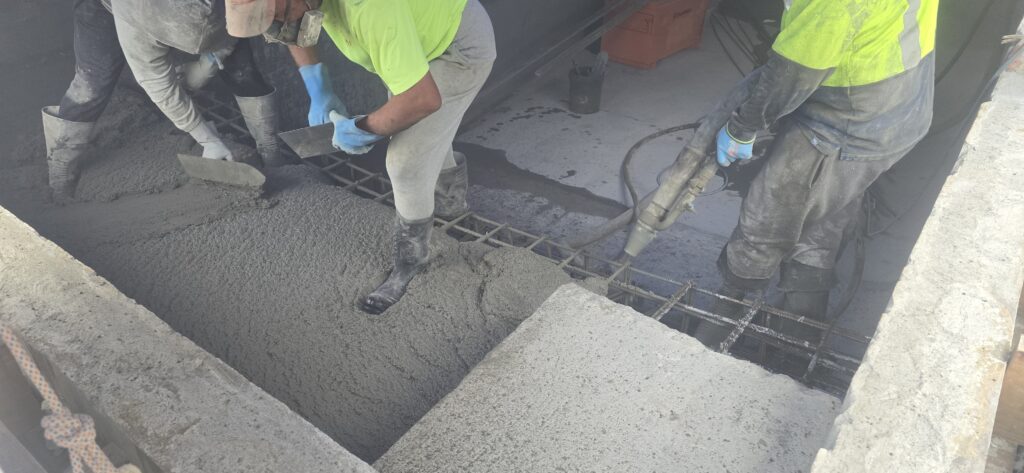
    Shotcrete shell pour (1-2 days) – Concrete is sprayed at high pressure onto the steel framework, creating walls 150-200mm thick. This is the most critical day of the build.
  6. 6
    28-day curing period (mandatory) – The concrete must cure for a full 28 days before any finishing work starts. You can’t rush this.
  7. 7
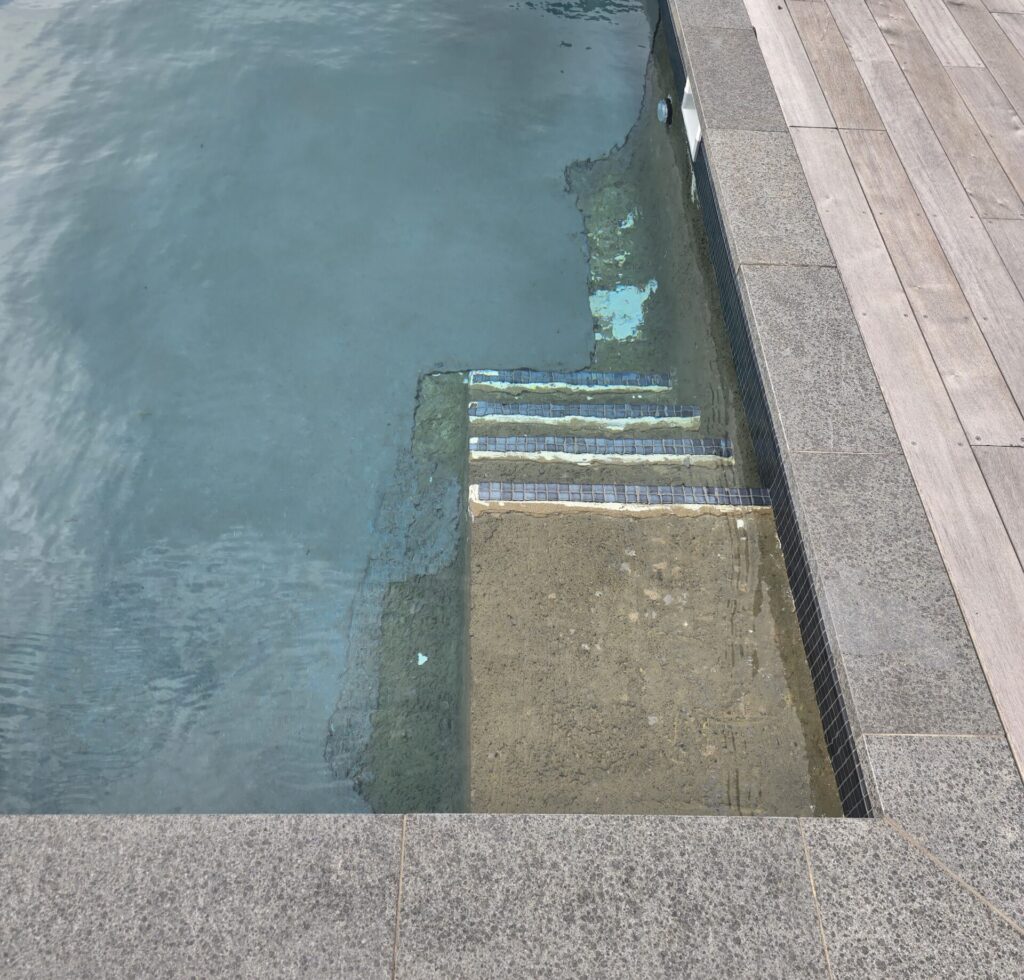
    Interior finishing (2-4 weeks) – Tiling, coping, plaster, or aggregate finish applied. See our curing and finishing process guide.
  8. 8
    Plumbing, filtration, fencing, electrical (1-2 weeks) – Equipment is installed, pool fencing goes up, and all connections are tested.
  9. 9
    Final inspection and code compliance certificate – Auckland Council inspects the completed build and issues the CCC.
  10. 10
    Fill, balance, swim – Pool is filled, water chemistry is balanced, and you’re in.

Auckland soil note: Auckland’s volcanic rock (central suburbs) and clay soil (North Shore, West Auckland) affect excavation time and cost. Steep sections may need hand excavation and retaining walls. A geotechnical report ($1,500-$3,000) before consent saves surprises during the build.

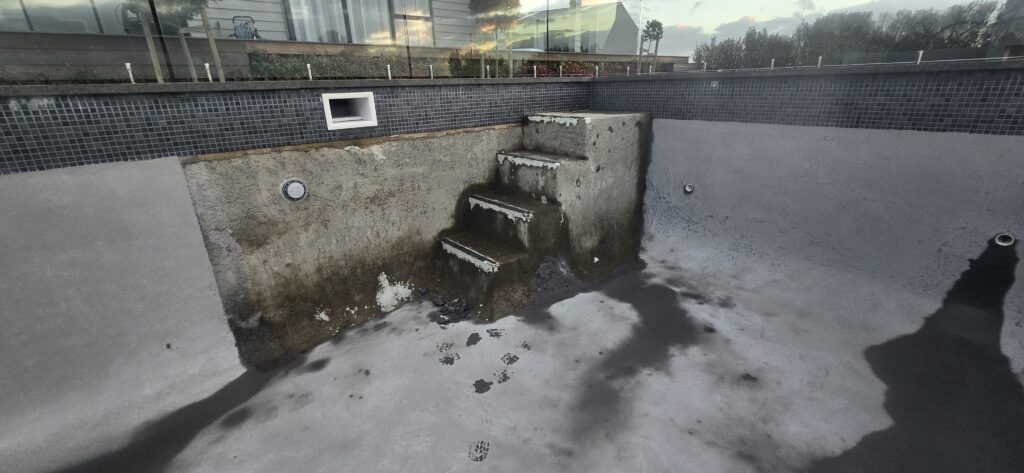
Concrete being placed over steel reinforcement during a concrete pool build in Auckland

How Much Does a Concrete Pool Cost in Auckland?

How much does a concrete pool cost to build in Auckland?

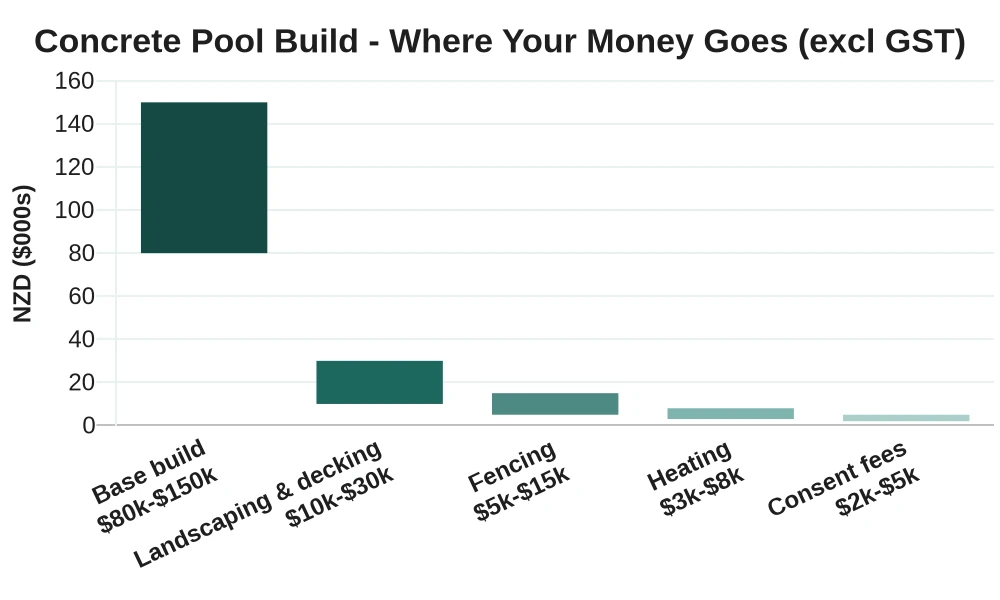
A standard concrete pool build in Auckland costs between $80,000 and $150,000 for a mid-range 7m-9m pool with basic surrounds. Smaller pools under 6m start from around $38,000, while large pools over 9m run $76,000-$143,000 depending on depth, shape, and access. High-end builds with infinity edges, spa attachments, or premium finishes regularly exceed $150,000 and can reach $220,000 or more. These figures cover the pool shell, plumbing, filtration, and basic coping but not fencing, landscaping, or decking, which typically add $15,000-$40,000. Auckland-specific cost factors include volcanic rock or clay soil requiring extra excavation, steep sections needing retaining walls, and narrow driveways that limit machinery access. Council building consent adds $2,000-$5,000 in fees alone. Every site is different, so the only reliable way to get a real number is a site visit from an experienced concrete pool builder who knows Auckland ground conditions.

Here are the current concrete pool NZ price ranges for builds in Auckland:

Pool SizeTypical Cost RangeIncludes
Small (under 6m)$38,000-$62,000Shell, plumbing, filtration, basic coping
Medium (6m-9m)$57,000-$86,000Shell, plumbing, filtration, coping, standard finish
Large (9m+)$76,000-$143,000Shell, plumbing, filtration, coping, premium finish
Standard Auckland build (7m-9m)$80,000-$150,000Mid-range complete build
High-end / infinity / spa$150,000-$220,000+Premium finishes, features, landscaping

What’s NOT included in these prices:

  • Fencing: $5,000-$15,000
  • Landscaping and decking: $10,000-$30,000
  • Council consent fees: $2,000-$5,000
  • Heating system: $3,000-$8,000

For a detailed concrete pool cost breakdown, read our pricing guide. And watch out for the hidden costs of concrete pool builds that some builders don’t mention upfront.

Chart showing where the money goes in an Auckland concrete pool build: base build with shell, plumbing, filtration and coping $80,000-$150,000, plus fencing, landscaping, consent fees and heating for a $110,000-$210,000 all-in total
A standard Auckland build runs $110k-$210k once fencing, landscaping and consent are added.

Ready to find out what your pool will cost? Get a free site visit and fixed-price quote.

What Affects the Final Price of Your Pool Build?

Two pools that look identical on paper can cost $30,000 apart. Here’s why.

The biggest price factors for Auckland concrete pool builds:

  • Pool shape and depth – Freeform shapes add 10-20% over rectangular. Extra depth means more excavation and more concrete.
  • Site access – Narrow driveways or steep entries add $3,000-$8,000. Compact excavators are slower.
  • Soil type – Volcanic rock on the isthmus is harder to dig than clay on the North Shore. Both cost more than sand.
  • Water table depth – High water tables (common on the North Shore) need dewatering during construction.
  • Surface finish – The gap between marblite ($6,000) and full tiling ($30,000+) is massive.
  • Features – Heating, lighting, automation, water features, swim jets all add up.
  • Retaining walls – Sloped sections often need them. Budget $5,000-$20,000 depending on height and length.
  • Fencing material – Glass fencing runs $350-$600 per linear metre. Aluminium is $150-$300 per linear metre.

Does a high water table affect concrete pool construction in Auckland?

Yes, a high water table significantly affects both the construction process and the long-term design of a concrete pool. Auckland’s North Shore is particularly affected because clay-heavy soils trap water close to the surface, creating water table levels as shallow as 1-2 metres in some areas. During construction, dewatering is required to keep the excavation dry while the shotcrete shell is applied, adding $2,000-$5,000 to the build cost depending on how long pumping is needed. The finished pool must include hydrostatic relief valves in the floor, which allow groundwater pressure to equalise if the pool is ever drained, preventing the empty shell from lifting or cracking. Your geotechnical report will identify water table depth and recommend the appropriate drainage design. Skipping proper dewatering or omitting relief valves to save money creates serious structural risk. For construction details, read our how a concrete pool build works guide.

For tips on getting accurate pricing, read how to get an accurate pool quote and our breakdown of cost of adding pool features.

Concrete vs Fibreglass - Which Pool Type Suits Your Section?

We build concrete pools, so we’re obviously biased. But the honest truth is that a concrete pool isn’t the right choice for everyone. Here’s the full picture so you can decide which pool type actually suits your property and budget.

Should I build a concrete pool or buy a fibreglass pool in New Zealand?

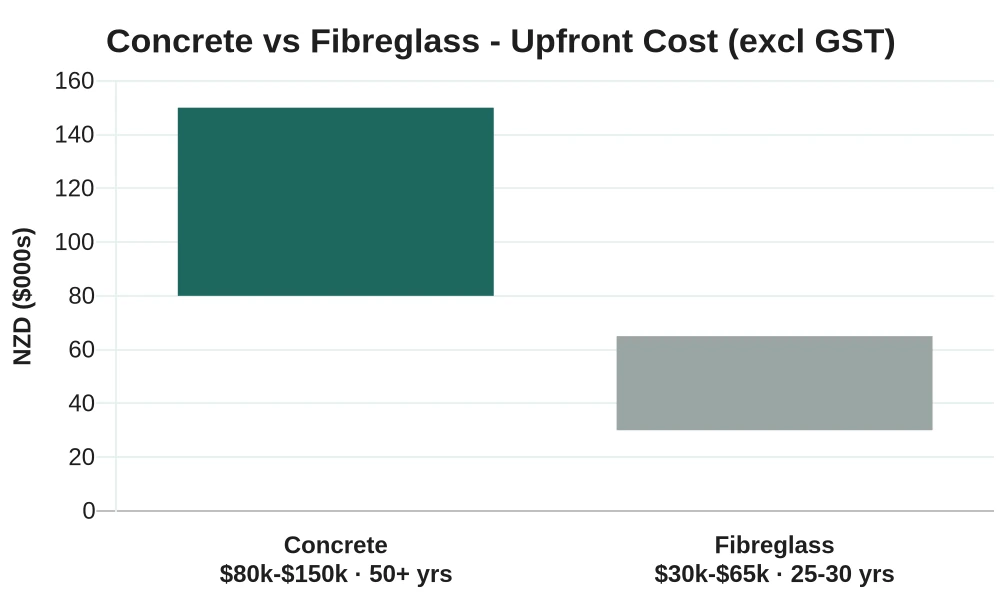
Concrete pools cost more upfront ($80,000-$150,000 vs $30,000-$65,000 for fibreglass) and take longer to build (10-16 weeks vs 2-4 weeks), but they last longer and offer total design freedom. A concrete shell lasts 50+ years before structural replacement, while fibreglass shells typically last 25-30 years. Concrete lets you build any shape, any depth, and any size, which matters on Auckland’s steep or irregularly shaped sections where a pre-made fibreglass shell simply won’t fit. Fibreglass pools are the better choice when you want a standard shape, faster installation, and lower ongoing maintenance. The smooth, non-porous surface of a fibreglass pool resists algae better and uses fewer chemicals. Neither type is objectively better – the right choice depends on your section, your budget, and whether you need a custom design. For fibreglass pool installation in Auckland, Principal Pools specialises in fibreglass builds. For a full concrete vs fibreglass comparison, read our detailed guide.

Here’s the side-by-side comparison:

FactorConcreteFibreglass
Upfront cost$80,000-$150,000$30,000-$65,000
Build time10-16 weeks2-4 weeks
Shell lifespan50+ years25-30 years
Shape optionsUnlimited – any shape/size/depthPre-made moulds, max ~11m
Finish optionsPebblecrete, marblite, tile, aggregateGelcoat (limited colours)
MaintenanceHigher – porous surface, more chemicalsLower – smooth, non-porous
ResurfacingEvery 10-20 yearsGelcoat refresh every 15-20 years
Annual running cost$1,500-$3,500$500-$1,500
Steep/irregular sectionsIdeal – built to fit the siteDifficult – crane access needed
Best forCustom design, large pools, difficult sitesStandard shapes, fast install, lower budget

When concrete is the better choice

Choose concrete if your section is steep, narrow, or irregularly shaped. Choose it if you want a pool longer than 11 metres, deeper than 2 metres, or any shape that doesn’t come in a catalogue. If you’re building a pool you plan to keep for 30+ years, concrete’s longer lifespan makes financial sense.

When fibreglass is the better choice

Choose fibreglass if you want a standard-shaped pool installed in weeks rather than months. If your budget is under $65,000, fibreglass gives you a high-quality pool at a lower entry point. The maintenance is simpler too. If fibreglass is the right fit for your section, fibreglass pool specialists in Auckland can help.

Side-by-side comparison chart of concrete versus fibreglass pools in Auckland covering upfront cost, build time and shell lifespan
Concrete versus fibreglass: cost, build time and lifespan at a glance.

Not sure which pool type suits your section? We'll give you an honest recommendation.

What Should You Look for in a Pool Builder?

How do I choose a concrete pool builder in Auckland?

The most common concrete pool problems in New Zealand are cracking from ground movement, surface delamination from poor prep, and leaking from waterproofing failure. Auckland’s volcanic and clay soils shift, so proper engineering and steel reinforcement design is not optional – it is the difference between a pool that lasts 50 years and one that cracks within five. When choosing a concrete pool builder in Auckland, ask for their Licensed Building Practitioner (LBP) number, council consent history on previous builds, current insurance certificates, and at least three references you can actually call. Get a written fixed-price contract with a clear timeline and payment schedule. Red flags include no LBP licence, no written contract, cash-only payment requests, and no mention of building consent. After the build, your builder must obtain a code compliance certificate (CCC) from Auckland Council confirming the work meets the Building Code. Read our full guide to common concrete pool problems to know what to watch for.

Before you sign anything, ask these questions:

  • LBP licence number – Licensed Building Practitioner status is required for restricted building work. Ask for the number and check it.
  • Council consent history – How many pool consents have they completed with Auckland Council?
  • Insurance certificates – Current public liability and contract works insurance. Non-negotiable.
  • References you can call – At least three. Actually call them.
  • Written fixed-price contract – With a clear timeline and payment schedule tied to milestones.
  • CCC commitment – Will they obtain the code compliance certificate at completion?

Red flags: No LBP licence. No written contract. Cash-only payments. No mention of building consent. Vague timelines with no milestones.

Artisan Stone & Tile: 15+ years hands-on experience, trade-certified, BRANZ-appraised materials, 35+ five-star Google reviews. We’re the only Auckland pool company that builds new concrete pools AND renovates existing ones. That means we understand what lasts and what doesn’t – because we’re the ones who fix it 15 years later.

For a wider comparison, see our guide to the best concrete pool builders Auckland.

Concrete pool built by Artisan Stone and Tile, concrete pool builders Auckland

How Do You Maintain a Concrete Pool After the Build?

How much does it cost to maintain a concrete pool in New Zealand?

Concrete pool maintenance in New Zealand costs $1,500-$3,500 per year for chemicals, equipment servicing, and minor repairs, plus $600-$1,200 in electricity to run the pump. Weekly water testing and chemical balancing is required because concrete surfaces are porous and more prone to algae growth than smooth fibreglass. An acid wash every 3-5 years ($800-$1,500) keeps the surface clean and prevents staining. The biggest long-term cost is resurfacing, which is needed every 10-20 years depending on your interior finish – pebblecrete lasts 15-20 years, while marblite needs replacing after 8-12 years. Saltwater chlorination systems reduce the hands-on chemical work but still need regular monitoring and cell replacement every 4-5 years ($600-$900). Auckland’s subtropical climate means year-round pool use is realistic but also means algae pressure never fully stops, even in winter. For a full maintenance schedule, read our concrete pool maintenance guide.

Here’s what ongoing maintenance looks like:

  • Weekly – Test water chemistry, adjust chlorine and pH levels
  • Monthly – Check filtration pressure, clean skimmer baskets, inspect equipment
  • Every 3-5 years – Acid wash the surface ($800-$1,500)
  • Every 8-12 years – Marblite resurfacing
  • Every 15-20 years – Pebblecrete resurfacing
  • Every 8-12 years – Equipment replacement (pump, filter, heater): $3,000-$8,000

The structural shell of a properly built concrete pool lasts 50+ years. But the surface, equipment, and water chemistry need consistent attention. Don’t skip it.

For detailed schedules, see our weekly pool maintenance schedule and concrete pool maintenance costs in NZ.
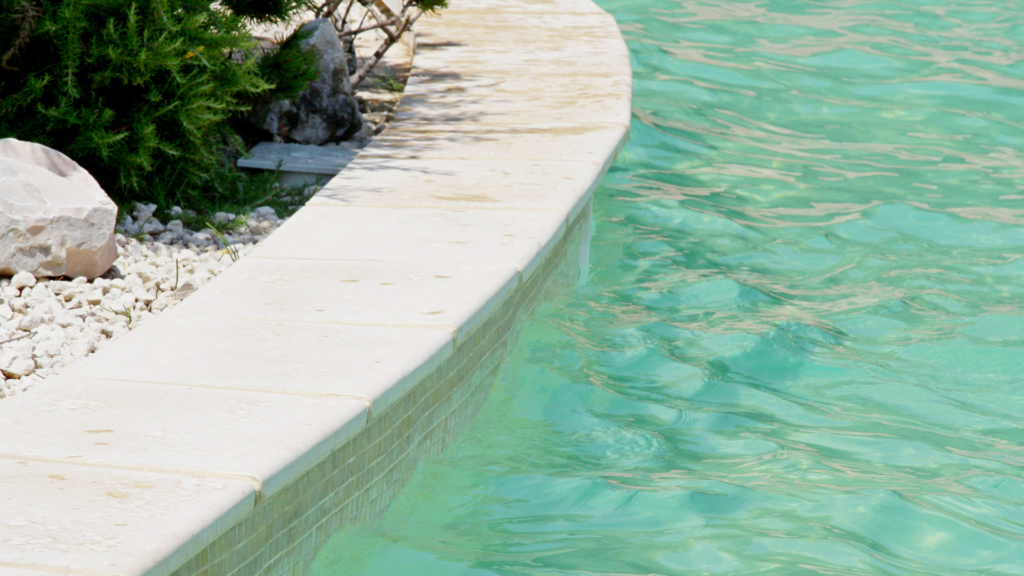
Concrete pool maintenance Auckland - clean balanced pool water
Weekly water testing keeps your concrete pool in top condition

Can You Add Premium Features Like Infinity Edges or Spa Jets?

Can I add a spa to my concrete pool?

Yes, an integrated spa attached to a concrete pool costs $15,000-$30,000 on top of the base pool build in New Zealand. The spa needs its own heating circuit, jet pump, and air blower, which adds complexity to the plumbing and electrical layout. Building it into the original pool design is significantly cheaper and less disruptive than retrofitting a spa onto an existing pool, where you would need to cut into cured concrete and rework waterproofing. Most integrated spa-pool combos share the same filtration system but run separate heating so you can keep the spa at 38-40 degrees without overheating the main pool. Auckland Council requires building consent for the spa component just as it does for the pool itself. If you are still in the planning stage, include the spa now even if it stretches the budget. For more on consent requirements, read our Auckland pool building consent guide.

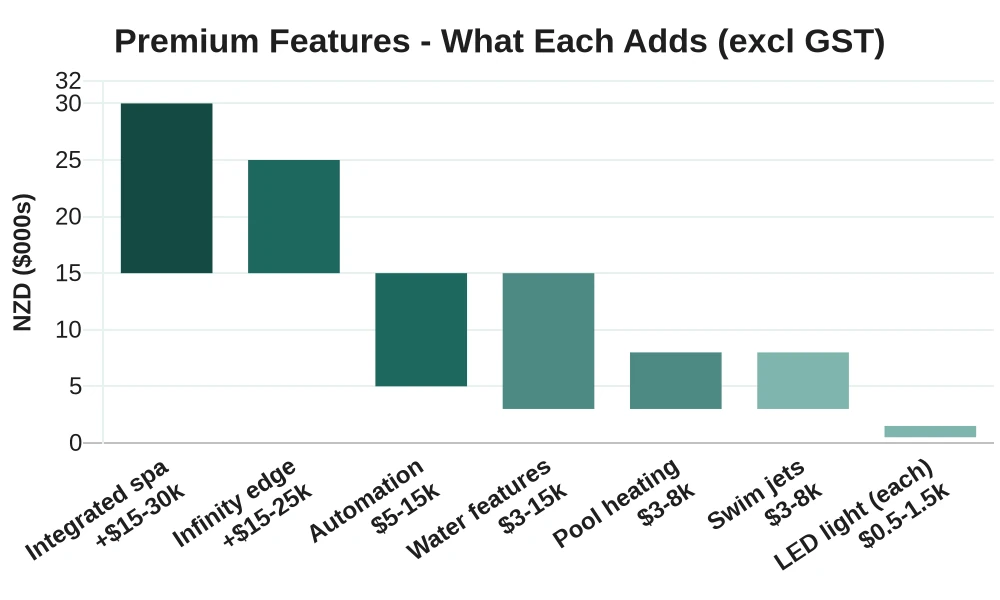
Chart of premium concrete pool features and their added cost in Auckland: infinity edge, integrated spa, water features, LED lighting, heating, automation and swim jets
What popular premium features add to a concrete pool build.

Here’s what each premium feature adds to the build cost:

  • Infinity edge – +$15,000-$25,000. Needs a catch basin and secondary pump. Best on sloping sections.
  • Integrated spa – +$15,000-$30,000. Own heating circuit, jet pump, air blower.
  • Water features – $3,000-$15,000. Spillovers, waterfalls, deck jets.
  • LED lighting – $500-$1,500 per light. Standard pool needs 3-4 lights. Add them during the build – retrofitting costs double.
  • Pool heating – $3,000-$8,000 installed. Heat pumps are the best value for Auckland. Runs about $50-$100/month.
  • Automation systems – $5,000-$15,000. Control filtration, heating, lighting, and chemicals from your phone.
  • Swim jets – $3,000-$8,000. Resistance swimming in a shorter pool.

The most cost-effective time to add any of these features is during the original build. Retrofitting involves cutting into cured concrete, rewaterproofing, and re-routing services.

For detailed guides, see pool heating options for concrete pools, LED pool lighting guide, pool automation systems in NZ, water features for concrete pools, and swim jets and resistance swimming.

Infinity edge detail on concrete pool build Auckland
Infinity edge pools start from $120,000 and suit Auckland's hillside sections

What Should You Include Now to Save Money Later?

What should I include now to save money later on my concrete pool?

Run electrical conduit for pool lighting, automation sensors, and a future heat pump during the shell construction phase, even if you are not installing those features immediately. Adding conduit to wet concrete costs a few hundred dollars; cutting into cured concrete and retiling around new penetrations later costs $3,000-$8,000 per feature. Plumb in a return line and jet fittings for a spa attachment if there is any chance you will want one in the next 10 years. Stub out gas and electrical connections for a future pool heater at the equipment pad location. Build the equipment pad large enough to accommodate a heat pump, salt chlorinator, and automation controller even if you are only installing a basic pump and filter on day one. Pour a concrete bond beam wide enough for future coping upgrades or a wider deck edge. These upfront additions typically add $2,000-$5,000 to the build but save $15,000-$25,000 in retrofit costs down the track. For build planning, read our guide to what to expect during pool construction.

Spend $2,000-$5,000 during the build,
save $15,000-$25,000 in retrofits later.
  • Electrical conduit for lighting & heat pump
  • Spa plumbing stubs
  • Gas & electrical at the equipment pad
  • Oversized equipment pad
  • Wider bond beam for future coping

This is one of the most valuable pieces of advice in this entire guide. Spending $2,000-$5,000 now saves $15,000-$25,000 later. Here’s the short list:

  1. Electrical conduit for lighting, automation, and heat pump connections
  2. Spa plumbing stubs if there’s any chance you’ll want a spa in 10 years
  3. Gas and electrical connections stubbed out at the equipment pad
  4. Oversized equipment pad that fits future upgrades
  5. Wider bond beam for future coping or deck changes
  6. Sensor mounts for automation controllers
Plumbing and services rough-in during concrete pool construction Auckland

Does a Pool Add Value to Your Auckland Home?

Does a concrete pool add value to your home in New Zealand?

A well-maintained concrete pool adds an estimated $30,000-$80,000 to property value in premium Auckland suburbs like Remuera, Epsom, and Devonport, where buyers expect outdoor entertaining features. The impact is smaller in outer suburbs where pool ownership is less common and maintenance costs weigh more heavily in buyer calculations. A poorly maintained pool with cracked surfaces, outdated equipment, or non-compliant fencing can actually reduce property value because buyers see it as a liability rather than an asset. The key factors that protect resale value are a recently resurfaced interior, compliant pool fencing, working filtration and heating, and landscaped surrounds that integrate the pool into the outdoor living area. Real estate agents in Auckland report that pools add the most value on north-facing sections where the pool gets full sun. For tips on keeping your pool in sale-ready condition, read our looking after a concrete pool.

The value depends on location. In Remuera, Epsom, or Devonport, buyers expect a pool. In outer suburbs, the maths is less clear.

A pool that’s been well maintained is an asset. A pool with cracked surfaces, broken equipment, and non-compliant fencing is a liability that buyers will price against you. Keep it maintained and it pays for itself. For more detail, read our guide to concrete pool return on investment.

Auckland home with concrete pool and landscaped surrounds
A well-maintained pool adds $30,000-$80,000 to premium Auckland properties

How Does Auckland Weather Affect Pool Construction?

When is the best time to start building a concrete pool in Auckland?

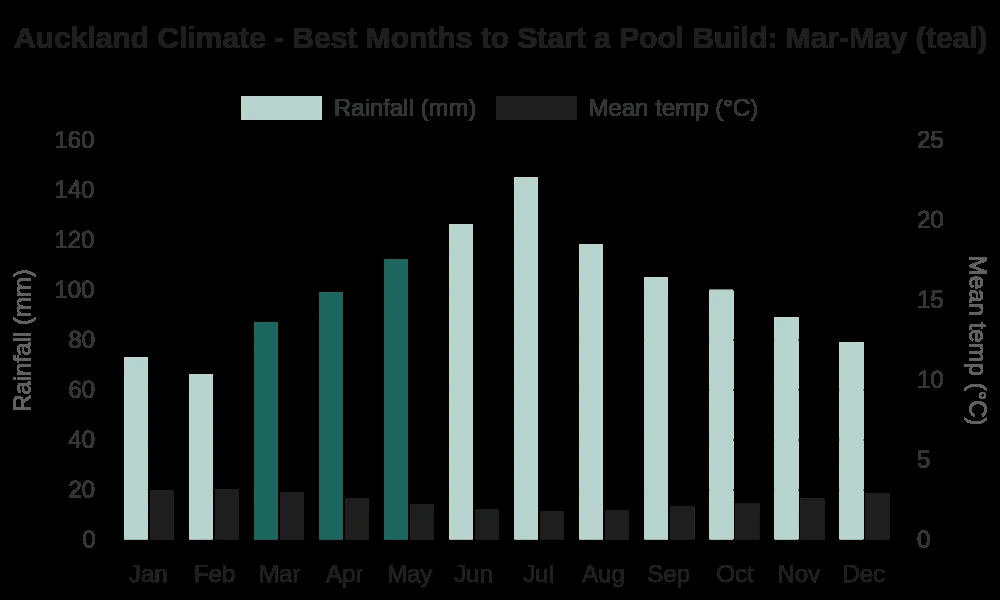
March through May is the best time to start a concrete pool build in Auckland because you catch the tail end of dry weather for excavation and the curing period falls in the cooler but still workable winter months. Starting in autumn means the pool is typically ready for its first swim by early summer (November-December), which is when you actually want to use it. The busiest period for Auckland pool builders is September through December, when demand spikes and lead times blow out to 4-6 months for some builders. Starting in the off-season (March-June) often gets you a shorter wait for both the builder and Auckland Council consent processing. Avoid starting excavation in July-August when Auckland gets its heaviest rainfall, as waterlogged clay soil makes digging slower and more expensive. The full build takes 10-16 weeks from consent to swim, so count backwards from when you want to be in the water. For a step-by-step timeline, read our step-by-step concrete pool build stages guide.

Auckland gets 1,200mm of rain a year. That directly affects scheduling.

Rain during excavation turns clay-heavy soil into mud. That can delay the dig by days. Shotcrete needs dry conditions for proper bonding. And the 28-day curing period works best with temperatures above 10 degrees.

Best timing strategy: Start in March-May. You’ll catch drier weather for excavation, workable winter temperatures for curing, and be swimming by November-December. You’ll also skip the September-December rush when every builder in Auckland is booked out 4-6 months.

The good news: Auckland rarely drops below 5 degrees in winter. Concrete curing is almost never halted by frost here, unlike South Island builds. And the mild winters mean year-round pool use is realistic with a heat pump.

Best time to start a build in Auckland

Start in March-May, skip the spring rush, swim by summer.

Jan
Feb
Mar
Apr
May
Jun
Jul
Aug
Sep
Oct
Nov
Dec
Best time to start Avoid (heaviest rain) Peak rush (4-6 month lead)

Frequently Asked Questions About Concrete Pool Builds

The total cost of a concrete pool in Auckland runs $110,000-$210,000 once you add fencing, landscaping, decking, and council fees to the base build price. A mid-range 8x4m pool costs $80,000-$150,000 for the shell, plumbing, filtration, and coping. Pool fencing adds $5,000-$15,000 depending on whether you choose glass ($350-$600 per linear metre) or aluminium ($150-$300 per linear metre). Landscaping and decking around the pool typically adds $10,000-$30,000. Council building consent fees run $2,000-$5,000. A heat pump adds $4,000-$8,000 installed. On top of the build, budget $1,500-$3,500 per year for ongoing maintenance including chemicals, servicing, and pump electricity. Resurfacing every 10-20 years is the biggest long-term cost. The gap between the cheapest and most expensive concrete pool in Auckland is mostly driven by site difficulty, finish choice, and features rather than pool size alone. For a full breakdown, read our NZ concrete pool cost breakdown.

A concrete pool takes 10-16 weeks from council consent approval to your first swim. Add 4-8 weeks for design and consent processing before the build starts. The main stages are excavation (2-5 days), steel reinforcement (1-2 weeks), shotcrete pour (1-2 days), 28-day curing, interior finishing (2-4 weeks), and final plumbing, fencing, and inspection (1-2 weeks). Auckland’s volcanic rock and clay soils can slow excavation. Steep or narrow sections sometimes need hand digging instead of machinery. The 28-day curing period is non-negotiable and can’t be shortened regardless of your timeline. Starting in March-May means you’ll be swimming by November-December. For the full step-by-step process, read our week-by-week concrete pool build schedule.

Neither is objectively better. Concrete costs more ($80,000-$150,000 vs $30,000-$65,000) and takes longer (10-16 weeks vs 2-4 weeks), but it lasts longer (50+ years vs 25-30 years) and offers unlimited design options. Concrete is the only choice for pools over 11 metres, unusual shapes, or steep Auckland sections where a crane can’t deliver a fibreglass shell. Fibreglass wins on speed, lower upfront cost, and easier maintenance because the smooth surface resists algae. Pick concrete if you need custom design or have a difficult site. Pick fibreglass if you want standard shape, fast install, and lower budget. Your section often makes the decision for you. For the full comparison, read our concrete versus fibreglass pool comparison.

Yes, you need building consent from Auckland Council for any pool deeper than 400mm. The application costs $2,000-$5,000 and takes a minimum of 20 working days. Resource consent may also be required if earthworks exceed your zone’s limits or if the pool is close to boundary setbacks. Pool fencing is mandatory under the Fencing of Swimming Pools Act 1987 – minimum 1.2m high with a self-closing, self-latching gate. After the build, your builder must get a code compliance certificate (CCC) confirming everything meets the Building Code. Cross-lease properties need written consent from co-owners before you apply. Building without consent is illegal and creates serious problems when selling. Your builder should manage the consent process for you. For the full requirements, see our pool consent requirements in Auckland.

Pebblecrete is the most popular finish in New Zealand, costing $8,000-$12,000 and lasting 15-20 years. It has a textured, slip-resistant surface that hides minor imperfections well. Exposed aggregate ($12,000-$18,000, 20+ years) is the best long-term value because it outlasts every other option except full tiling. Full tiling with glass mosaics from Ezarri or Bisazza costs $15,000-$30,000+ but lasts 25+ years and gives you the most design freedom. Marblite is the cheapest at $6,000-$10,000 but only lasts 8-12 years and stains easily. Choose based on lifespan, not just upfront cost. A finish that costs twice as much but lasts three times longer saves money over the pool’s life. For full details, read our pebblecrete surface guide for NZ pools guide.

Yes, concrete is the only pool type suited to steep or irregular Auckland sections. The pool shell doubles as a retaining structure, turning a problem slope into a feature. Fibreglass pools can’t do this because the pre-made shell needs a level base and crane access, which steep sites don’t have. Steep builds typically need retaining walls ($5,000-$20,000 depending on height), additional engineering for the foundation, and sometimes hand excavation where machinery can’t reach. Suburbs like Titirangi, Herne Bay, and hillside areas of the North Shore are well-suited to concrete pool builds that work with the natural fall of the land. For more ideas on working with challenging sections, see our guide to small concrete pools for Auckland sections.

Annual maintenance runs $1,500-$3,500 for chemicals, servicing, and minor repairs, plus $600-$1,200 in electricity for the pump. Weekly water testing and chemical balancing is required because concrete surfaces are porous and prone to algae. You’ll need an acid wash every 3-5 years ($800-$1,500). The biggest long-term cost is resurfacing – pebblecrete lasts 15-20 years, marblite 8-12 years. Equipment (pumps, filters, heaters) typically needs replacing every 8-12 years at $3,000-$8,000. Saltwater systems reduce daily chemical work but still need monitoring. Auckland’s subtropical climate means year-round pool use but also year-round algae pressure. The pool is a commitment, not a set-and-forget asset. For a detailed schedule, see our concrete pool care guide.

An 8x4m pool – the most commonly built size in Auckland – needs roughly 400 square metres of total section once you account for the 1.5m boundary setback required by Auckland Council. The three most popular sizes are 7×3.5m for sections under 500sqm, 8x4m for standard sections, and 10x5m for larger properties with 600sqm+. Narrow sections often work better with a lap pool at 12m x 2.5m rather than a wide rectangle. Before locking in a size, check stormwater easements, sewer lines, and any council setback overlays specific to your zone. Your builder should check the Auckland Unitary Plan rules for your property before drawing plans. Getting this wrong means redrawing everything. For detailed sizing guidance, see our guide on what size pool fits your Auckland section.

Ready to Build Your Concrete Pool?

Get a free site visit, honest advice on what will work on your section, and a fixed-price quote with no hidden costs.