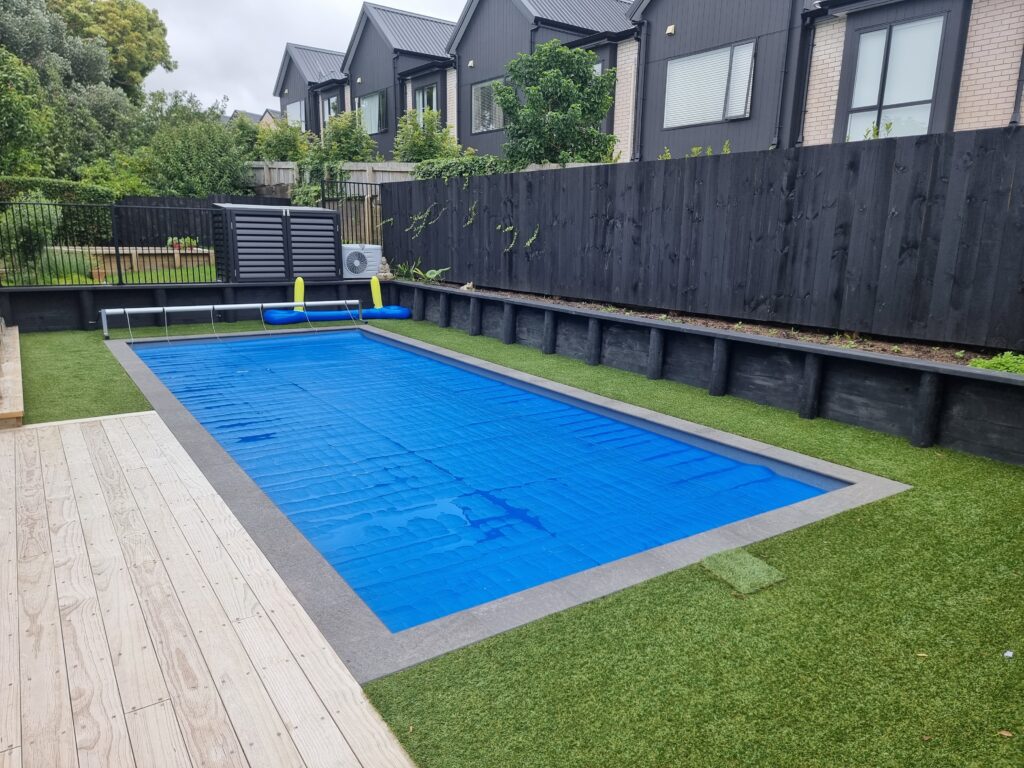
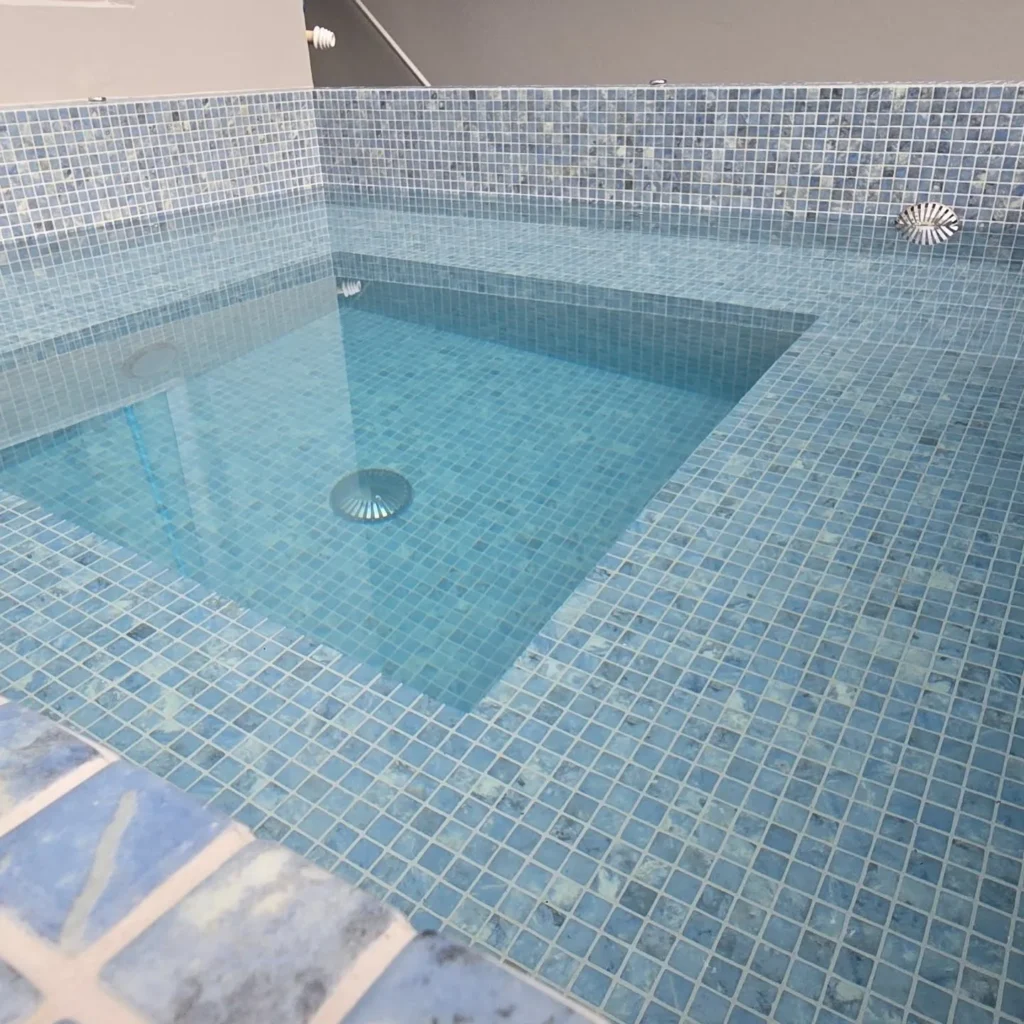
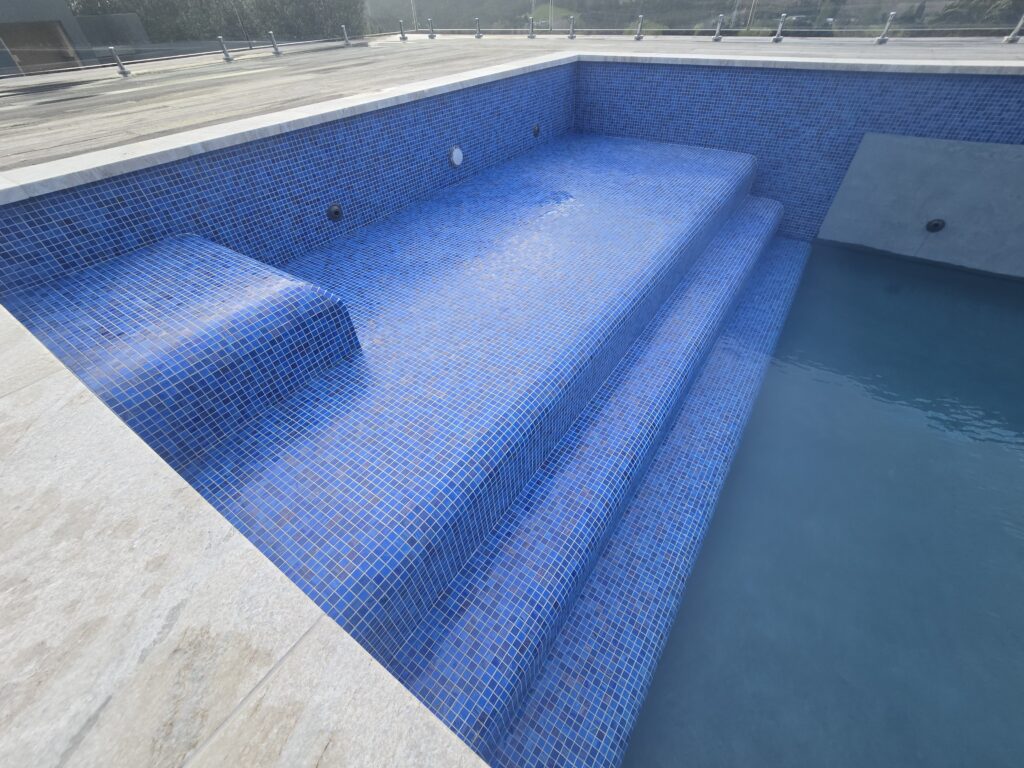
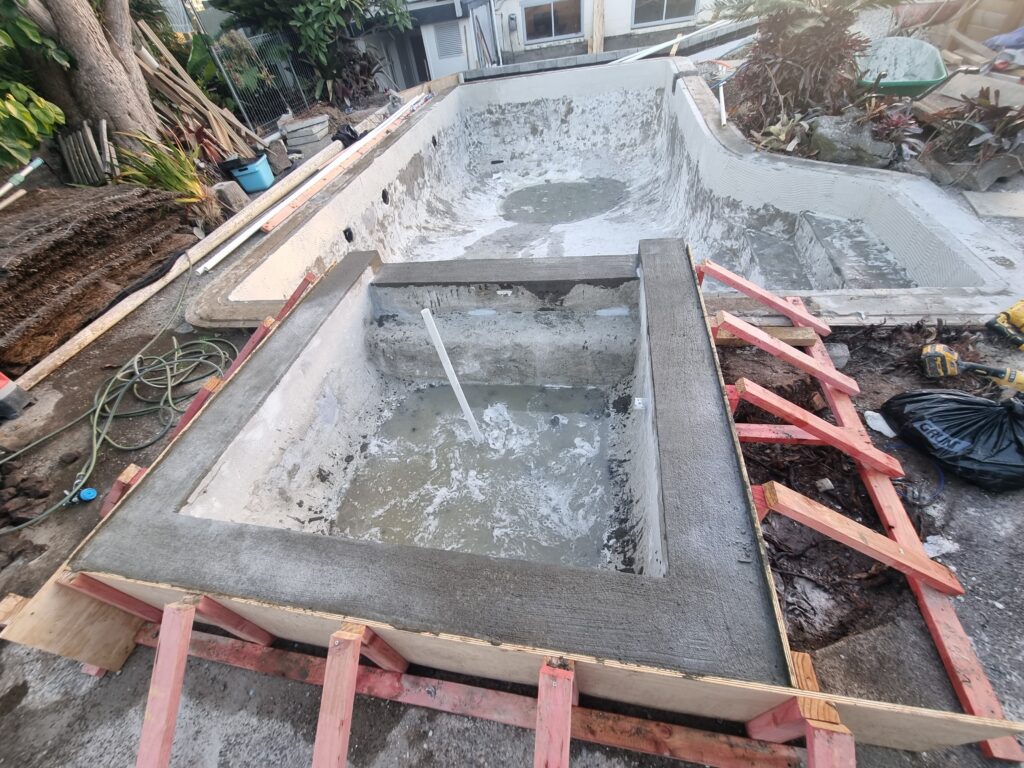
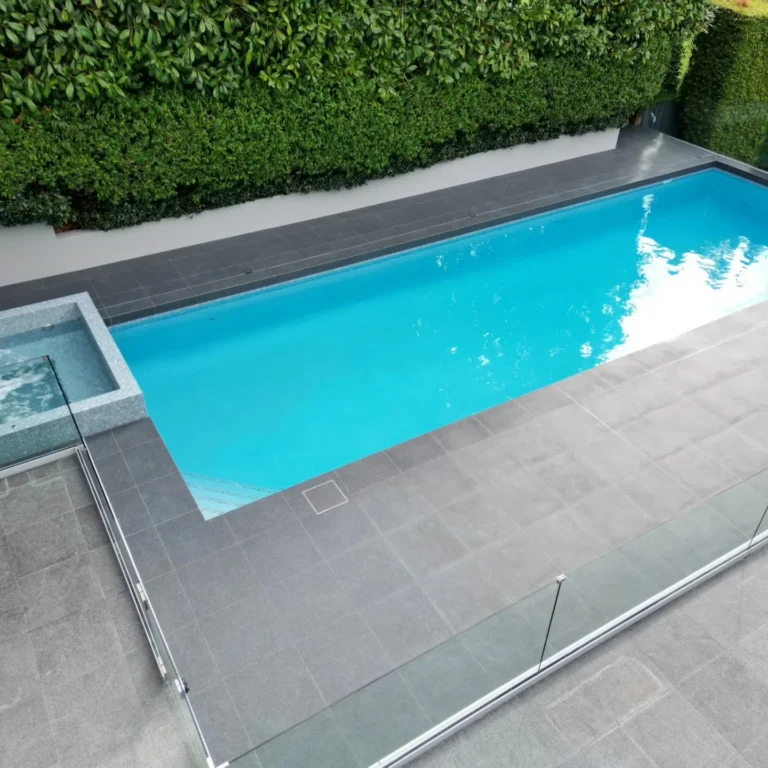
Artisan Stone & Tile supplies and installs pool coping across Auckland, on concrete and fibreglass pools alike. Drop-face, bullnose, natural stone and premium porcelain, set to last in Auckland’s climate. Honest quotes and a free site visit before you commit anything.
5.0 ★ on Google · 35+ five-star reviews · Concrete & fibreglass · Drop-face specialists · Auckland-wide
5.0 ★ on Google · 35+ reviewsDrop-face coping specialistsConcrete & fibreglass pools~$100-$145 / linear metre installed3-5 days, no full drain
Trusted by leading Pool Companies
In short
Pool coping is the capping that finishes the top edge of your pool, where you step and sit. We supply and install it on both concrete and fibreglass pools, in natural stone, porcelain or concrete. Drop-face is the popular modern profile, and most jobs run about $100 to $145 per linear metre installed, or from $5,000 to $8,500 plus the copings for a full replacement. A typical replacement takes 3 to 5 days and rarely needs the pool fully drained. Every pool needs a capped edge, so if yours is loose, cracked or dated, it is worth sorting properly.
The basics
What are pool coping stones?
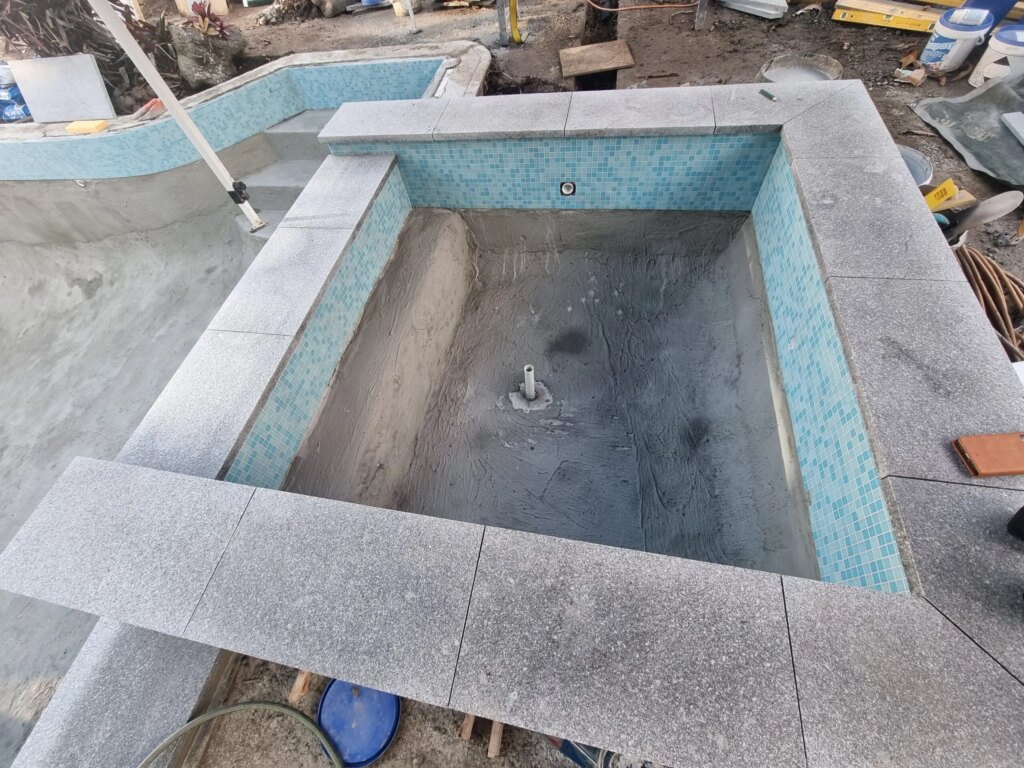
Pool coping is the row of stones or pavers that caps the top outer edge of the pool wall, sitting on the concrete bond beam. It is the part you stand on, sit on, and see first.
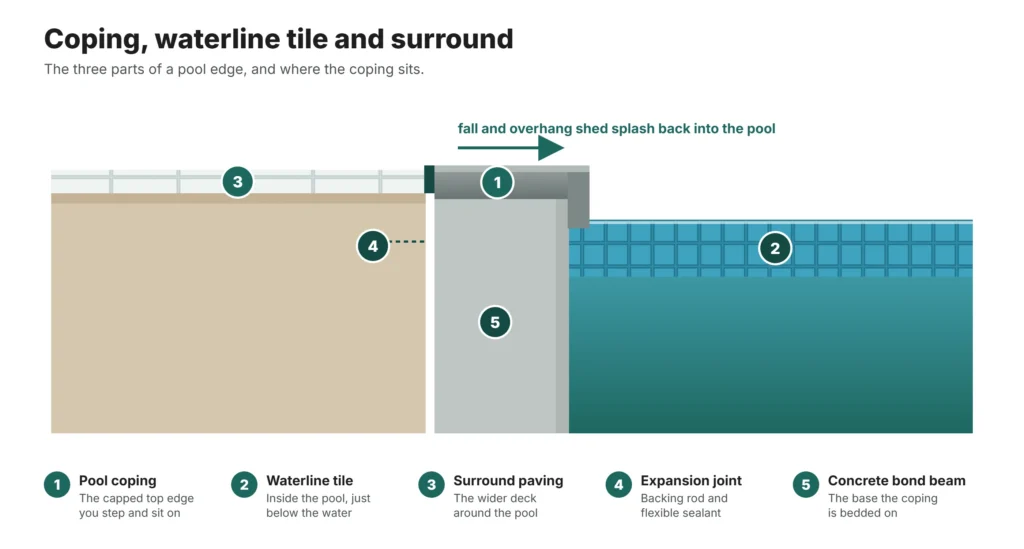
Coping does three jobs. It finishes the pool edge cleanly, it gives you a safe, slip-resistant surface to step onto, and its fall and overhang send splash water away from the pool structure rather than letting it pool against the shell. Every in-ground pool needs a capped edge, so this is not an optional extra – the only real choice is the material and profile.
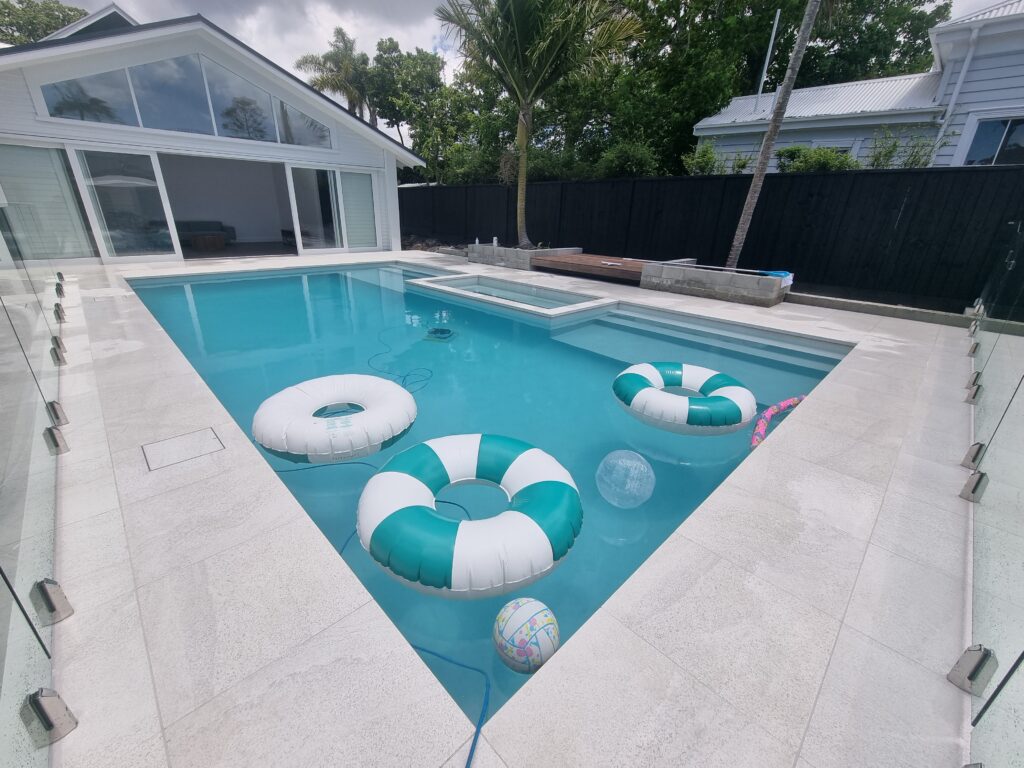
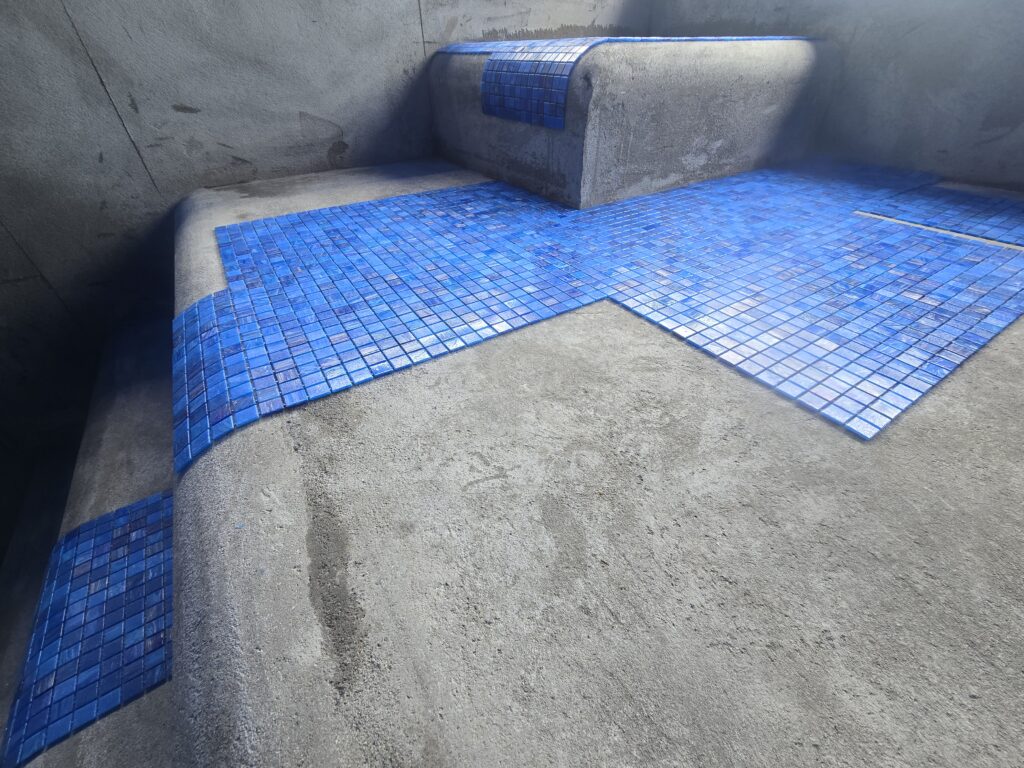
Coping is a different job from two things people often confuse it with. It is not the waterline pool tiling that sits just below the water inside the pool, and it is not the pool surrounds and paving that make up the wider deck. Coping is the narrow edge band that joins the two.
Profiles
Pool coping profiles: drop-face, bullnose and more
The profile is the shape of the coping’s front edge, and it sets the whole look of the pool.
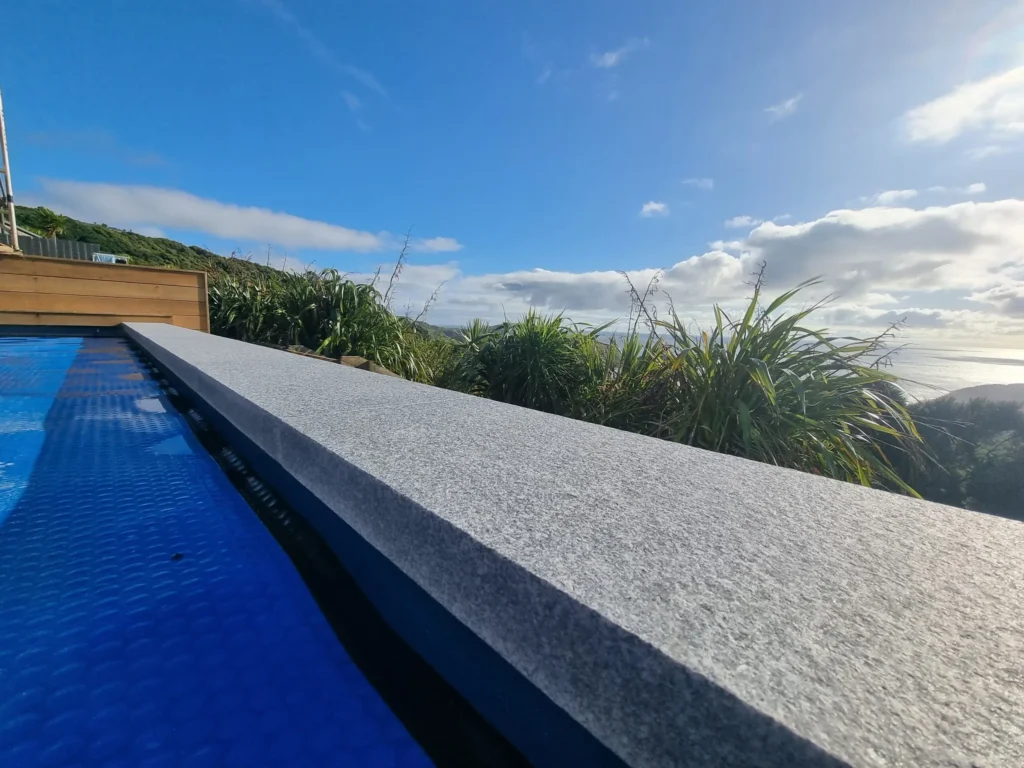
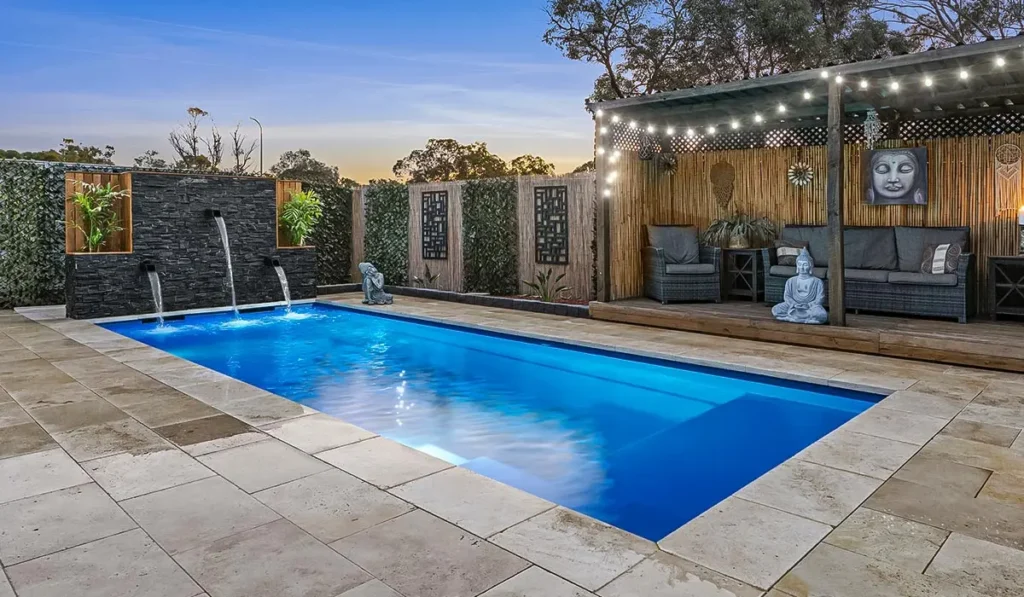
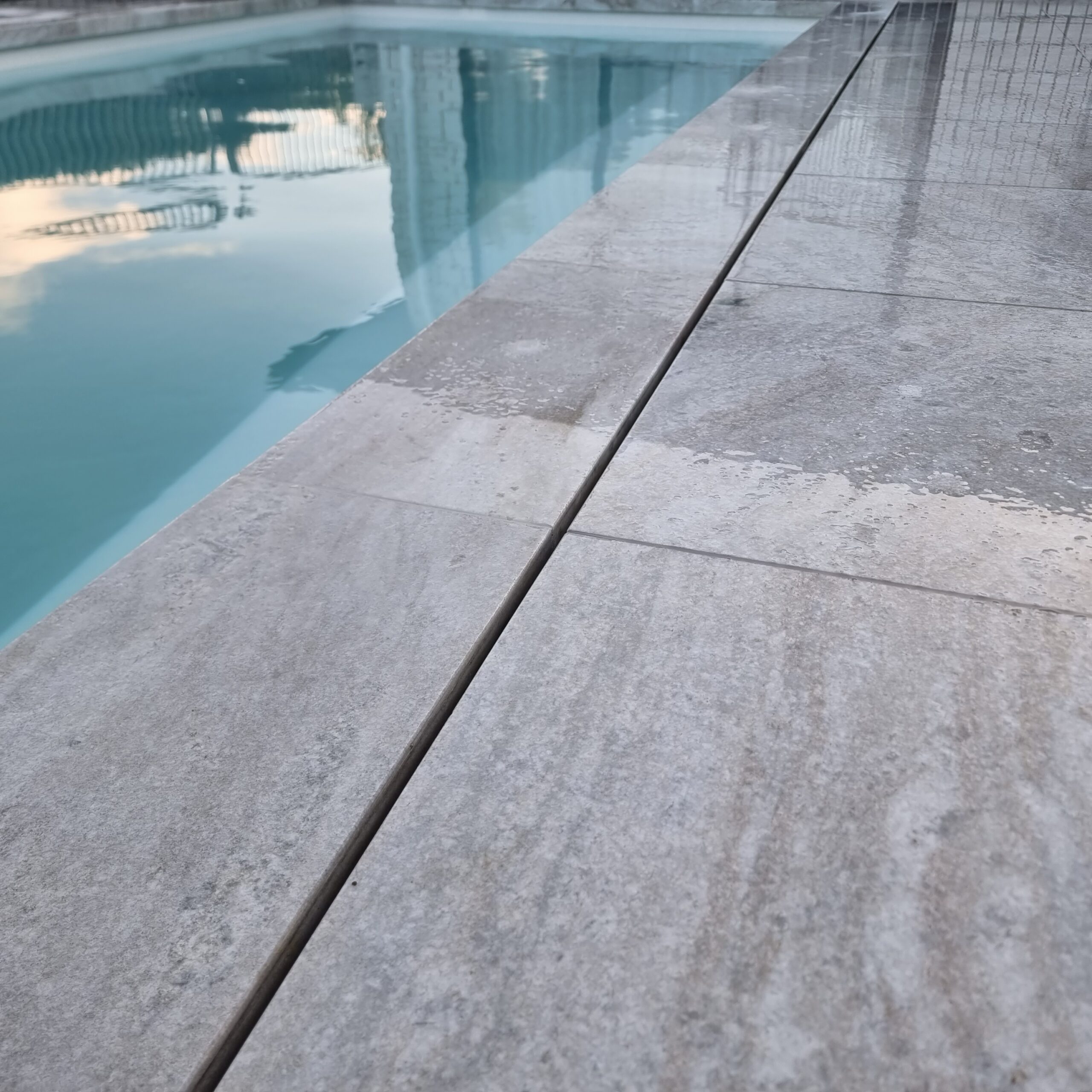
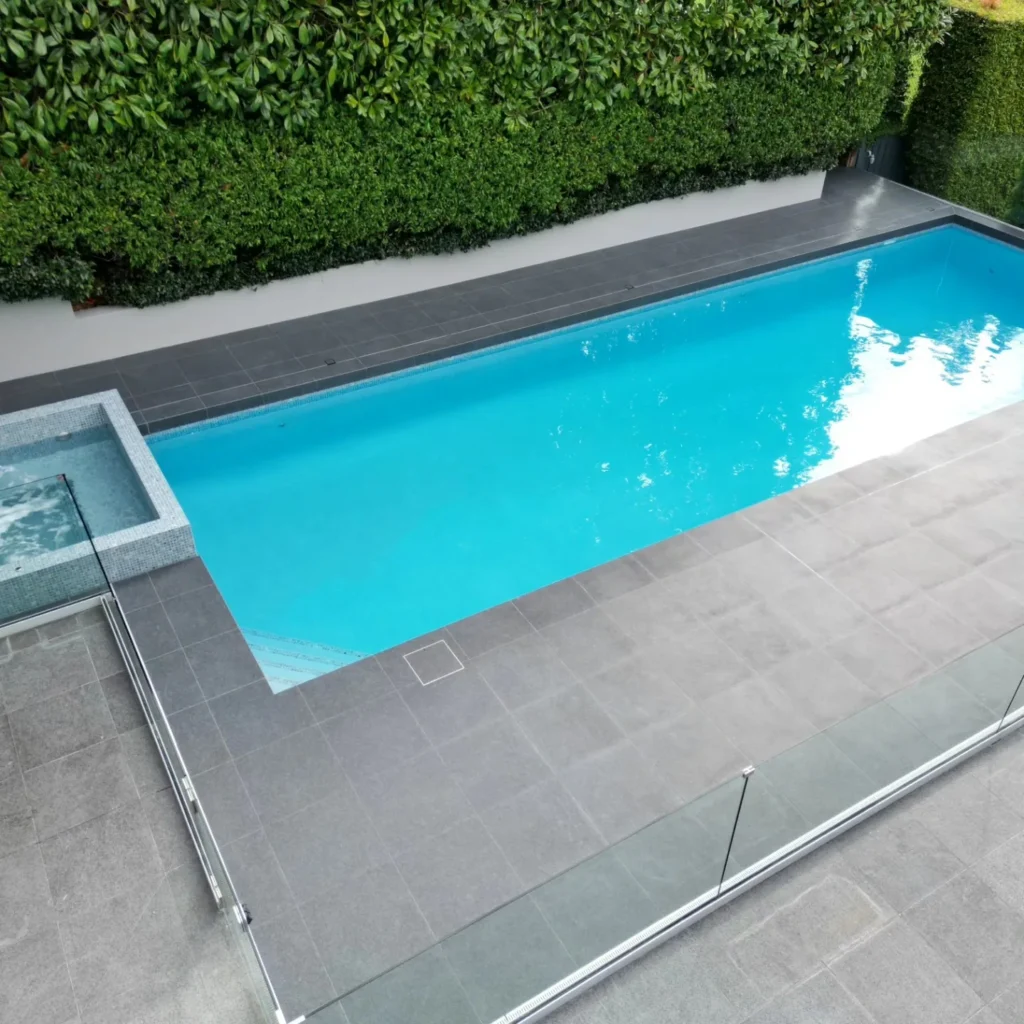
Drop-face coping is the profile most Auckland homeowners choose today, and it is roughly 7 in 10 of the jobs we install. The face hangs over the pool edge by 25 to 40mm, hiding the bond beam and any waterline tile for a clean, modern line. The overhang is not just for looks – it directs splash back into the pool instead of onto the paving.
Bullnose coping has a rounded top edge and no overhang. It reads as more traditional, and it suits older pool designs and fibreglass retrofits where a softer edge fits the era of the pool.
Square-edge (arris) and flush profiles, where the coping sits level with the deck, are also available for a minimalist look, though they are far less common here. We fit whichever profile matches your pool and paving.
Width matters as much as profile. Coping runs from 300mm to 500mm wide, and 350 to 400mm is the sweet spot for most pools – wide enough to sit on comfortably, without overpowering the edge. Our drop-face versus bullnose coping guide compares the profiles on looks, price and pool style.
Materials
Choosing a coping material - stone, porcelain and concrete
The material sets the look, how it wears, and a large part of the cost. Six options work well around Auckland pools.
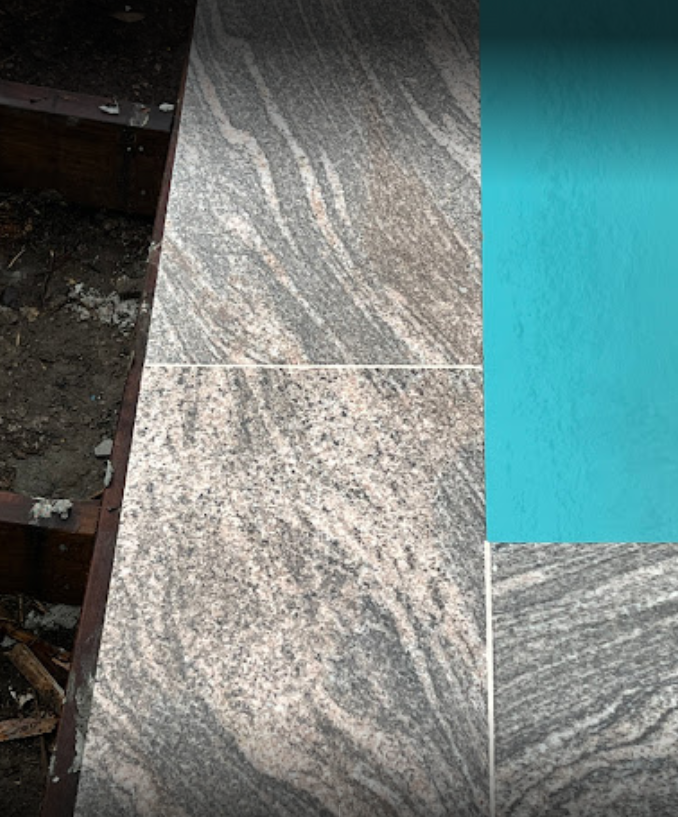
Natural stone is the most popular choice. Bluestone leads it – it scores R11 or higher for grip, shrugs off salt, and stays cooler underfoot than darker stone. Granite and sandstone sit alongside it at the premium end, lasting 30 years or more with little upkeep. Premium porcelain is the newest option: low maintenance, consistent colour and a slim profile, though it needs precise installation. Concrete pavers are the budget pick and still perform well in Auckland’s climate. None of these is a wrong choice – it comes down to look, budget and how much upkeep you want.
Two Auckland-specific things guide the choice. First, salt: about 80% of new pools here run salt chlorination, and salt draws efflorescence (white crusty marks) out of porous stones like some sandstones and unsealed concrete. Bluestone and granite are naturally salt-resistant and rarely show it. Second, grip: pick a honed or textured finish rated R11 or higher and avoid polished stone, which turns dangerously slick when wet.
Colour matching is the last piece. Natural stone varies batch to batch, so an exact match to older paving is rarely possible – we either source as close as we can or choose a deliberate, complementary contrast that looks intentional. Dark stone and drop-face profiles dominate Auckland projects right now, with porcelain the fastest-growing choice.
Coping is priced by the linear metre, and installed work generally runs $100 to $145 per metre. The labour is much the same whichever material you pick – what moves the price is the coping itself. Larger stones and porcelain cost more than a standard concrete paver, and porcelain always sits at the top. Pool type (concrete or fibreglass), pool shape and site access do the rest.
A full coping replacement starts around $5,000 to $8,500 plus the cost of the copings. It is more straightforward, and cheaper, on a concrete pool than a fibreglass one. Regrouting or patch repairs are charged at an hourly rate and quoted once we have seen the pool.
What
What it covers
Typical price (excl GST)
Coping supplied and installed
Priced by the linear metre, most materials
$100 to $145 per linear metre
Full coping replacement
Strip the old coping, prep the bond beam, bed, grout and seal
From $5,000 to $8,500 plus the copings
Regrouting
Raking out and regrouting coping that is still sound
Hourly rate, quoted after a site visit
Patch repairs and resetting
Lifting and resetting stones that rock underfoot
Hourly rate, quoted after a site visit
Swipe the table sideways to see every column.
One thing to skip: painting old coping. It costs a few hundred dollars but lasts a season or two, and it hides cracked grout or loose stones instead of fixing them. There is also the resale angle – a cracked or stained edge reads as deferred maintenance, and buyers discount the whole property for it, usually by far more than the coping would have cost to put right.
Prices are a guide only, exclude GST and the copings, and are confirmed at a free site visit. Our pool coping cost guide breaks pricing down by material and width with real Auckland examples.
The process
How pool coping is installed
A tidy coping job is about the base it sits on and the way water is managed – not a coating.
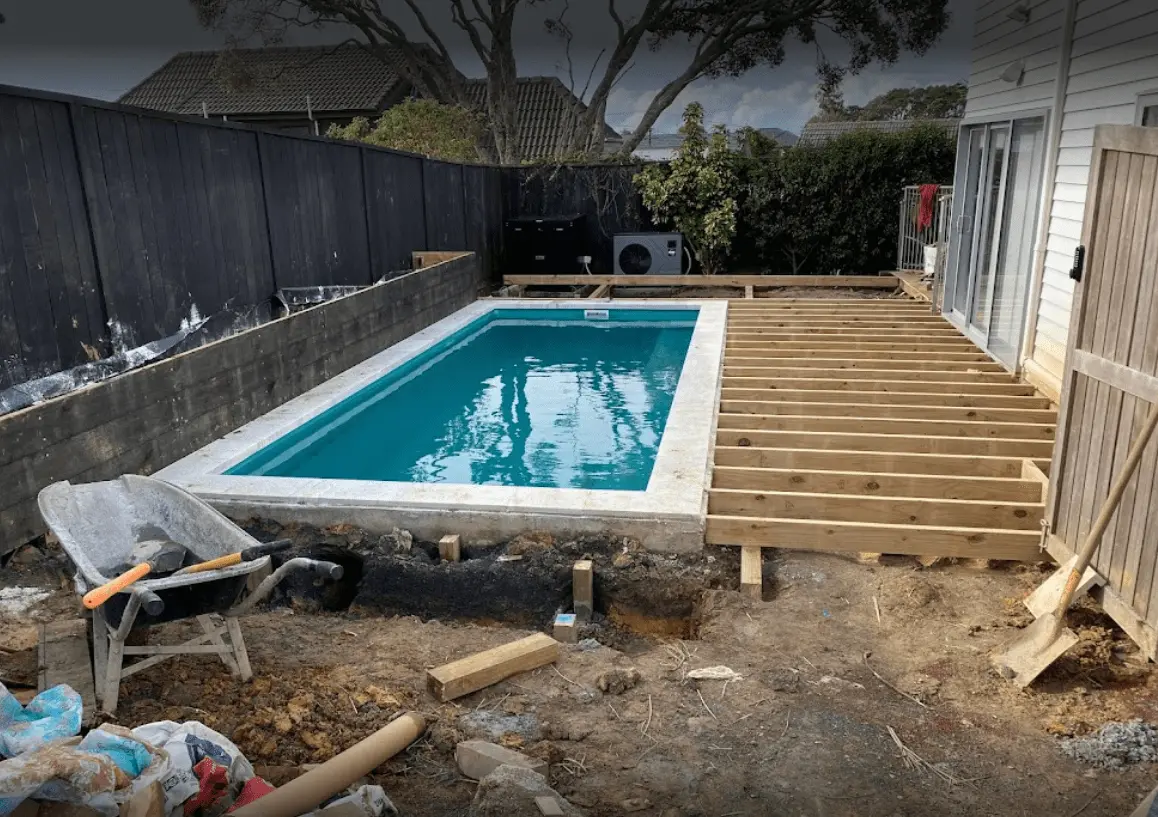
The work runs in a clear order. We strip the old coping, then clean and true the concrete bond beam underneath, patching it where it has cracked (about 1 in 3 jobs need some beam repair, and you rarely see the full extent until the old coping is off). New stones are then bedded on a flexible adhesive, set with the correct fall so water runs away from the shell, and finally grouted and sealed. Between the coping and the deck we run a flexible expansion joint – a backing rod and sealant – so seasonal movement flexes the joint rather than cracking the stone. The adhesive needs 24 to 48 hours to cure before the pool refills.
How pool coping is installed
A tidy edge is about the base and the fall, not a coating.
1Strip old coping
2Clean & true the bond beamrepair if cracked
3Bed on flexible adhesivewith correct fall
4Expansion jointbacking rod + sealant
5Grout & seal
6Cure24-48 hrs
Most jobs take 3-5 days · the pool stays full (water dropped 150-200mm).
Most replacements take 3 to 5 days, and you will not need to drain the pool – we drop the water 150 to 200mm below the coping line. Your pool fence stays up and compliant throughout, or we put temporary fencing in place if the existing fence fixes to the coping.
You do not need Auckland Council building consent for a like-for-like coping replacement; it counts as maintenance. Just keep the fencing right: the 1.2 metre minimum height is measured from the highest climbable surface, and new coping counts, so it must not shorten the effective fence height. The rules sit with Building Performance New Zealand. Our pool coping installation guide walks through each step.
Repair or replace
Repair, regrout or replace your coping?
Coping usually warns you before it fails. The common signs are cracked grout lines, stones that rock or lift when you step on them, gaps opening at the joints, and water sitting behind the edge instead of draining away.
How far you go depends on what has actually failed. If the grout is cracking but the stones are solid, a regrout (charged hourly) tidies it up and buys years. If stones rock underfoot, the adhesive bond has let go and those sections need resetting. If water is tracking in behind the coping, the edge has lost its fall and seal and that run needs stripping back and redoing properly. In Auckland the usual cause is ground movement – clay soils in the west expand and contract, volcanic ground in the central suburbs behaves differently again – along with tree roots within about 3 metres of the pool.
Repair, regrout or replace?
Regrout
Grout cracking
Stones still solid
Buys several years
Hourly rate
Reset sections
Stones rock underfoot
Adhesive bond has gone
Localised areas only
Hourly rate
Full replacement
More than 30% affected
Water sitting behind the edge
Consistent colour all round
From $5,000-$8,500 + copings
A free site visit confirms which one your pool needs.
The rule of thumb is simple: once more than 30% of the coping is loose, cracked or lifting, a full replacement costs less per metre than patching, and you get a consistent colour and a fresh edge all the way round. Patching also runs into colour matching, since natural stone shifts between batches.
Two questions come up a lot. You do not need to fully drain the pool to replace coping, and if you are replacing a vinyl liner, the coping usually comes off as part of that job anyway. Our repair versus replace guide and our notes on cracked pool coping cover the decision with photos.
Fibreglass pools
Coping for fibreglass pools
Yes, you can put stone coping on a fibreglass pool, and we do it regularly across Auckland – it is one of the things that sets us apart, because not every installer will touch a fibreglass shell.
The difference is the adhesive. A fibreglass shell expands and contracts more than concrete, around 3 to 4mm over a 10 metre span, so a rigid adhesive cracks within a season or two. We set fibreglass coping on a flexible polyurethane adhesive that moves with the shell. The moulded lip of most fibreglass pools sits on a concrete bond beam, and the stone coping goes on top of that, so the finished edge looks identical to a concrete pool.
It is a common upgrade – swapping a tired plastic or pebble lip for natural stone transforms an older fibreglass pool. The job takes 3 to 5 days, the same as concrete. Our fibreglass pool coping guide covers the full process, and coping often forms part of a wider pool renovation.
Aftercare
Caring for your coping
Coping is low effort once it is in. Give it a monthly wash over summer with warm water, a pH-neutral cleaner and a soft brush. The key job is sealing: use a penetrating (impregnating) sealer, never a topical one, which peels and goes white. Reseal travertine every 12 to 18 months, concrete pavers every 2 to 3 years, and bluestone or granite every 3 to 5 years. Sunscreen is the usual stain culprit – a baking-soda poultice left overnight lifts it. If you pressure wash, keep it under 1,500 PSI. Our guides to cleaning natural stone coping and sealing pool coping set out a seasonal routine.
Add-on
Under-coping LED lighting
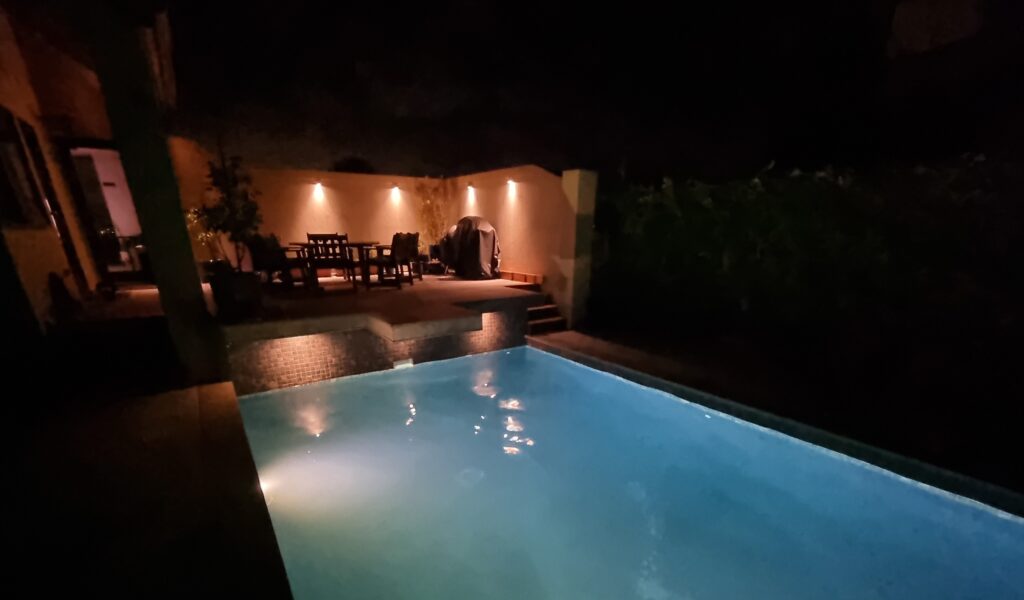
A strip of LED under a drop-face lip washes light down the pool wall at night and lifts the whole area. The time to add it is during a coping install – the wiring and conduit go in before the stones are set, so there is no cutting back into finished work later. If you are already replacing your coping, it is worth deciding on lighting now rather than retrofitting it. It pairs well with a wider outdoor lighting plan for the pool surround.
Recent work
Recent coping projects across Auckland
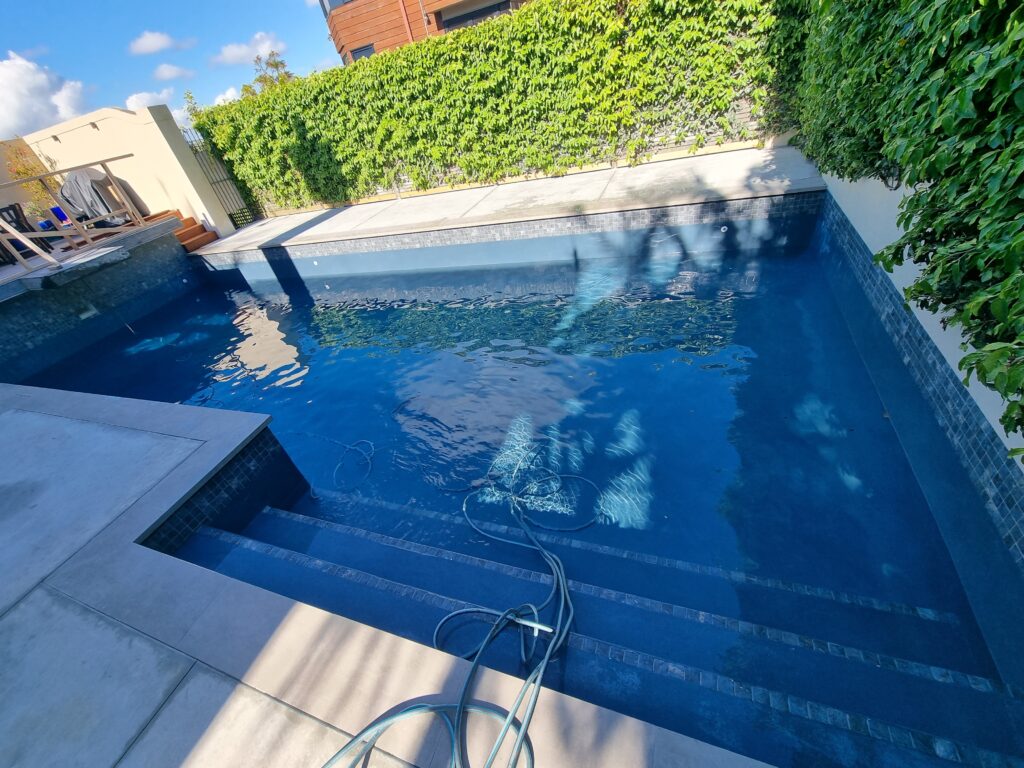
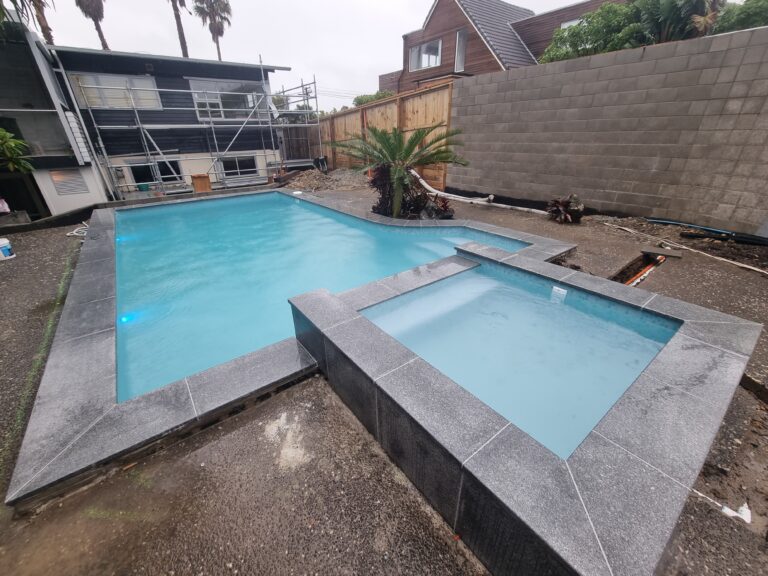
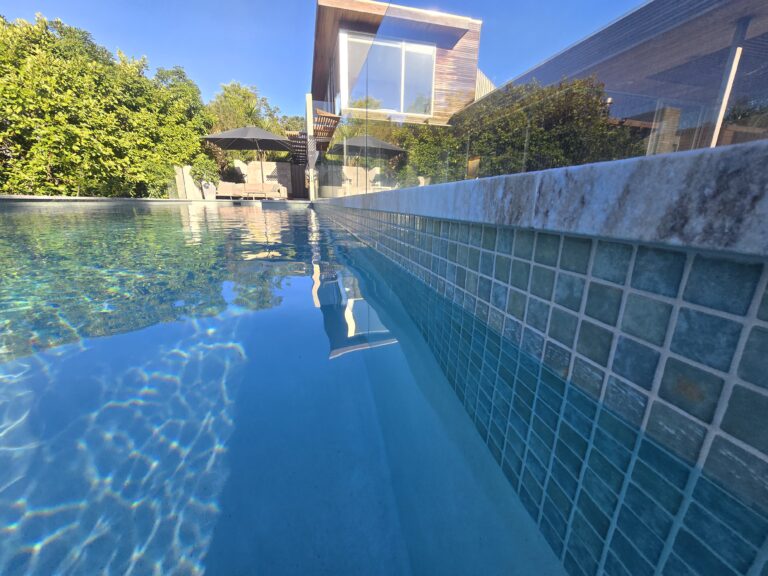
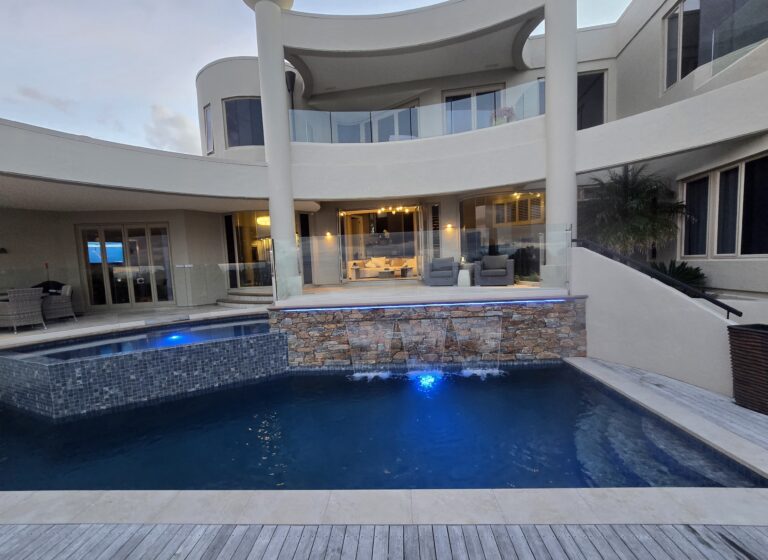
Real coping edges, real Auckland suburbs. Each shows the profile, material and finished result.
From pool coping to complete renovation, our team has delivered stunning results across Auckland. See how we’ve turned our clients’ pool visions into reality.
Our Happy Clients
⭐⭐⭐⭐⭐ 5.0 from 35+ five-star reviews
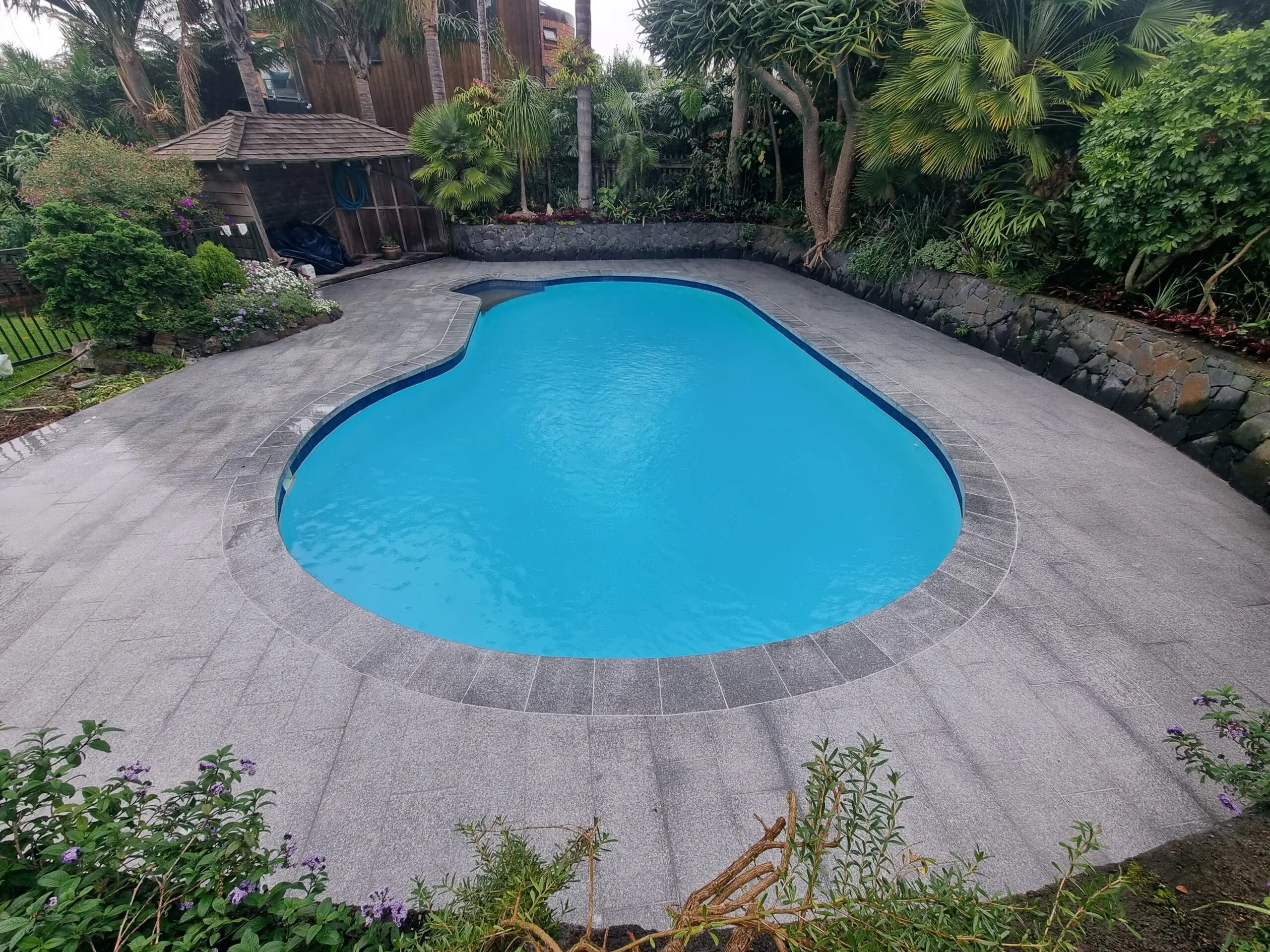
Mario and his team did an excellent job replacing the copings and tiles around a 30 year old kidney shaped pool. Large area and not an easy one with all the curves.
Their attention to detail was excellent but the most impressive part was how they engineered the flow of rain water on tiles around pool to drain naturally.
Mario and his team were a pleasure to deal with. Their knowledge and craftsmanship is exceptional.
Absolutely outstanding service and workmanship from Mario and his team. From the initial quote to the final installation we have been so impressed. Mario has by far been one of the best tradesman we have dealt with. He is prompt with his communication and incredibly honest and upfront. He is fantastic with advice and sharing his knowledge about the products and overall design which we really appreciated.
Mario did a fantastic job on the coping around the pool, it was a difficult job and was completed on time, at the cost quoted and the finished results looks amazing as you can se from the before and after pictures. Highly recommend
Our pool was not installed completely level. Mario helped to rectify issues, grinding and levelling to produce an amazing outcome. Mario is an honest, hardworking perfectionist which shows in his outstanding work. Thank you.
Mario and his team did an amazing job on our pool - great to work with, excellent comms, and gave us great options. Highly recommend
Installed coping runs about $100 to $145 per linear metre, and a full replacement starts around $5,000 to $8,500 plus the copings. Regrouting and patch repairs are charged at an hourly rate. Prices exclude GST and are confirmed at a free site visit.
Yes. Every in-ground pool needs a capped edge – it finishes the pool, gives a safe stepping surface, and sheds splash water away from the shell. The choice is the material and profile, not whether to have it.
Yes. We drop the water 150 to 200mm below the coping line rather than draining the pool, so most replacements happen with the pool still full and the fence still up.
Rarely. Getting the bond beam true, the fall right and the flexible adhesive and expansion joint correct is what makes coping last. Done wrong, water tracks behind the edge and lifts the stones within a season or two.
A flexible expansion joint – a backing rod with a flexible sealant – between the coping and the surrounding deck. It lets seasonal ground movement flex the joint instead of cracking the coping or grout.
Natural stone coping lasts 20 to 30 years or more with proper installation and sealing. Grout and sealer need refreshing sooner – grout every 8 to 15 years, sealer every 1 to 5 years depending on the stone.
Yes. We install stone coping on fibreglass pools using a flexible adhesive that moves with the shell, so it does not crack. The finished edge looks identical to a concrete pool.
Bluestone and granite. Both are dense and naturally salt-resistant, so they rarely show the white efflorescence that salt draws out of porous stones. Keep up with sealing and they handle salt easily.
No, a like-for-like coping replacement counts as maintenance and needs no building consent. Your pool fencing must stay compliant, and the 1.2 metre height is measured from the highest climbable surface, so new coping must not shorten it.
A reputable installer should offer at least a 5-year workmanship warranty on adhesion and grout integrity. Artisan Stone & Tile provides a 10-year workmanship guarantee on all coping installations across Auckland. Get it in writing before work starts.
Get a free pool coping quote
Tell us about your pool and we will give you a straight answer and a clear quote after a free on-site visit. No pressure, no full payment upfront.