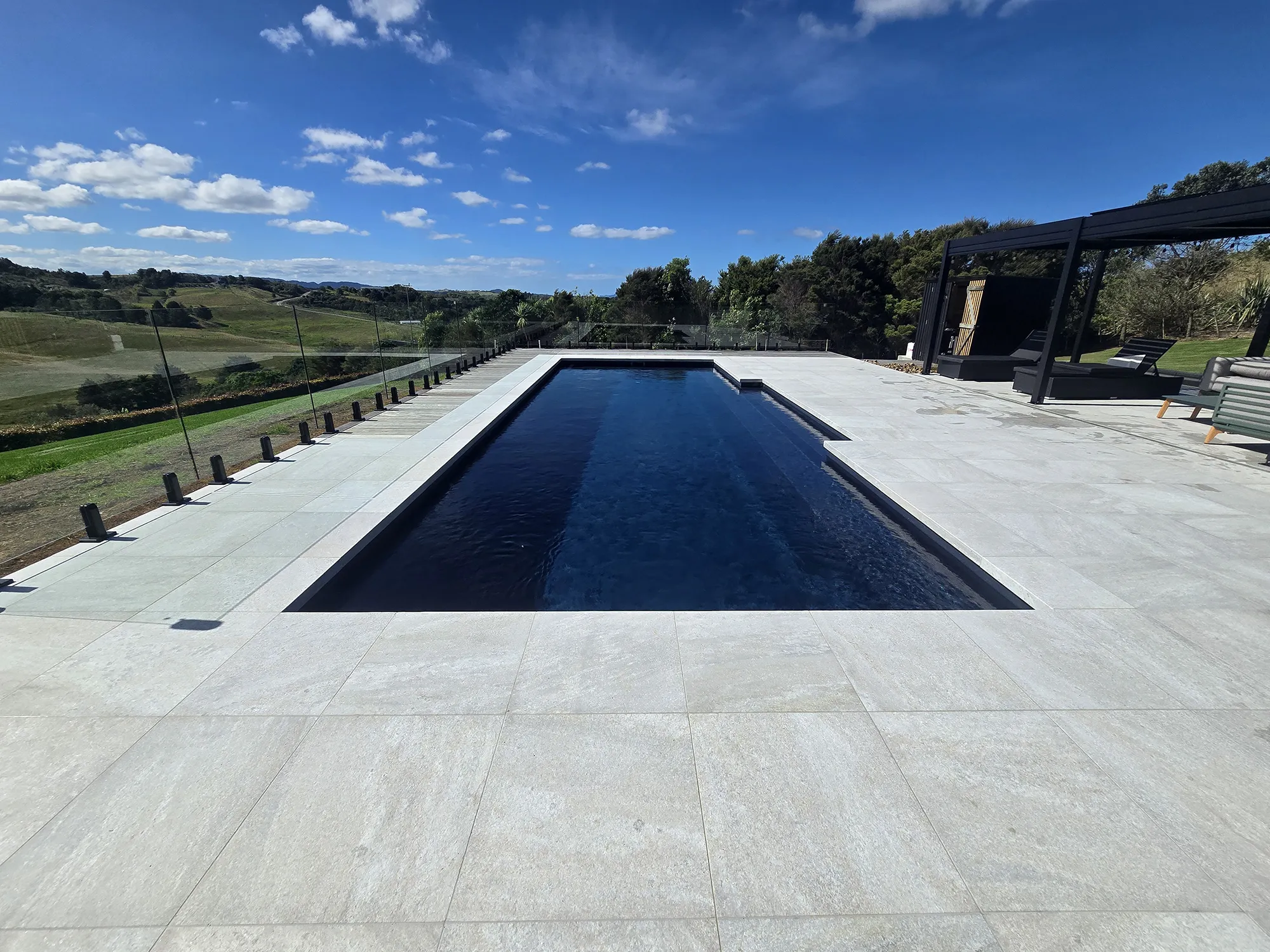







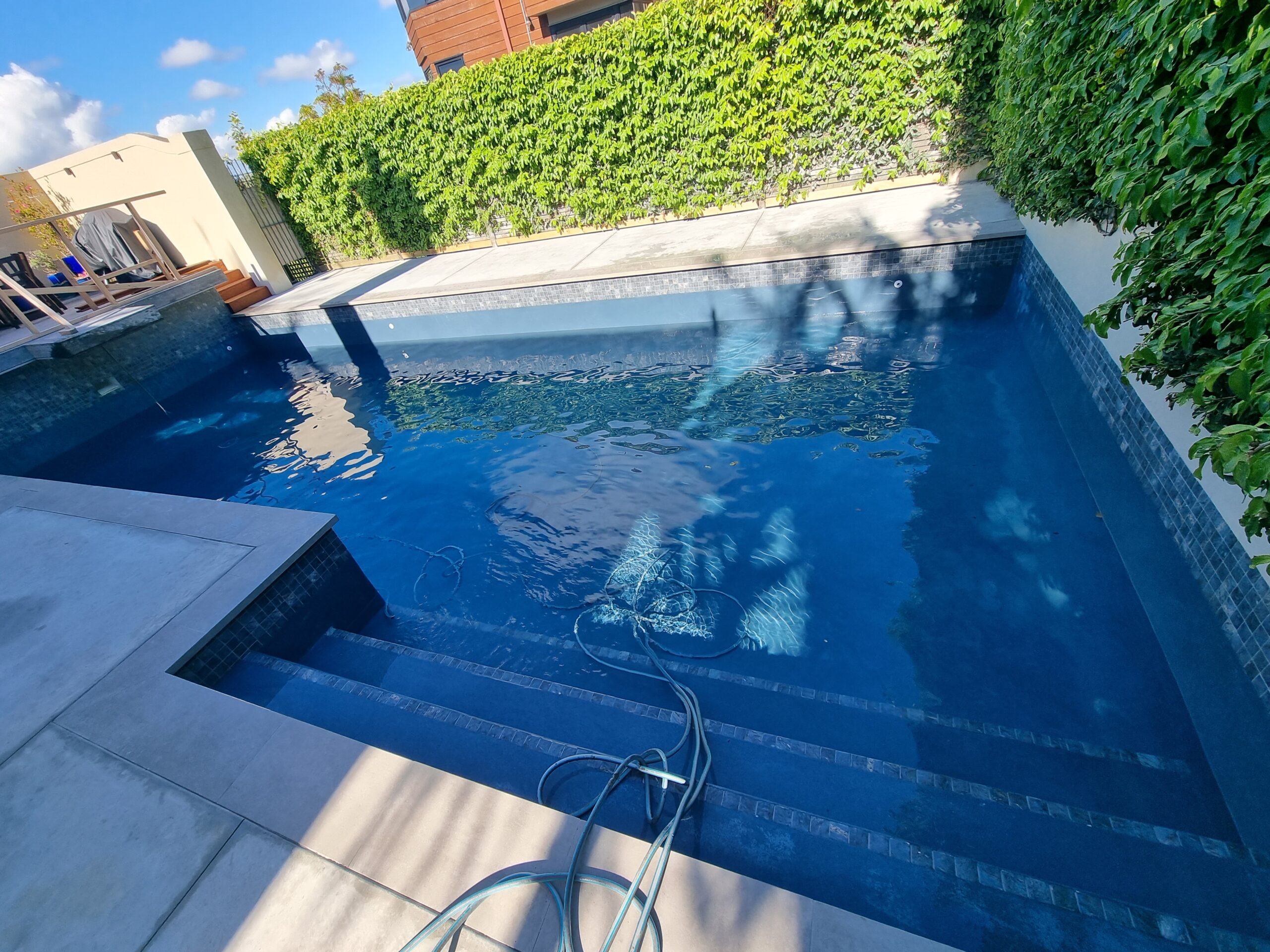
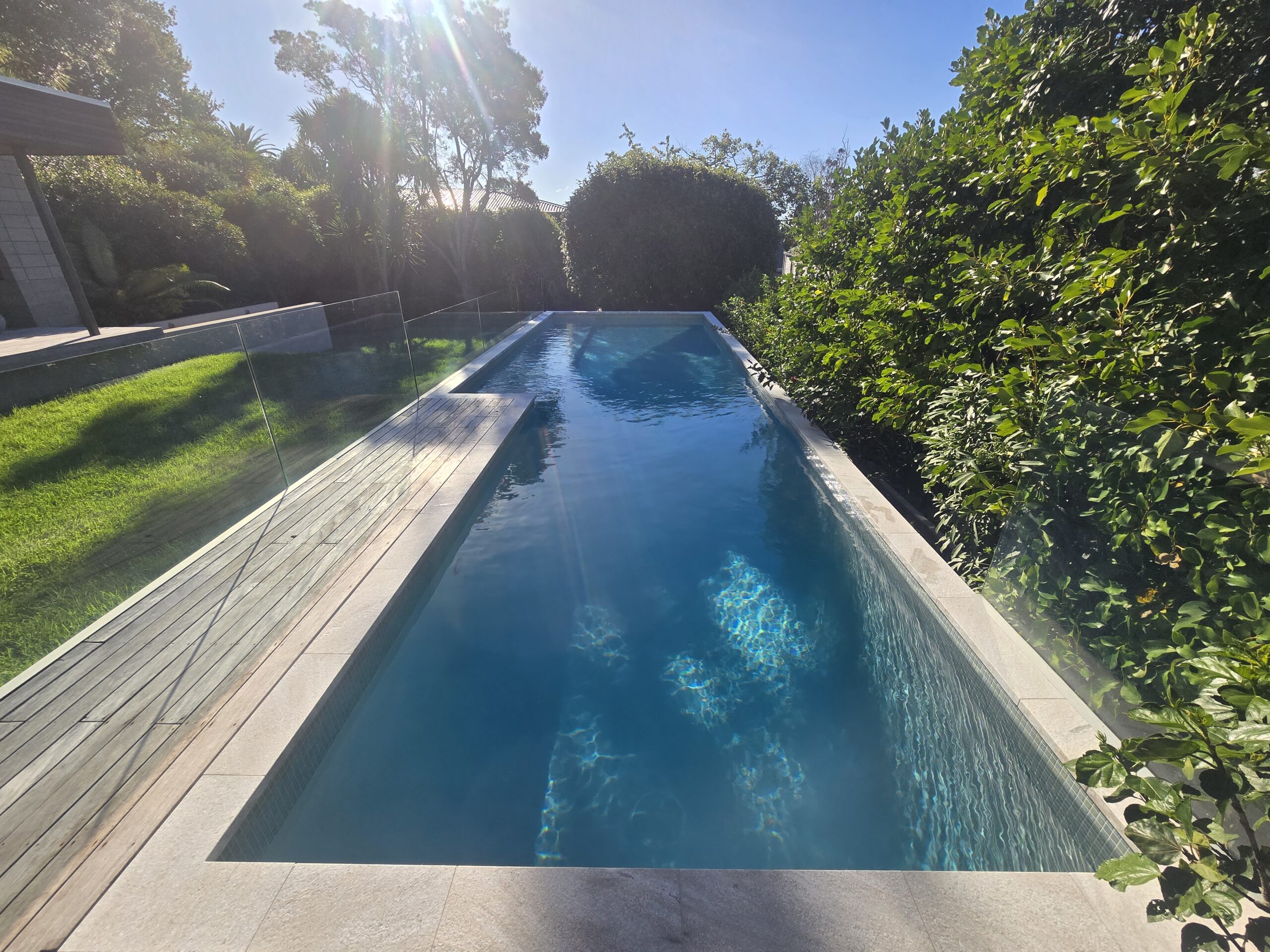
Waterline tiling, glass mosaic and full interior tiling for Auckland pools, waterproofed to hold up under constant immersion. Honest quotes, a free site visit, and a finish built to last.


Artisan Stone & Tile tiles Auckland pools properly, from a fresh waterline band to a full glass mosaic interior. Full interior tiling is for concrete pools; waterline tiling suits both concrete and fibreglass. A full tiled interior on a standard 8x4m concrete pool runs $40,000 to $52,000 plus tiles, and waterline tiling starts around $6,000 to $9,000 plus tiles. Every job is waterproofed to immersion standard and grouted with epoxy, because that is what makes tiling last.
Pool tiling means different things depending on how much of the pool you cover. We do all of it.

A band at the very top of the interior, right where the water sits. They stop a scum line of sunscreen, oils and minerals baking into the surface, and they are the easiest area to refresh on an otherwise sound pool. Waterline tiling works on concrete and fibreglass pools.
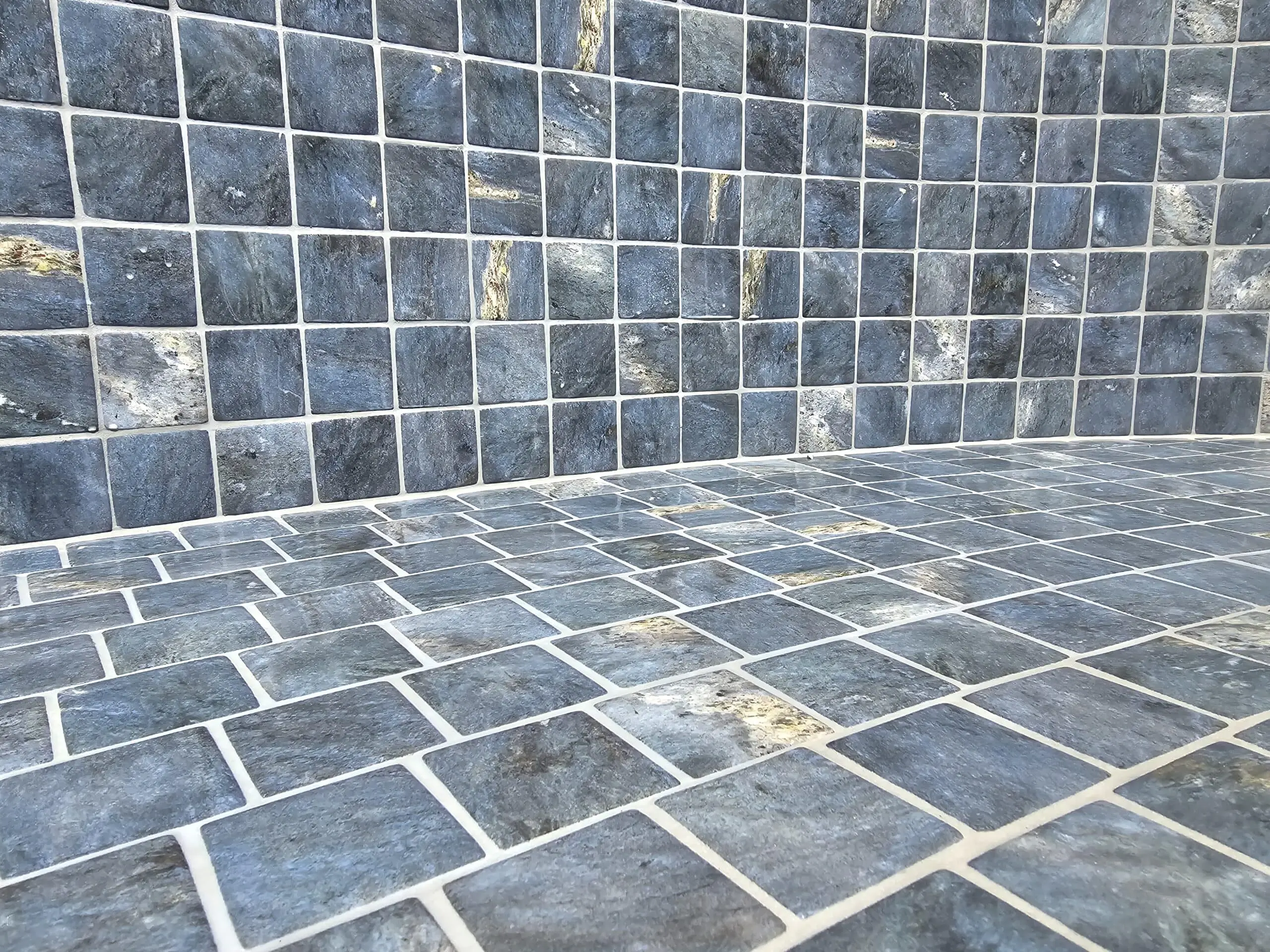
Covers the whole shell – walls, floor and steps – usually in glass mosaic or porcelain on mesh-backed sheets that follow the pool’s curves. This is a concrete-pool job.
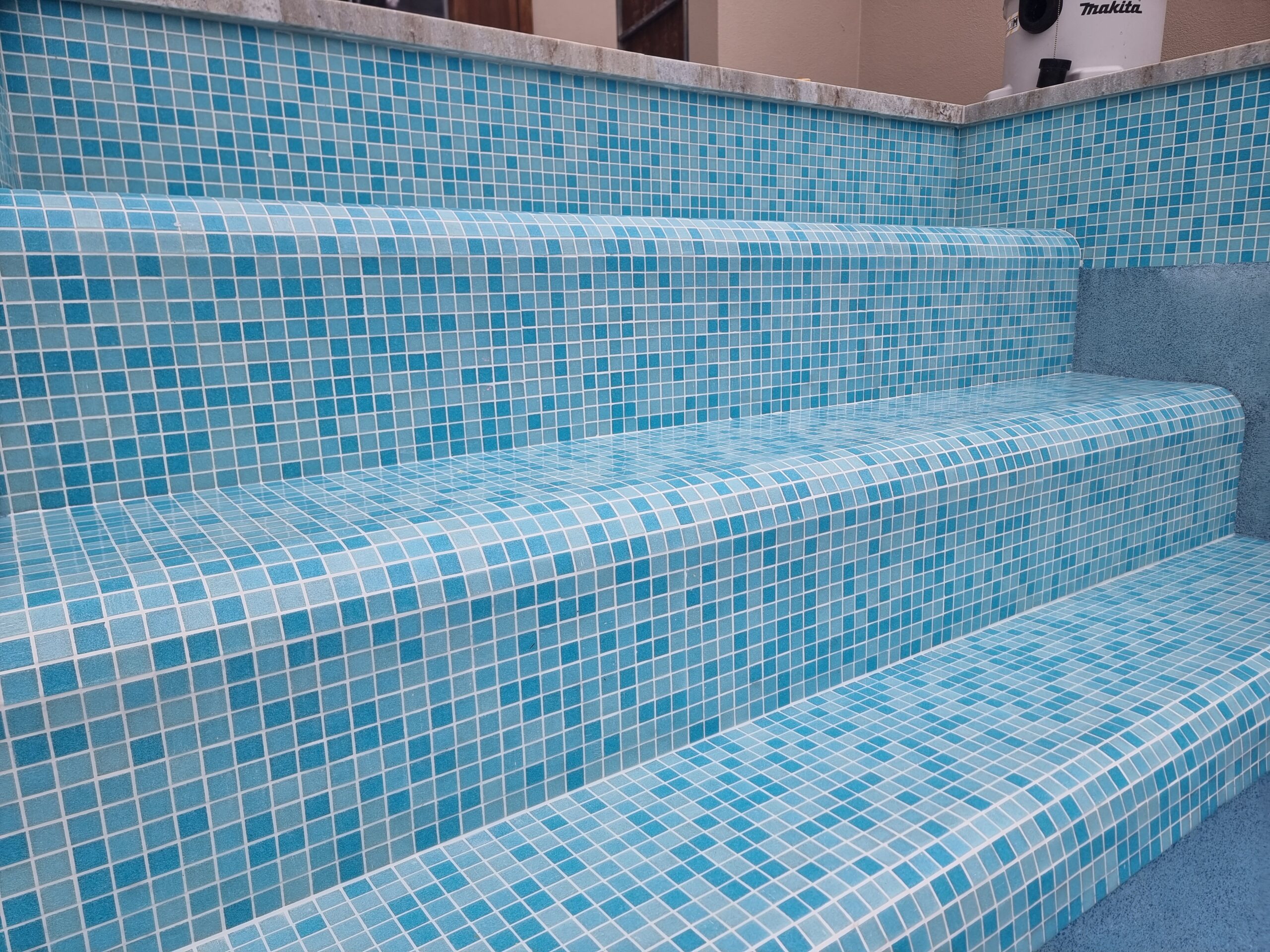
A row of contrasting tiles on submerged steps and ledges, so swimmers can judge depth and see where the floor drops away. A safety feature as much as a design one.
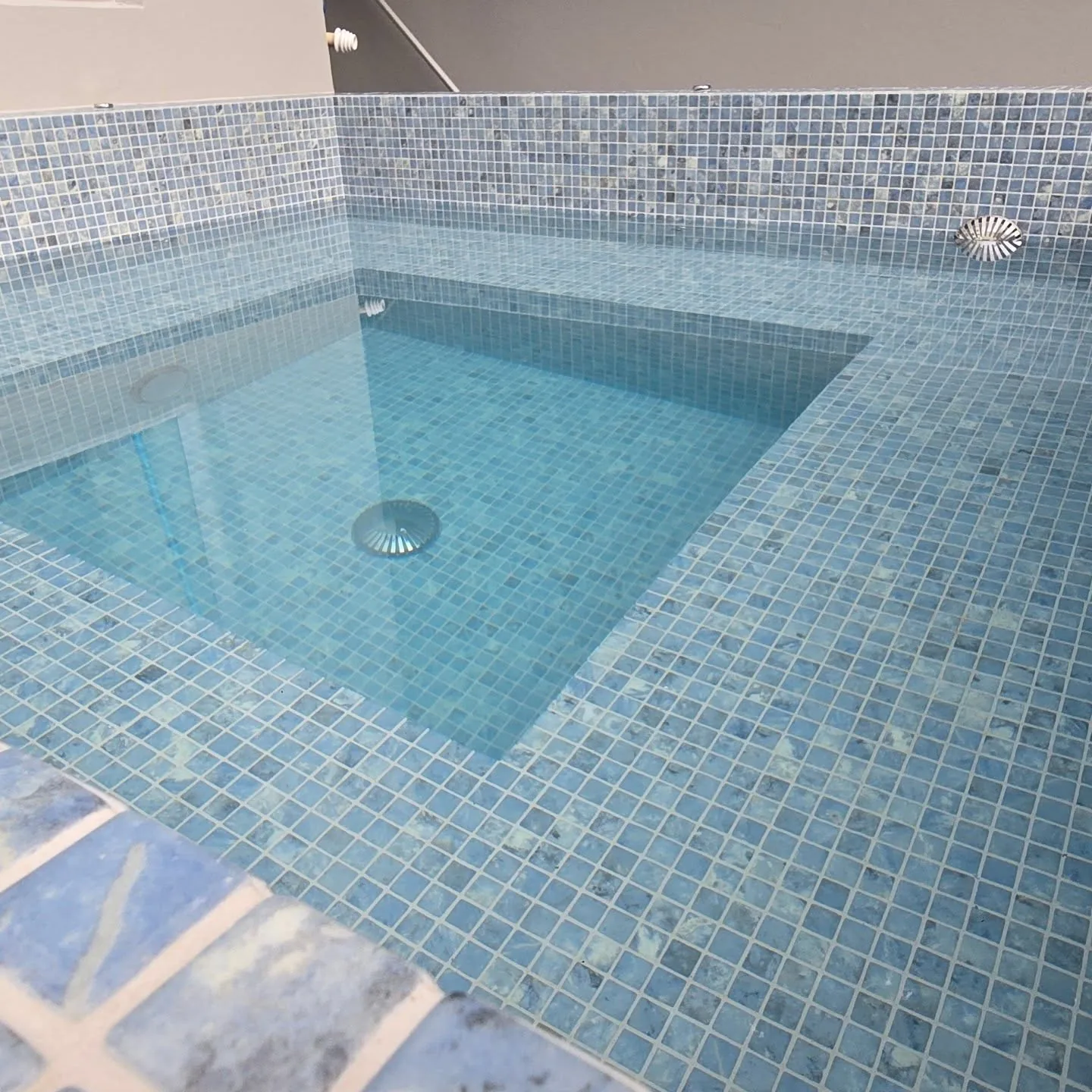
We also strip and replace tired or failing tiled surfaces. Tiling sits inside a wider pool renovation, alongside new coping stones at the pool edge and surrounds and paving around it.
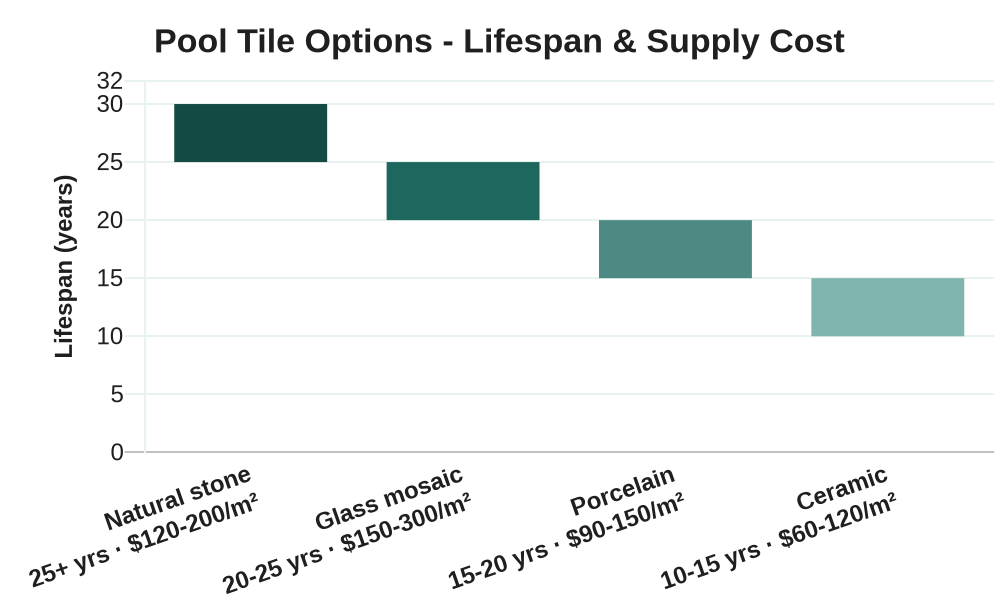
The tile sets the look, the lifespan and a large part of the supply cost. Here is how the main options compare.


| Tile | Supply $/m² | Lifespan | Best for | Notes |
|---|---|---|---|---|
| Glass mosaic (Ezarri / Bisazza) | $150-$300 | 20-25 years | Curves, feature walls, saltwater | Non-porous, widest colour range |
| Porcelain | $90-$150 | 15-20 years | Large, flat, rectangular pools | Frost-proof, low maintenance |
| Ceramic | $60-$120 | 10-15 years | Budget projects | Less frost-resistant |
| Natural stone | $120-$200 | 25+ years | Premium, natural look | Needs sealing; salt-vulnerable |
Glass mosaic is the pick for curved or freeform pools because the small format follows contours without awkward cuts, and it shrugs off saltwater. Porcelain covers large flat areas faster and needs little upkeep.
Every pool tile laid in New Zealand has to meet the Building Code slip-resistance standard, a P4 or P5 wet-pendulum rating. Our guide to pool tile options breaks each one down in full.
Pool tiling is priced on the work involved, and the tiles you choose are supplied on top. The figures below are the install cost. They reflect real jobs, not generic online estimates.
| Scope | What’s involved | Install price (excl GST, + tiles) |
|---|---|---|
| Waterline tiling (concrete or fibreglass) | Render, waterproof and tile the waterline band, epoxy grout | from $6,000-$9,000 + tiles |
| Full tiled interior (concrete only) | Render, waterproof and tile the whole shell, epoxy grout | $40,000-$52,000 + tiles |
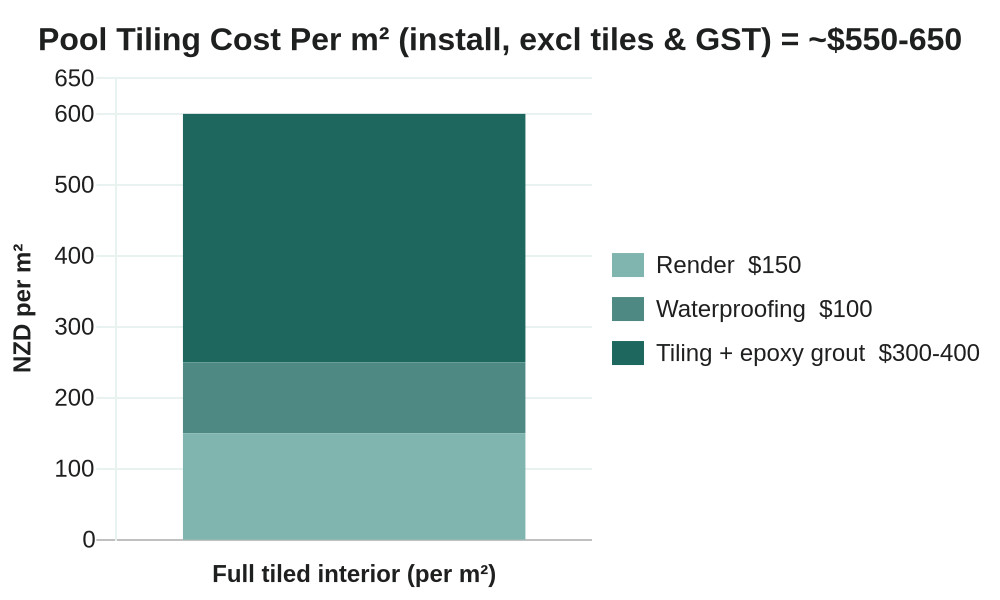
| The per-m² stack | Render ~$150 + waterproofing ~$100 + tiling and epoxy grout $300-$400 | ~$550-$650 / m² |
| Existing pool | Strip the old finish first before any of the above | added prep |
A standard 8x4m concrete pool has around 70 to 74 square metres of tileable interior. The tiles themselves are supplied on top: porcelain from about $90 per square metre, glass mosaic $150 to $300 per square metre.
Prices are a guide only and exclude GST and tiles. Your exact cost is confirmed at a free site visit.
Three things move the price most: the tile you choose, the pool’s size and shape, and how much stripping and prep an existing pool needs. For a full breakdown, see our pool tiling cost guide, compare finishes in our pool tile types guide, or read up on waterline-only work below.
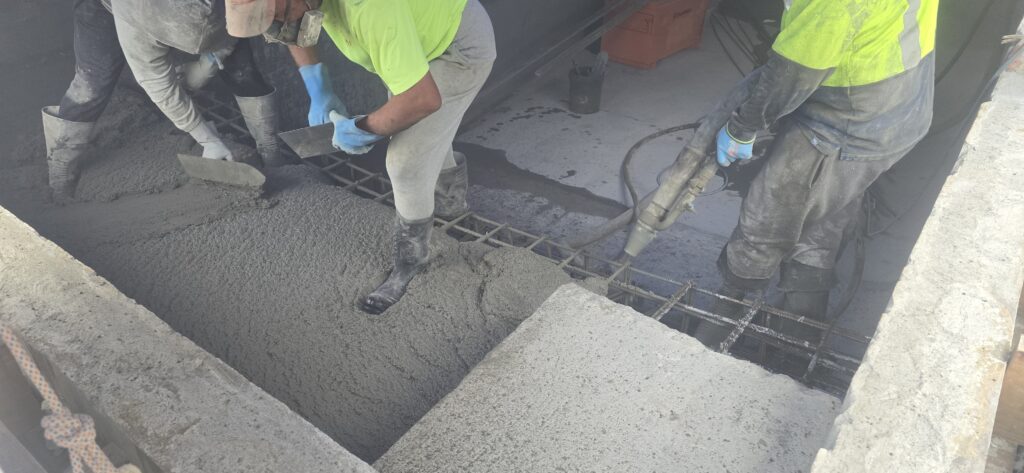
A tiled pool is only as good as what sits behind the tiles. Get the waterproofing wrong and the tiles lift within a year or two, so this is where we spend the most care.
Waterproofing is what makes it last, so it runs in this order.
Waterproofing and epoxy grout are what make it last.
Two details separate a pool that lasts from one that fails: an immersion-rated waterproof membrane, and epoxy grout throughout. We use both as standard. Pool fencing and Building Code slip-resistance rules are covered by Building Performance New Zealand.
How long it takes: a full pool retile takes 2 to 4 weeks from drain to first swim, depending on how much prep the old surface needs. Waterline-only tiling is much faster at 3 to 5 days, and either way the grout needs 7 to 14 days to cure before filling. The pool is out of action for the whole job, so autumn (March to May) is the best time to book, when you are closing the pool for winter anyway.
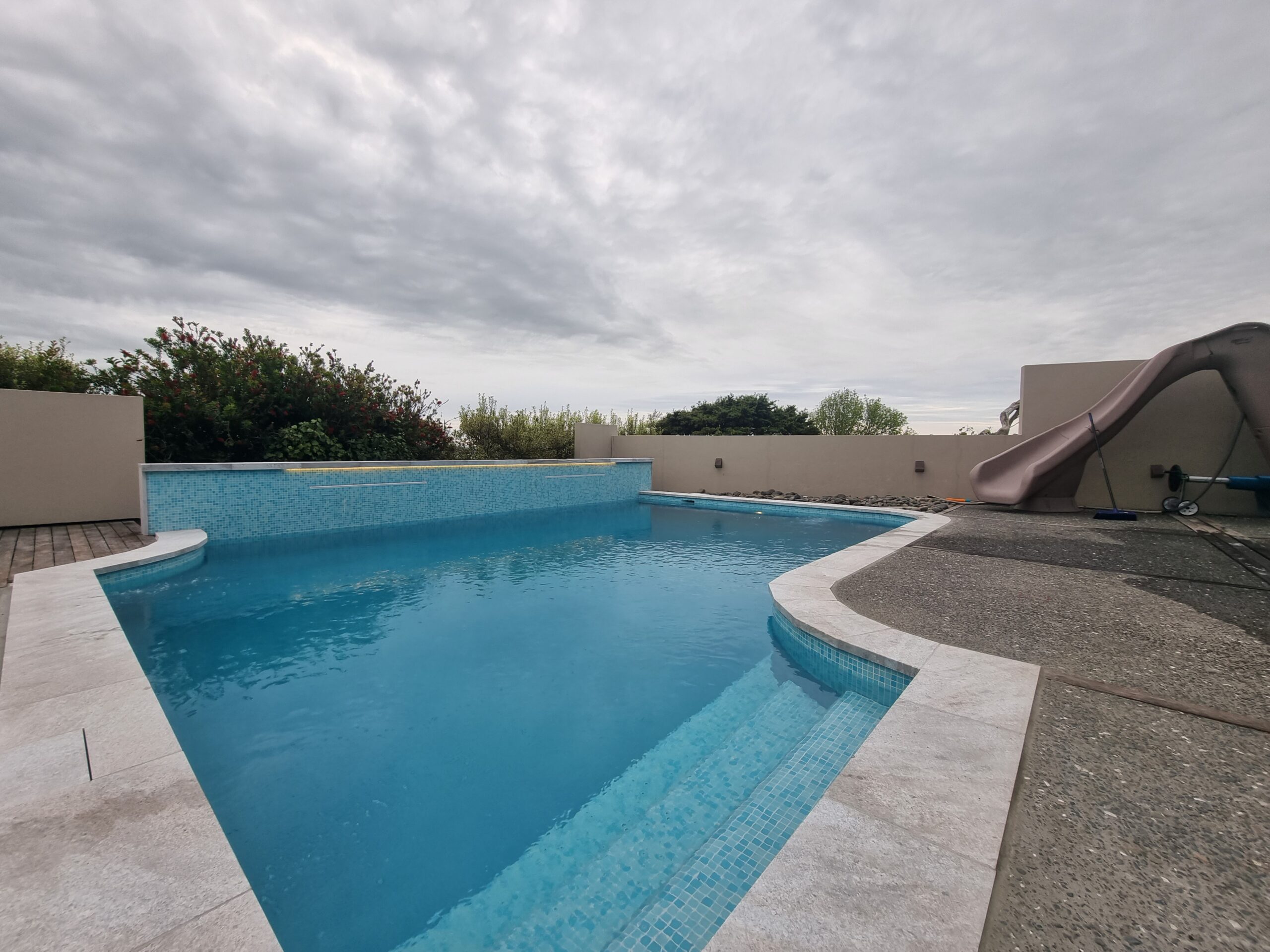
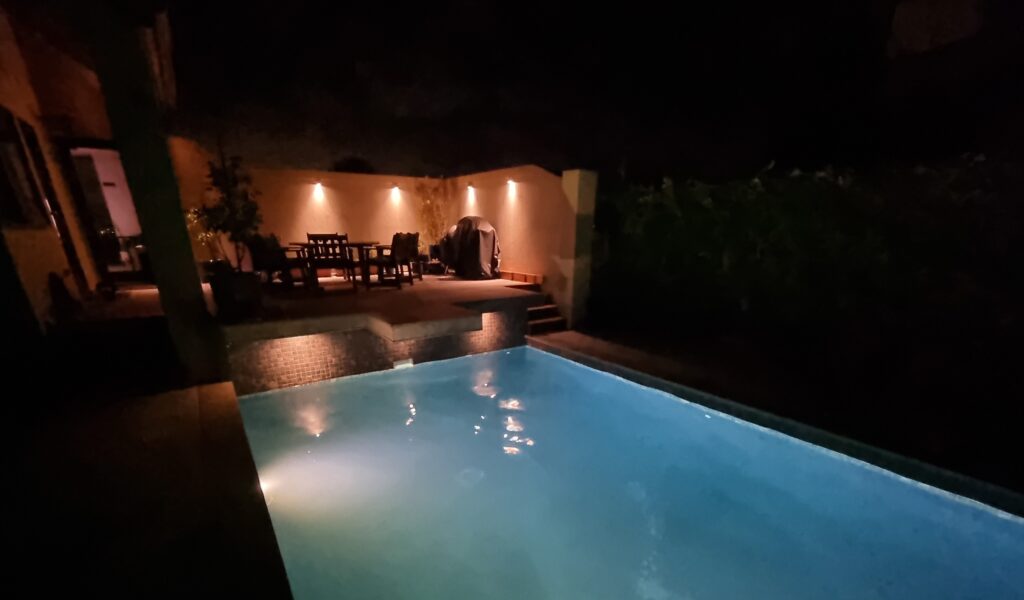
Real tiled pools, real Auckland suburbs.

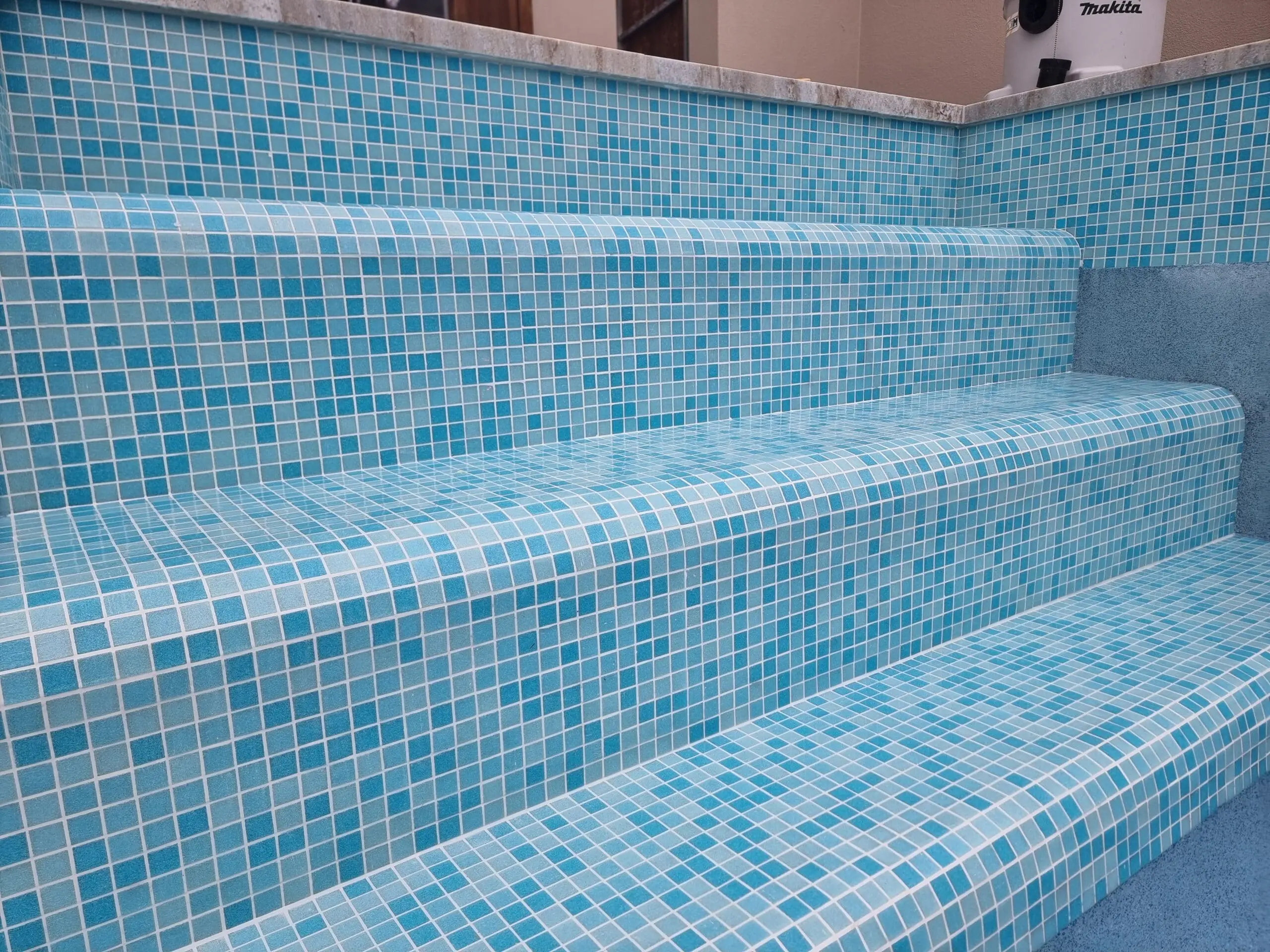
Fully tiled stairs and feature wall in Bisazza mosaics
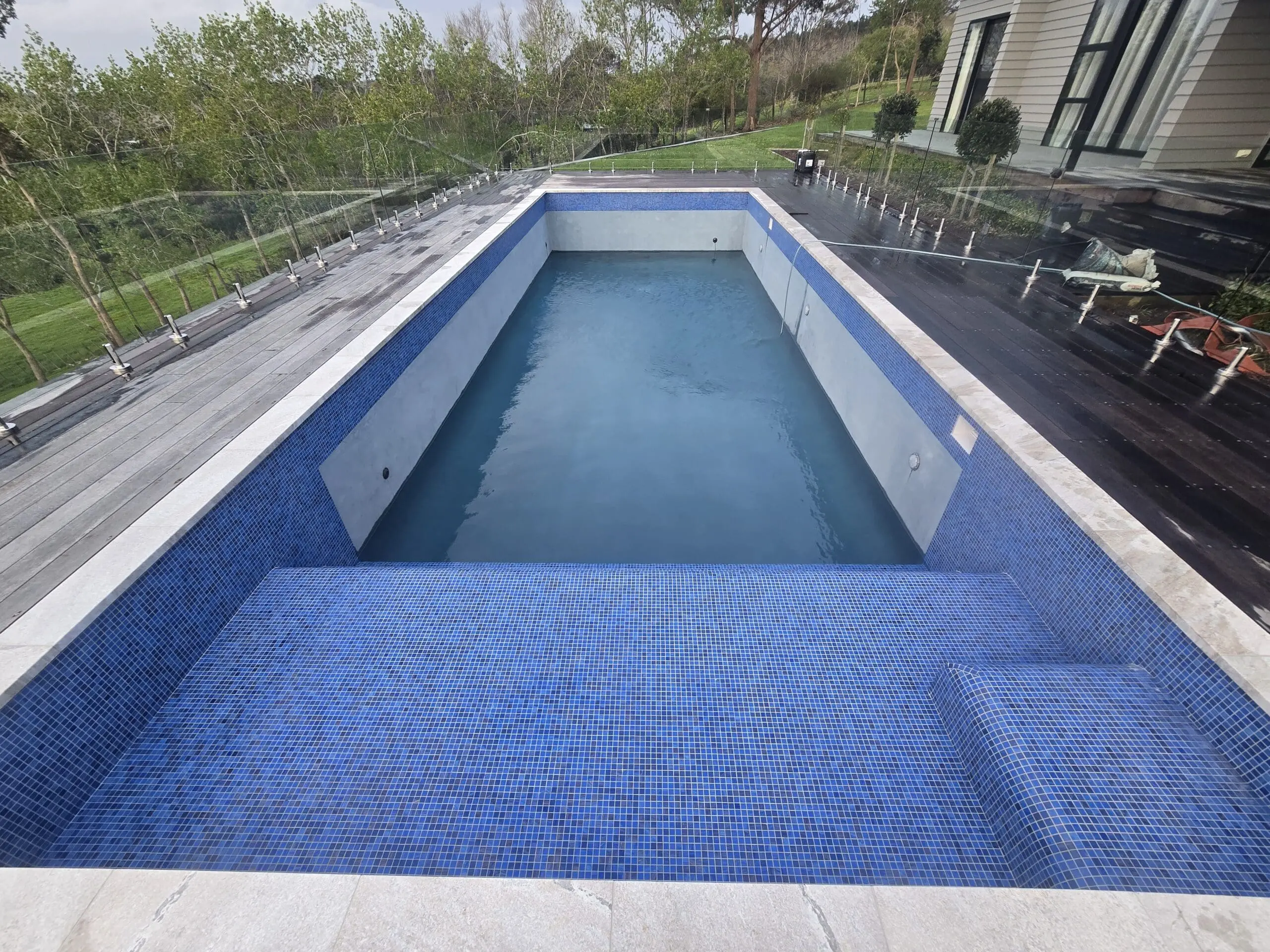
A fully tiled sun shelf in Bisazza

Ezarri Peridot glass mosaic interior
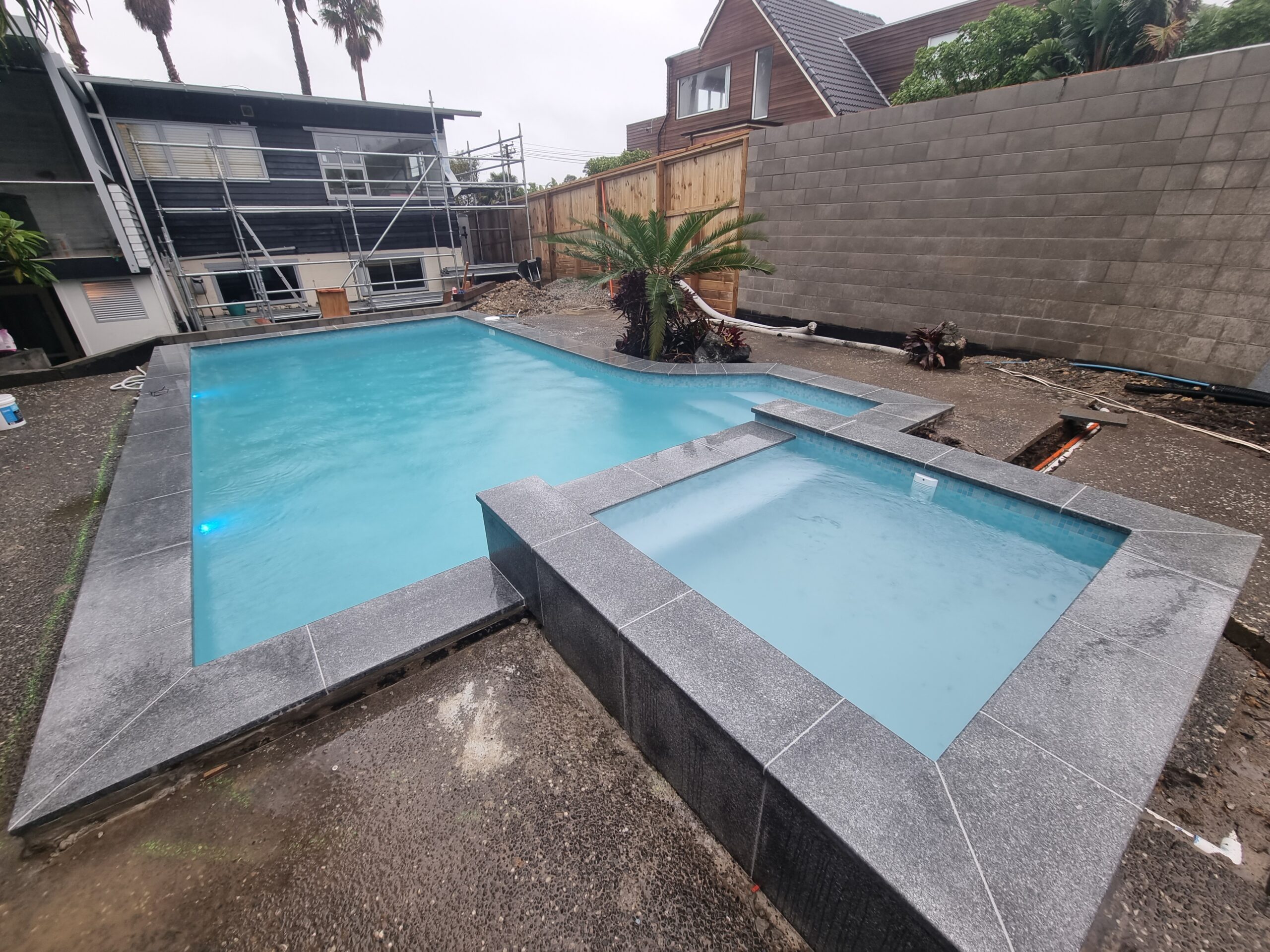
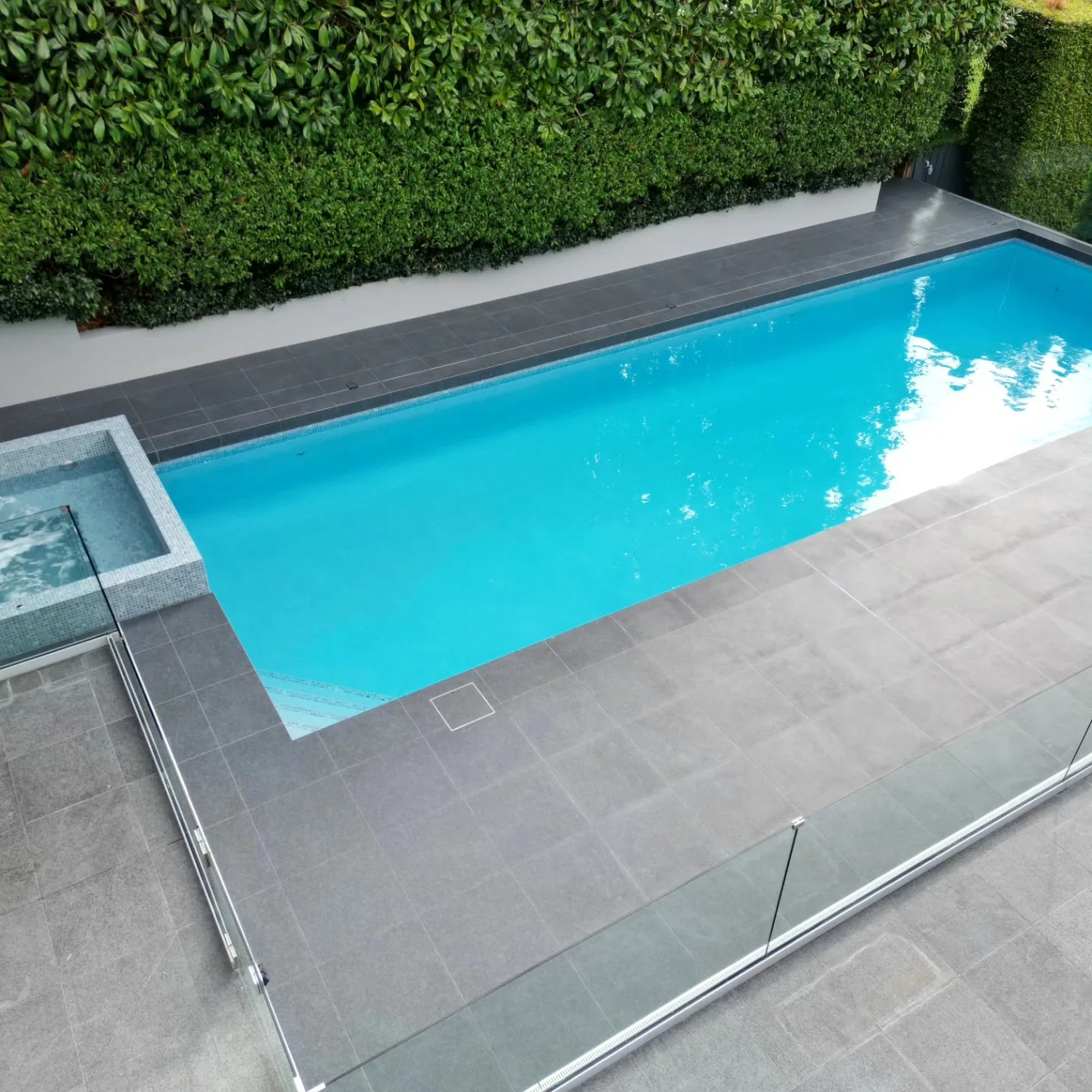
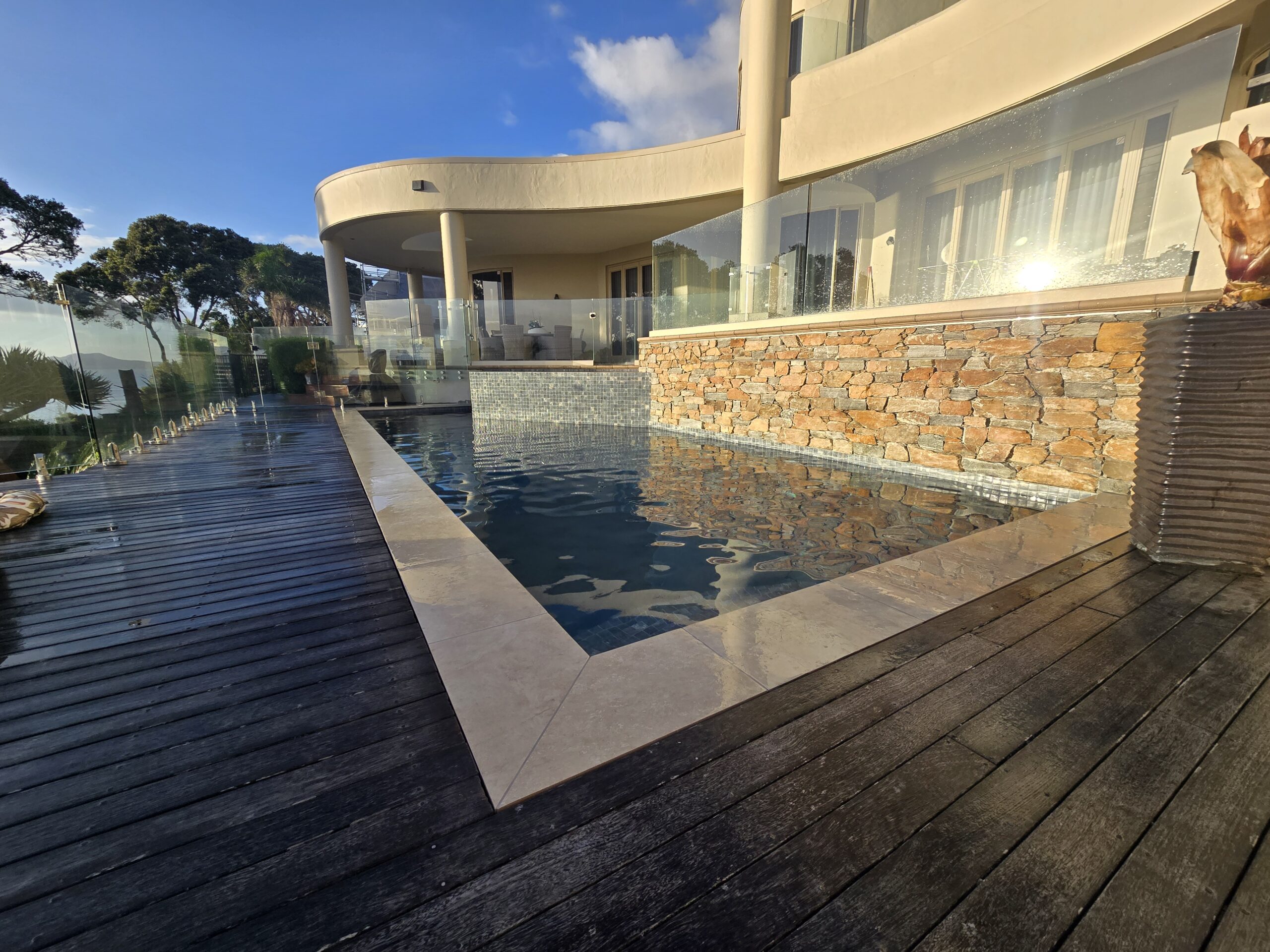
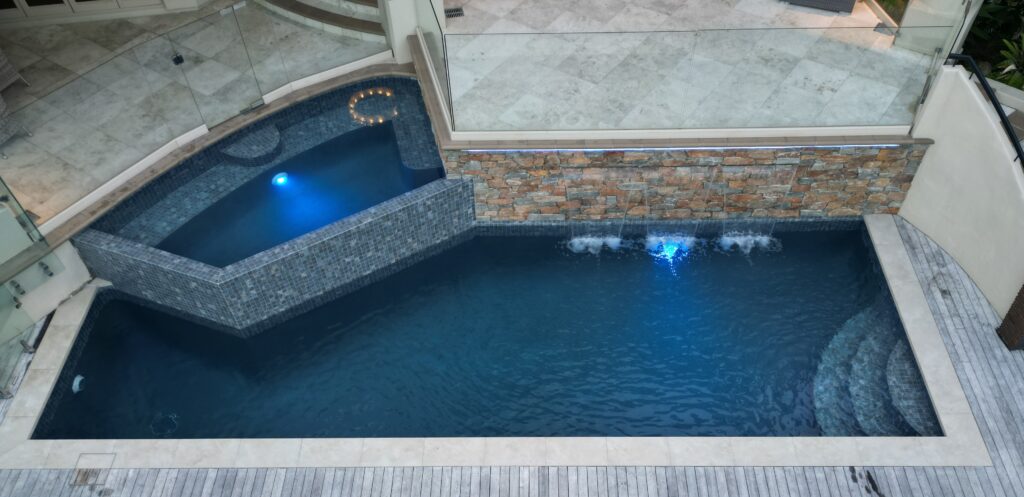
Bisazza mosaic with an infinity spa

Ezarri Dolerite glass mosaic
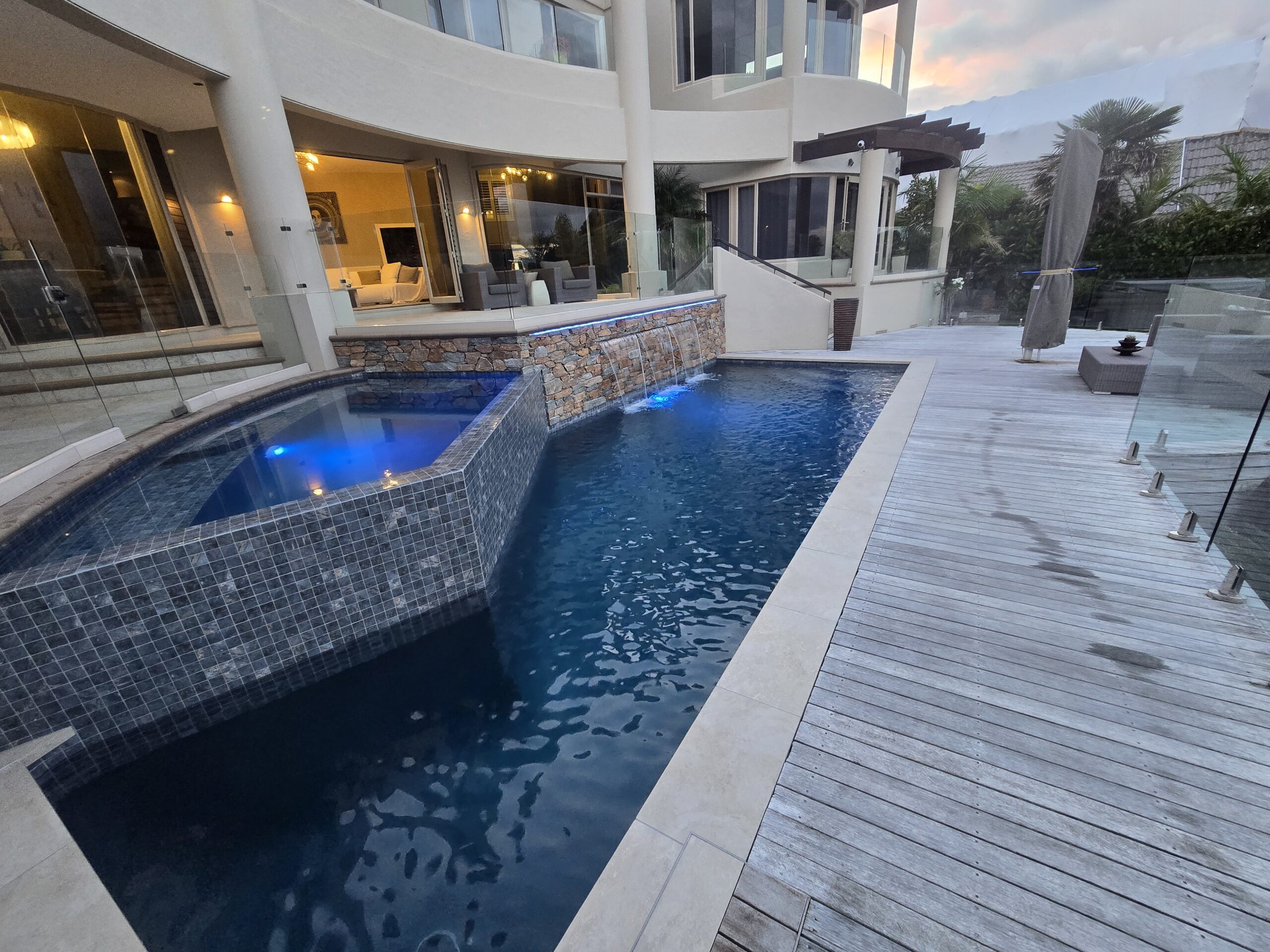
Ezarri glass mosaic with an infinity spa
Yes and no, and the difference matters. You can add waterline tiles to a fibreglass pool, laid with a flexible adhesive that moves with the shell. What you cannot do is fully tile a fibreglass pool. Only a concrete pool takes a full tiled interior, because the rigid shell holds the tile bed still while a fibreglass surface flexes and would crack the tiles.
Around a third of Auckland pools are fibreglass, so this comes up often. If you have a fibreglass pool and want a full tiled look, that means a concrete shell. For other ways to refresh a fibreglass pool, see our pool renovations page.
Tiles usually warn you before they fail. The common signs are a hollow sound when you tap a tile, tiles lifting at the edges, grout crumbling across several joints, white calcium spreading beyond the waterline, and water loss beyond normal evaporation. A pool leaking behind the tile bed can lose 2,000 to 5,000 litres a day.
A free site visit confirms which one your pool needs.
Small, localised damage can be spot-repaired for $500 to $2,000 if matching tiles are available. Once more than 20 percent of the tiles are damaged, or the membrane behind them has failed, a full retile is the better long-term fix. Our repair versus retile guide covers the decision in detail.
New tiling needs a careful first month. Wait 7 to 14 days before filling, keep pH between 7.2 and 7.6, hold off on acid washing for six months, and keep robotic cleaners off the surface for the first four weeks while the grout hardens.
After that, tiled pools are low effort. A weekly brush keeps calcium and algae off the tiles, and epoxy grout stands up to salt and chemicals far better than cement. If grout does wear, regrouting a full pool costs $2,000 to $5,000, a fraction of a retile. Our pool maintenance guide sets out the routine.
Blue-green glass mosaic blends are still the most requested finish, for that natural lagoon look. Matt-finish porcelain in charcoal and slate tones is growing on modern rectangular pools, and darker interiors stay popular for a resort feel, warming the water 2 to 3 degrees through passive solar gain.
A site visit includes tile samples so you can see colours against your own pool and surrounds.


Straight answers to the questions Auckland pool owners ask us most.
A full tiled interior on a standard 8x4m concrete pool runs $40,000 to $52,000 plus tiles, which works out to roughly $550 to $650 per square metre for render, waterproofing and tiling. Waterline tiling starts around $6,000 to $9,000 plus tiles. See the full breakdown in our cost of pool tiling in Auckland guide.
Glass mosaic suits curved and freeform pools and lasts 20 to 25 years, while porcelain covers large flat areas faster and lasts 15 to 20 years. Mosaic offers the widest colour range; porcelain needs the least maintenance. Compare them in our mosaic versus porcelain guide.
You can add waterline tiles to a fibreglass pool, but you can’t fully tile one. Around a third of Auckland pools are fibreglass, and these take a waterline band only, because the flexing shell can’t hold a full tiled bed the way a rigid concrete shell can. For other ways to refresh a fibreglass pool, see our pool renovations guide.
A full pool retile takes 2 to 4 weeks from drain to first swim, while waterline-only tiling takes 3 to 5 days. Fresh grout then needs 7 to 14 days to cure before filling, so booking in autumn avoids losing summer swimming. See a week-by-week view in our pool renovation timeline.
Like-for-like retiling generally does not need building consent, though structural changes to the shell can. Fencing must still meet the 1.2 metre standard. Check what applies in our pool renovation consent guide.
Yes, waterline-only tiling is one of the most common jobs and starts around $6,000 to $9,000 plus tiles, because it still needs rendering, waterproofing and epoxy grout on the band. It suits a pool that is otherwise sound. Our waterline tiling cost guide explains what’s involved.
Glass mosaic lasts 20 to 25 years, porcelain 15 to 20 years, and natural stone 25 or more, all with proper water chemistry. Grout typically needs redoing every 8 to 15 years. Our pool tile lifespan guide covers this in detail.
Tiles usually fail because water gets behind the tile bed through a failed waterproof membrane, or from ground movement on Auckland’s clay soils. A hollow sound when you tap a tile means the bond behind it has gone, and once more than 20 percent are affected, a full retile beats patching. Our guide to failing pool tiles walks through repair versus retile.
Rarely, because a failed waterproof membrane can cause $15,000 to $30,000 of structural damage, and pool-rated adhesives and epoxy grouts are specialist products. Waterline tiling is the only realistic DIY job. See the real costs in our pool tiling price breakdown.
Yes, and glass mosaic with epoxy grout is the best combination for saltwater pools, since roughly 80 percent of NZ pools run salt chlorination. Epoxy grout resists the salt crystallisation that breaks down cement grout. See the best saltwater pool tiles in our tile guide.
Tell us about your pool and we’ll give you a straight answer and a clear quote after a free on-site visit. No pressure, no full payment upfront.
Last updated: 18 August 2026 · Reviewed by Mario Miocevic, Artisan Stone & Tile